On the KLM airplane to Holland, the first thing I noticed was how jovial the Dutch passengers were. The people in the row in front were leaning over their seats, chatting to the people next to me and laughing. A lot. I remembered the exuberance of the Dutch supporters during the 2010 Soccer World Cup. Cape Town turned bright orange during the Holland games. A massive party, including an orange double-decker bus, had travelled down to South Africa to follow their team. The Dutch are without doubt, a happy, hearty, friendly nation.
One of the many colourful cyclists
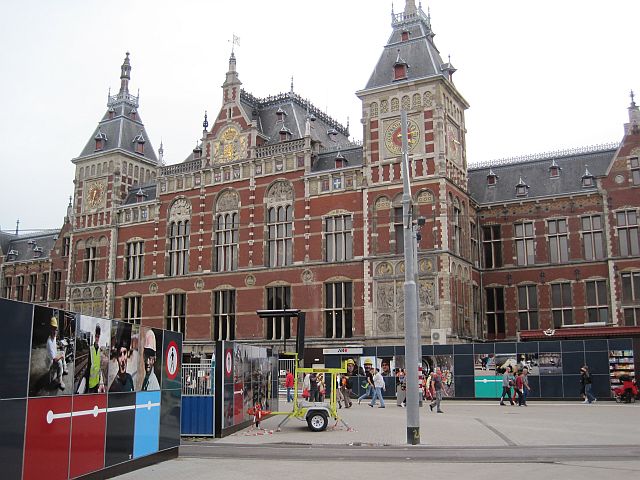
My other half and I arrived at Schiphol Airport in Amsterdam. From there, it was a 2 minute walk to the train station next door where we took the train to Amsterdam Centraal. And from there, you can get anywhere. The Dutch all speak English so we had no problem buying tickets. The fare was €4.20 each from the airport to Amsterdam Centraal Station.
Our first night was spent at Ibis Hotel in Stopera which was a 30 minute walk away. We could have taken a bus but after a day of sitting on planes and buses we were happy to walk. The hotel is fairly central and our room looked out onto a canal. The Ibis/Accor group are often our hotel of choice as they are well priced and it’s easy to book in advance. Breakfast is optional with Ibis hotels. Ibis Hotel.
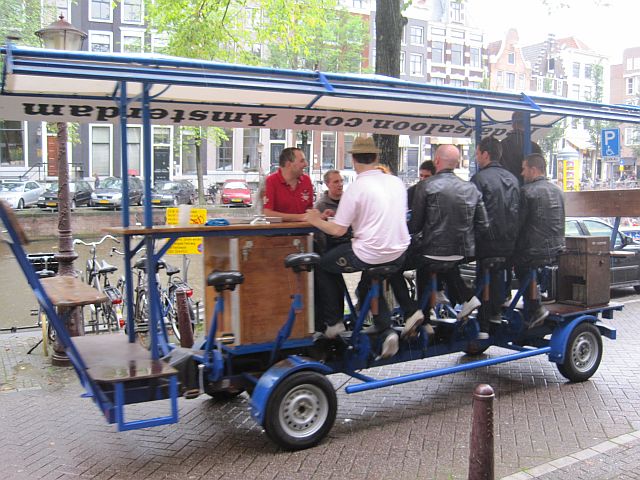
Bicycle beer bar
Internet is usually free in the lobby. If you can get a chance to use it. Check prices before hook up to the net in your room. You may be in for a shock.
IBIS tend to do a local style breakfast so it varies from hotel to hotel. A Dutch breakfast would have been €15.00 each. We decided to take to the streets and find our own breakfast. The receptionist guided us to a quaint spot called Bagel and Beans where we each had a soy milk chai latte and a goat cheese with chives omelet which came to €16 in total.
Abandoned bicycle
This was a boating holiday for the most part. My other half is a master mariner and an avid boater. He had pre-booked a charter boat from a place called – Yacht Charters Urk. Although we have a good few boating holidays under our belts, this one was special. This boat was a Dutch steel motor cruiser. My other half has designs on one for us one day. Two things struck me about our boating time in The Netherlands. Firstly, how different the countryside is from previous boating holidays in Europe. The Dutch canals are wide, busy, commercial and a lot more modern for the most part. Big working barges barrel along the canals. This is in contrast to the narrow canals and olde worlde scenery we encountered in the UK and France. There, one only encounters leisure boats.
Family day out on a bicycle
The thing that my brain had a hard time dealing with is the logistics of a country that lies 5 metres below sea level. Everything works the wrong way around. Usually a boat “locks up” when one goes inland. In Holland, one “locks down”. Locks are the waterway equivalent of an elevator or stairs. Boats can’t go up and down slopes so they move through locks to go up or down in stages. Normally water runs toward the sea. But in Holland, well it’s different. For more on locks, boating and waterways visit Waterway Wanderer.
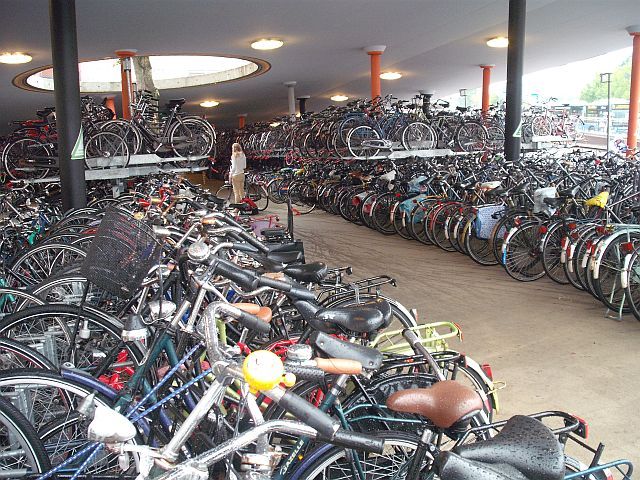
Bicycle parking bay in Gronigen
The next day we took the train from Amsterdam Centraal to Lelystadt to be met by the charter company rep. The trip was 45 minutes and give or take 45 kilometres. The train ticket cost €9.00 each. A big plus with doing a charter boat holiday is your accommodation and your transport are one cost. This particular charter cost €1250.00 per week.
We didn’t initially think of going to Dubai. However, since Emirates Air appear to be one of the better and more affordable airlines for economy class flights, we decided to throw in a three day stop-over in Dubai en route to London. It must be oil money offsetting the price, as the saving was substantial.
Also helping us to make our choice was a chance to spend time with family who live there.
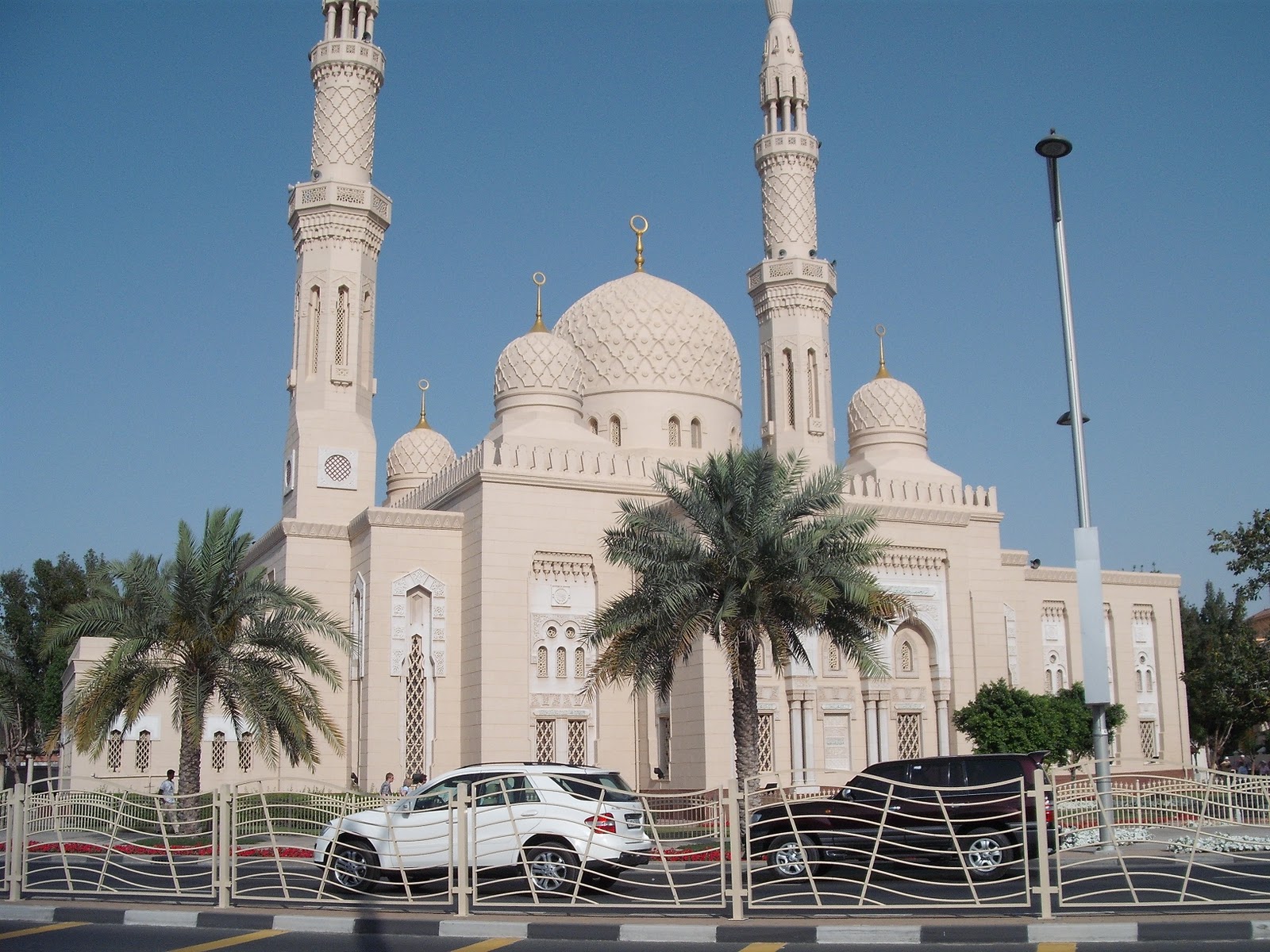
Mosque, Dubai
Our flight didn’t disappoint. Emirates Air on-board entertainment has a selection of nearly everything from current and classic movies to Best-of TV shows past and present. The music selection was massive ranging from country music, the latest chart offerings through to solid rock numbers.
The seating space seems roomier than other airlines, which helps on a long haul flight. Not that Dubai is too far from Cape Town; our flight was 8 and ½ hours. They gave out warm cloths to freshen up before we left and a copy of the menu with 4-course meals. I had the vegan meal and my other half had a low calorie, low cholesterol meal. We also had some lovely French wine with our meal. We didn’t sleep much as the flight wasn’t long enough. I watched Slumdog Millionaire and my other half watched re-runs of Fools and Horses.
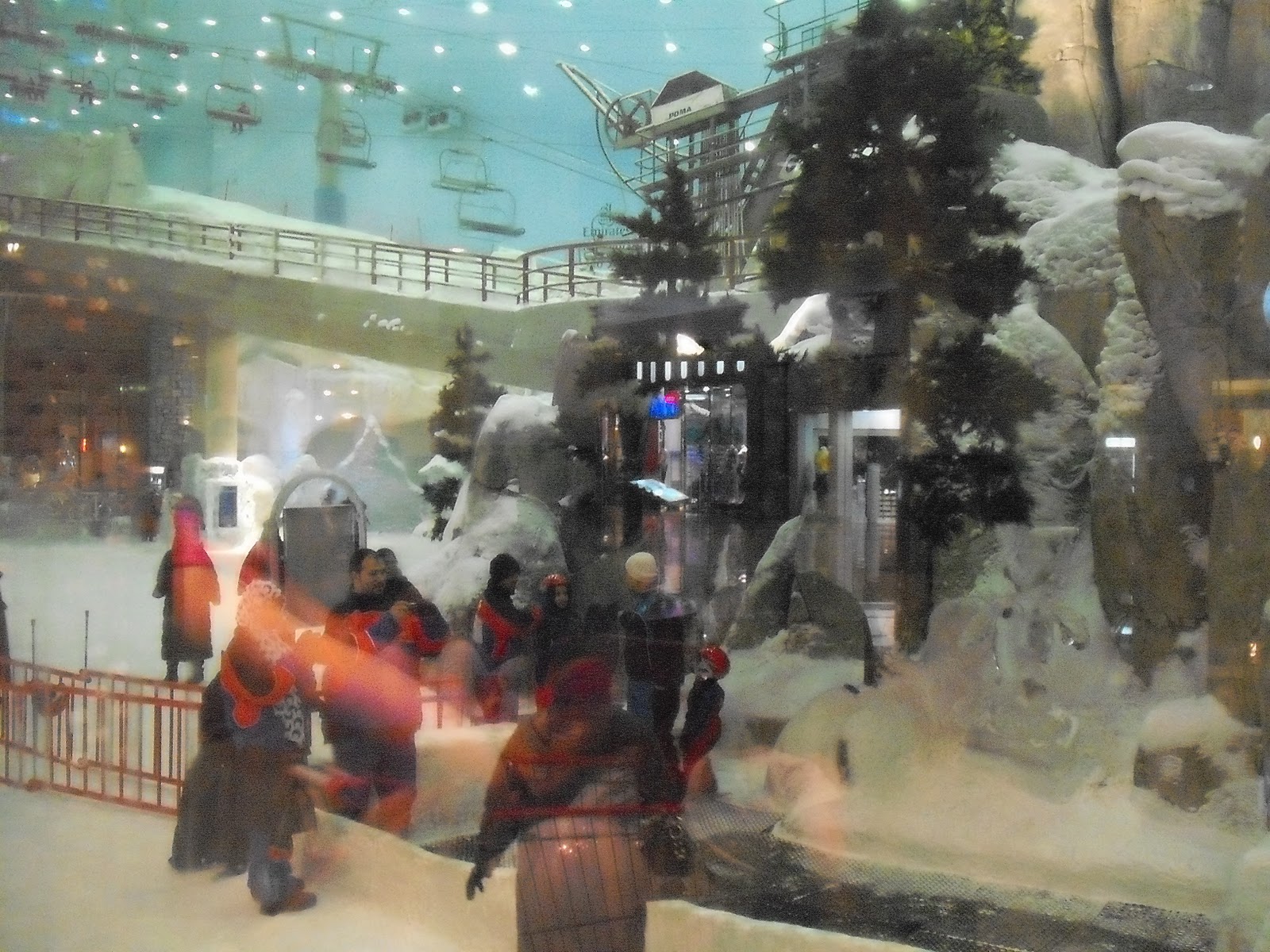
Fake ski resort, Dubai
We arrived in Dubai Airport at 05.00 am. We had booked into Ibis Hotel in Deira and we were told a shuttle bus ran from the airport to the hotel. Our bus driver arrived after about ½ hour and took us to the hotel. We were very early but they agreed to check us in at 10.00 am so we had a snack in the reception area while we waited.
We paged through tour brochures and probably picked the same tours as everyone else. They all had variations on the much the same thing. As we made our choice of tours we sat watching people with mounds of bags check into the hotel. It never ceases to amaze us how much luggage people travel with. We always stick to the limit for fear of penalties, yet we saw people staggering under their luggage. How do they get away with it?
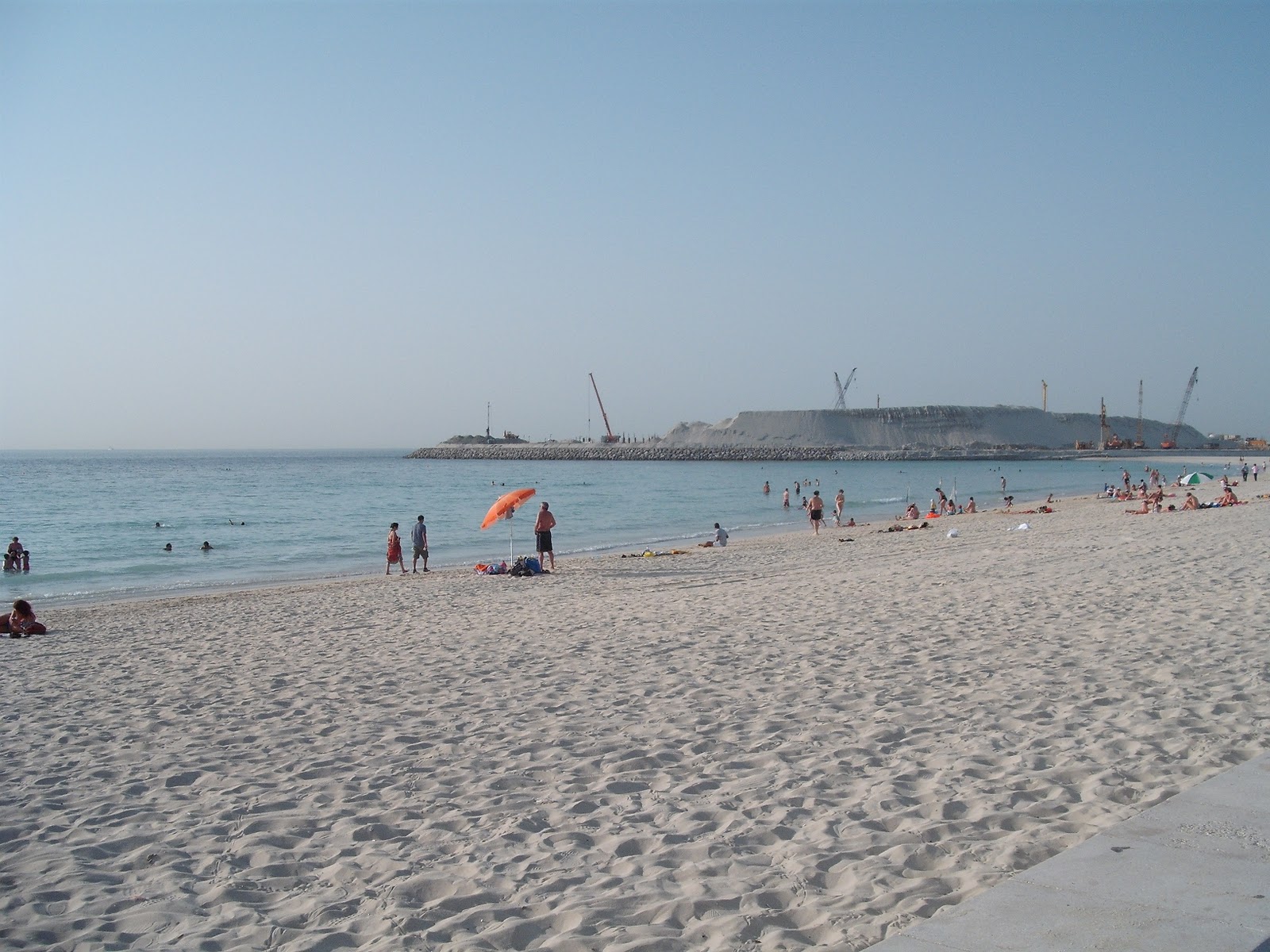
Beach, Dubai
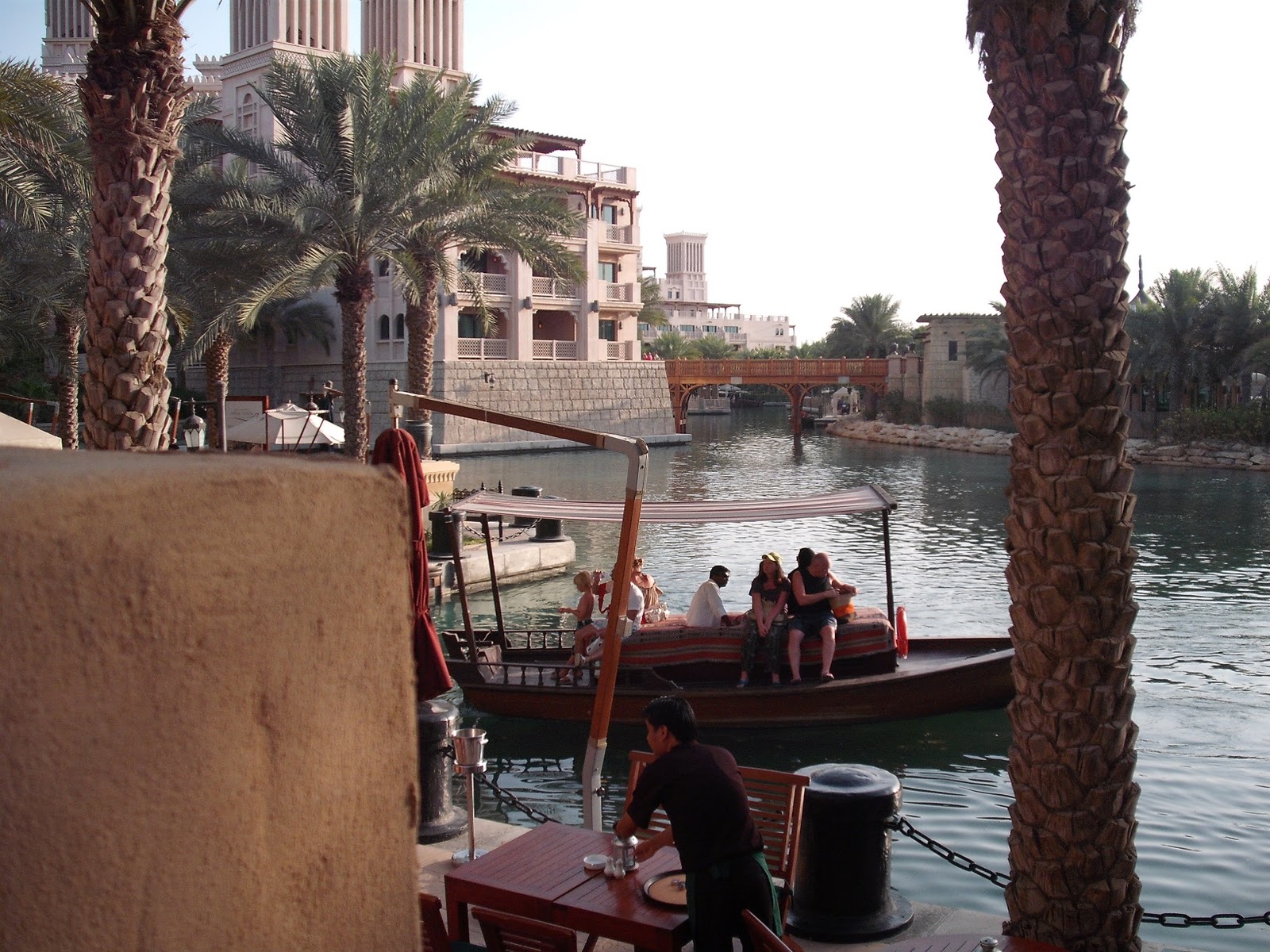
Once checked in, we freshened up and had a short sleep. I had been to Dubai before in June and the heat and humidity was particularly uncomfortable. I was pleased that in the last few days of April it was warm but not unbearable. Next, our tour guide for the Dubai City Tour collected us. We soon realised that all tour guides in Dubai are always foreigners.
In fact the only jobs the Emiratees seem to hold are in government, banks or shareholders in business. What was even more surprising is the Emiratees only make up only 20% of the total population of Dubai. The rest are workers and “ex pats”. Asians from India, Pakistan, Bangladesh and those regions make up 50% of Dubai’s people and the final 30% of the population are Europeans, Australians, and South Africans etc.
Foreigners come across for work and money opportunities. They pay tax, for water, for education, and the usual things one would expect. Most people working in Dubai earn good money but the cost of living is high. Conversely the Emiratees don’t pay tax and get state grants for just about everything. Truth is they don’t have to work and one can’t help but wonder if any do as they fill the millions of shopping malls all hours of the day and night.
Outside a souk, Dubai
Dubai likes to think of itself as a shopping destination. And if shopping is your thing, you’re in the right place. There are many shopping malls with the same shops. The usual big names like Gap, H&M, Next, Benetton and even the South African store Woolworth was there but with signage in Arabic. The high-end shopping malls have designer stores with luxury goods. There is even a shopping mall with a ski resort in the middle. We watched people going up ski lifts in real snow through the glass windows.
All the shopping malls we went to were spotlessly clean and air-conditioned with plenty of coffee shops. The sight of the Emiratee people sipping coffee in their traditional clothing is a common one. The men wear a white dishdasha robe with a checked or white headdress. The woman cover up in a black abaya with a black headdress and sometimes even a black facemask or a burka.
Scotland is to England like chalk is to cheese. If you plan to give Scotland as miss because you have been to England, think again. Scotland has a ruggedness and a character all of it’s own. The Scots are so down to earth and friendly you’ll wonder why you didn’t skip England and just head straight up north.
The population of Scotland is just over 5 million. It’s a small country, about 79 000 km2, which means getting around is relatively easy. Most entry flights to Scotland terminate in Glasgow, however many budget flights terminate in London. You may plan a day or two in London before making your way north. I leave that to you.
Megabus
The cheapest way to get to Scotland from London is via Megabus – megabus. The London bus terminus is a 10 min walk around the corner from the London Victoria Station. The London Victoria Station does not have escalators, or lifts, so make sure you can carry your bags up the stairs. It’s not as deep as some of the other tube stations but it’s still a schlep.
Glasgow by Sven Hagenberg
Consider basing yourself in either Edinburgh or Glasgow. They are located south of Scotland, but are central, making it an easy base from where you can do day trips. They are also the biggest cities in Scotland. Go to Google maps UK to get a feel for the layout of the country – map of Scotland
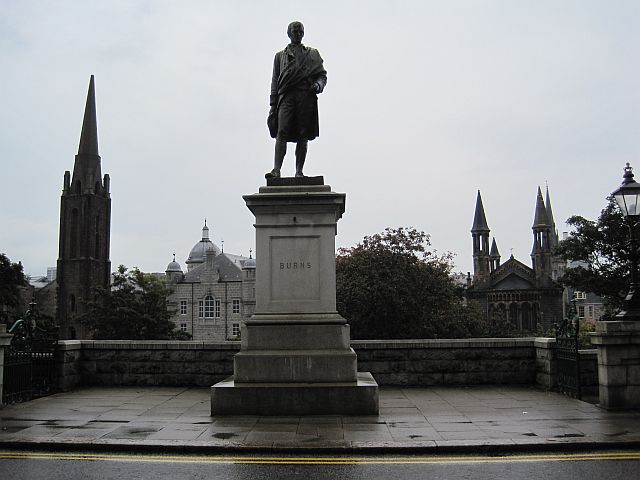
Rabbie Burns
Both Edinburgh and Glasgow are about 9 ½ hours by bus from London. Megabus bookings open up a good few months ahead. Make sure you book early to bag the cheapie seats. They go up substantially if you leave it too late. The buses leave early-ish in the morning. You can also travel overnight if you prefer, but then you will leave nearer to midnight. Megabus services depart daily for most destinations in the UK and Scotland.
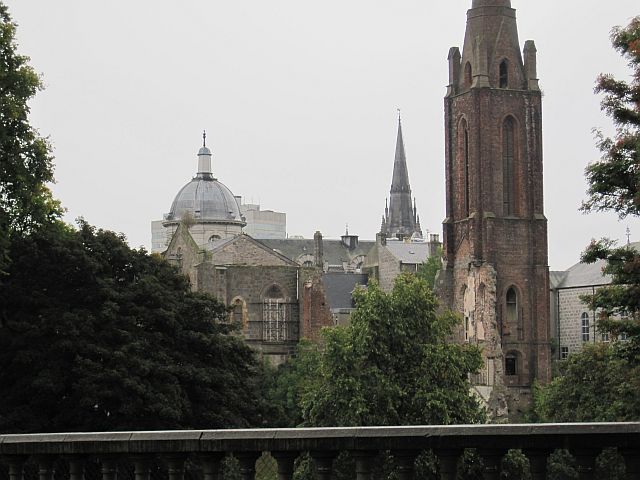
Skyline in Aberdeen
Your best bet is to hire a car to get around Scotland. I suggest Enterprise Car Hire www.enterprise.co.uk for the best deal. The current rate is approximately £12 – 14 per day for an A group car such as a Ford Ka. This excludes petrol, but includes unlimited mileage and insurance. Petrol is about £1.20 per litre when oil prices are lower. Book as soon as you can. I suggest you collect and drop off the car in Glasgow or Edinburgh. Remember Scotland is NOT England. You will have to pay a drop-off fee of around £75 if you drive to England. Traffic in and around London can be really bad and you could find yourself gridlocked. Remember central London has congestion taxes. Rather take the Megabus if you have to return to London, or one of the trains.
The three major cities in Scotland are very different in character. Glasgow is the biggest city in Scotland. It’s my favourite. Not considered the prettiest, although I would disagree. Glasgow is the working capital, the art and music capital and the shopping and party hub of Scotland. It’s brash, working class and in your face. It’s also fun, trendy, arty and the centre of most Scottish music. Think Wet Wet Wet, Franz Ferdinand, Ultravox, Primal Scream, Donovan, Fratellis, Texas, Love and Money, Glasvegas, Hipsway, Travis, Jerry Rafferty, Big Country, Jesus and Mary Chain, Deacon Blue, Simple Minds, Hue and Cry, Belle and Sebastien, The Delgados, Biffy Clyro, Paolo Nutini, Snow Patrol, Fairground Attraction.
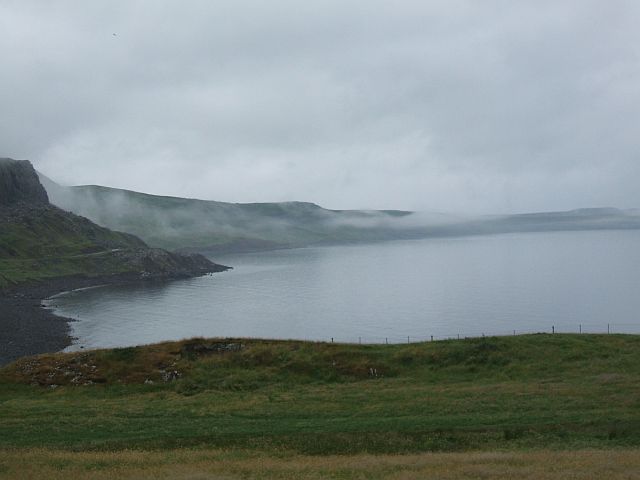
Scotch mist on the Isle of Skye
Phew!
There must be something in the water. Glasgow is crawling with universities and colleges including some world famous faculties like the medical school where a doctor inspired the character of Sherlock Holmes.
Scottish flag – St Andrews Cross
Glasgow has loads of art galleries and museums. Their art colleges have guided tours and check out GOMA (Gallery Of Modern Art) which is free and has strange modern art. Glasgow is also the home of Charles Rennie Macintosh and his art nouveau followers. His influence on architecture and design is highly evident. They have some quaint original Tea Rooms where you can take tea in the old style. There is plenty of shopping. (The South African in me loved Nelson Mandela Square.) You can also visit the old style tenements, which were ghettos before, and where the likes of Billy Connolly grew up.
I fell in love with the Glasgow train station and took a train to Paisley. No more scarves anymore and Paisley was a bit run down, but passing in and out the station was enough for me. The River Clyde where the old boatyards were located, cuts through the city. Glasgow used to be a city in disrepair but it was on the receiving end of massive grants and it shows. You can see lots of funky modern architecture and renovated old buildings.
Crinan Marina
If you decide to do a road trip, which I recommend, from Glasgow head north-west toward Fort William via Loch Lomond. Ben Nevis and the ski-ing area of Aviemore are in the heart of the highlands and are near Fort William. Check out if there any music festivals around that time. T-in-the-Park and Rockness are two big music festivals in Scotland. A day at one of them is an amazing experience, a full weekend can be great, but oh so long. There are also plenty smaller music festivals.
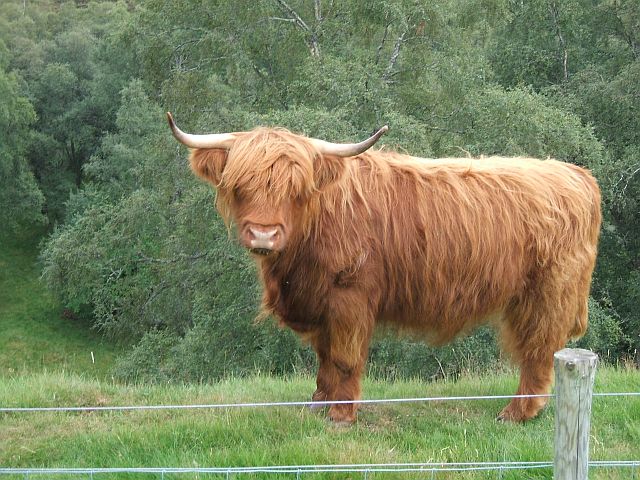
Highland cow
Back to your road trip. Start veering west to the Isle of Skye. Skye is scenic and old world. They still speak a bit of Gaelic there and local TV is in Gaelic. If you have time I suggest taking a ferry to the the Hebrides. They still manufacture their own heat from the peat which they dig out of the bogs and they weave their own fabrics. Ever heard of Harris Tweed? Nike manufacture sneakers from it. You see place names in Gaelic and they speak even more Gaelic than on Skye. It’s so rural and remote that the roads appear to be designed for sheep and not cars.
Coming back from Isle of Skye, head back to the mainland and east toward Inverness taking in Loch Ness. Along the way are loads of castles and prehistoric monuments. There are road signs indicating these monuments. Some stone circle you can get up close and personal with, while some are only seen from the outside as you walk past them. If you have a road map, the prehistoric monuments are marked. Plan to visit them in advance so you don’t drive past them by mistake. Prehistoric monuments include long barrows and stone circles. Scotland has stone circles galore and castles in various states of repair and disrepair.
When you think of Sweden, what comes to mind? How about, ABBA, Bjorn Borg, leggy blondes, the Nobel prize, IKEA, Electrolux, Absolut Vodka and Volvo. Swedes have a sensibility about them that is evident in their people and design aesthetic. They use the word “lagam” which means not too much and not too little, just in the middle. And that is exactly how they are.
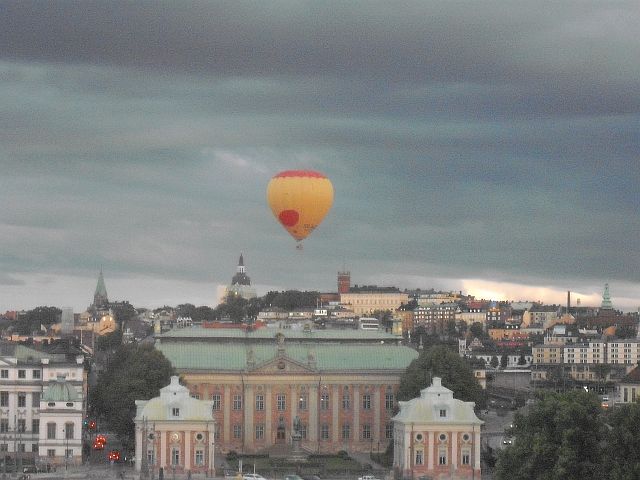
I liked that they don’t insist on helmets for bikers, they allow drivers to use their cell phones, they permit drinking in three of their public parks and hot air balloons are free to coast quietly over the city skyline. They assume that the public will use enough sense to act responsibly. Clearly in Sweden, they do. The Swedish royal family send their children to the same schools they expect their subjects to attend. No wonder the Swedes like their royal family.
The leggy blonde bit is also true. I saw the highest concentration of attractive woman, and men, in a wholesome sort of way, than I have seen anywhere else.
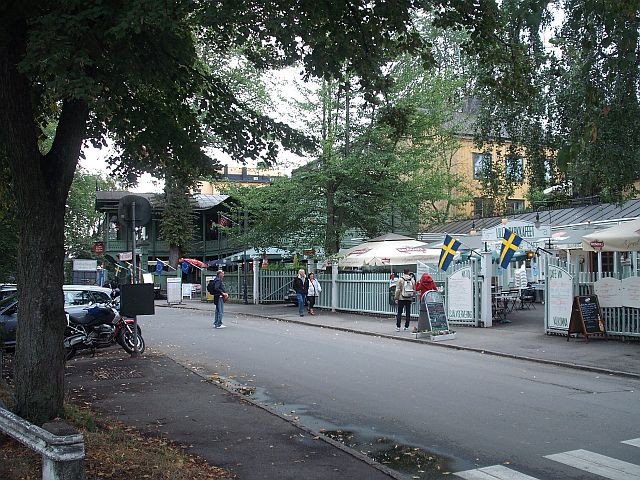
Public park
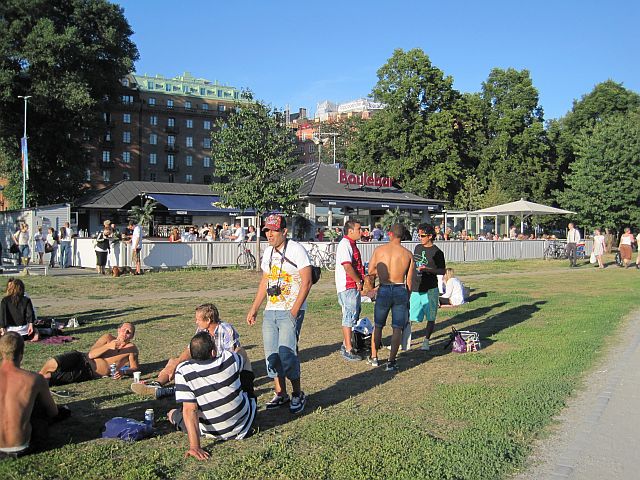
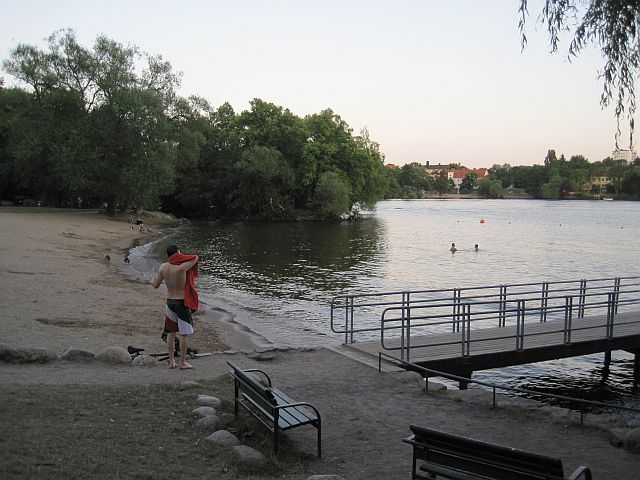
As the plane flew in to land at Arlanda Airport I peeked through the window and saw forests and lakes. They say that Stockholm is one third forest, one third lakes and one third city. Stockholm is not a land mass as such, but an archipelago of 14 islands linked by 52 bridges. This makes it one of the greenest cities in the world. On a sunny day you will find Stockholm residents swimming, cycling, walking or running about. They happily bask in the sun and are spoilt for choice with places to go.
Heading north, the country becomes mainland but Sweden has 93 000 lakes in all. Sweden is clean and the Swedes pride themselves on their clear lakes. The water is good to drink and you can safely swim in their waters. Sweden has a law called – Allemans rätten – which allows all people right of access to natural land. Again, their inherent sensibility allows such a law to work.
Hot air balloon over the city
The summer months in Sweden are from June to August. For the rest of the year it is cold. Really cold. The winters are also dark. The cold sets in from October and lasts till end of April. You can do a winter snow break in Stockholm if you fancy something a bit different. You might even be lucky enough to see the Northern lights. Just remember you also get 24 hours of night around that time of the year depending how far north you go.
Every single person I encountered spoke perfect English, so language wasn’t a problem at all. A few handy words are “hej” (pronounced hay) which is hello and goodbye; “tack” (pronounced tuck) which is thank you and “gatan” means street or road, it follows on after a street name.
Bicycles for hire
Scandinavia has a reputation for being beyond the purse of the average person. While Norway is off the Richter scale expensive, Sweden is the cheapest of all the Scandinavian countries and is manageable on a modest budget. Tour prices are around SEK300 – 500. You are looking at SEK40 for a single ferry ticket to Skansen Island. A meal out can cost from SEK100 – 400. I tended to buy a take-out salad and a sandwich, then find the nearest park to relax and eat. That would cost about SEK70 – 80. A coffee at a cafe costs around SEK40. The northern areas of Stockholm are classier and you will pay more. The southern areas were a lot more laid back with a meal costing SEK85 including a drink.
Skansen
There are a number of options for getting to the city from Arlanda Airport, which is a good 40 mins from the city centre. I chose Swebus over the high speed train, plain and simply because it was cheaper. You could also take a Flybussarna bus. Click on this link for more – Flygbussarna. These busses run regularly between the city terminus and the airport and cost about SEK99 one way.
A beach in the city
You can also avail yourself of a travel card for 24, 72 or more hours. This card allows you to ride any bus, overland train or tube train. The card costs a nominal amount and you are looking at about SEK250 for a 72 hour card. I had a SL card. Go to this link for more – travel card. Just be aware that it is cheaper to top up your card at the local supermarket – Pressbyran – than at the train stations. I can’t explain this. You could also hire a bicycle. For more follow this link – Citybikes.




.jpg)