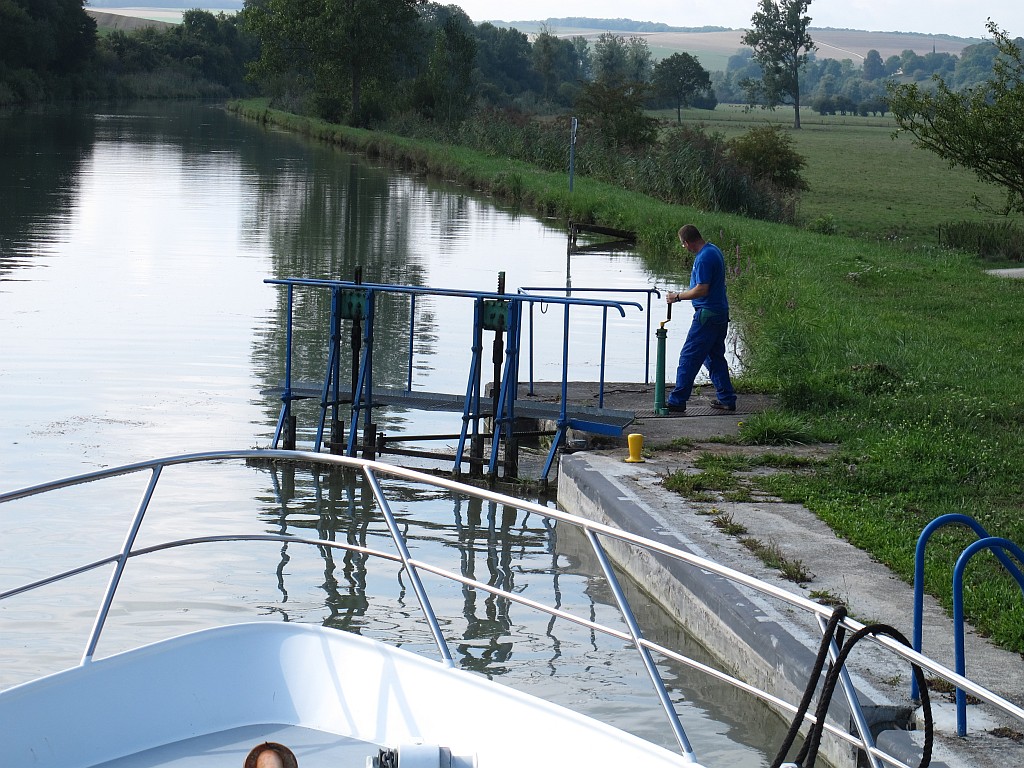
We were aiming for Langres as our next stop. The route has manual locks – no remote controls. Our lock-keeper drove past our boat as we were loosening our ropes which was most encouraging. We met him at the first lock. He was a rather serious looking bloke who had a habit of muttering to himself. I kept thinking people were walking past on the towpath and only later realised it was our lockie talking to himself.
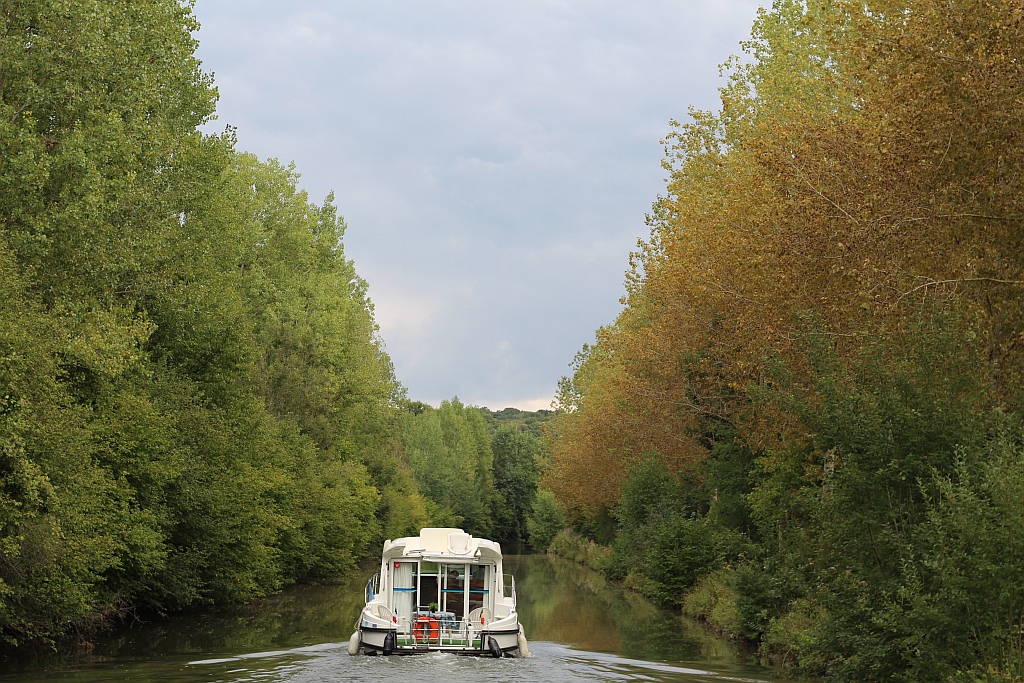
En route to Langres
He of course spoke no English and was – we think – trying to ascertain what our travel plans were. If the language gap is hard for us it must be as difficult for the French people we talk to. Trouble is, we think we’re speaking French. We understand each other but we’re learning from the same source. We resorted to writing what we needed to convey in the hope that would make it easier for people to understand us since our pronunciations must be atrocious.
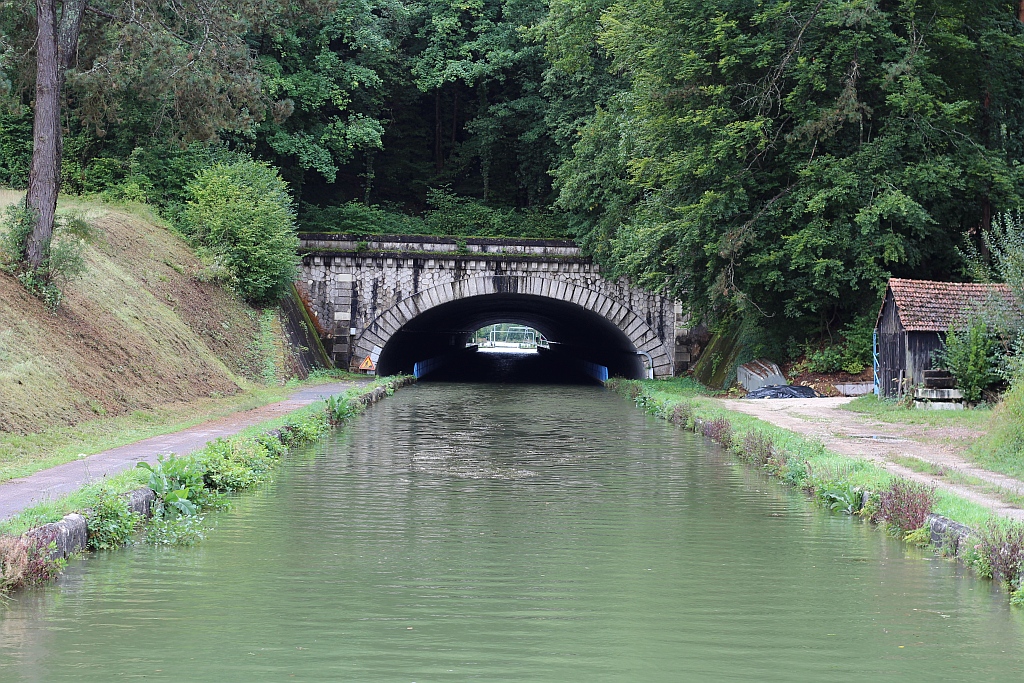
Condes Tunnel
The lockies in this section of the canal wear full VNF overalls and a life jacket. It’s hard work winding these ancient locks and coaxing them into action. Fortunately these blokes work right through lunch time and Sundays so we could keep going. Next thing a youngster arrived on a scooter in regular clothes to take over from our lockie. This bloke had some incentive for sure. He had prepared the upcoming locks before meeting us and worked the locks with Olympic speed. He had no time for small talk. I wondered if they were being tested as future candidates or perhaps were paid per lock?
View from the boat
We found Langres easily and tied up to rings. Nice not to have to use our stakes as we never got around to buying a hammer. The service was free but electricity was limited to 3 hours per day – an hour in the morning, one at noon and a last hour at night. There was water – but no hoses. They provide hoses at most places in Holland but not in France. And there was a toilet minus a seat. No toilet paper. Not the best facilities.
Facilities in Langres
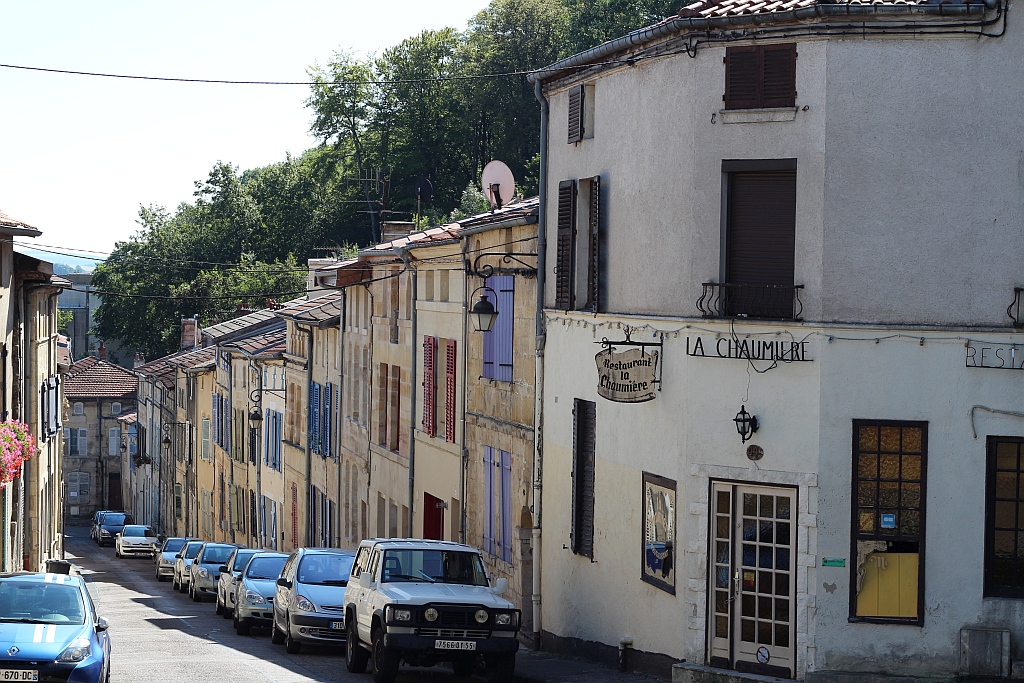
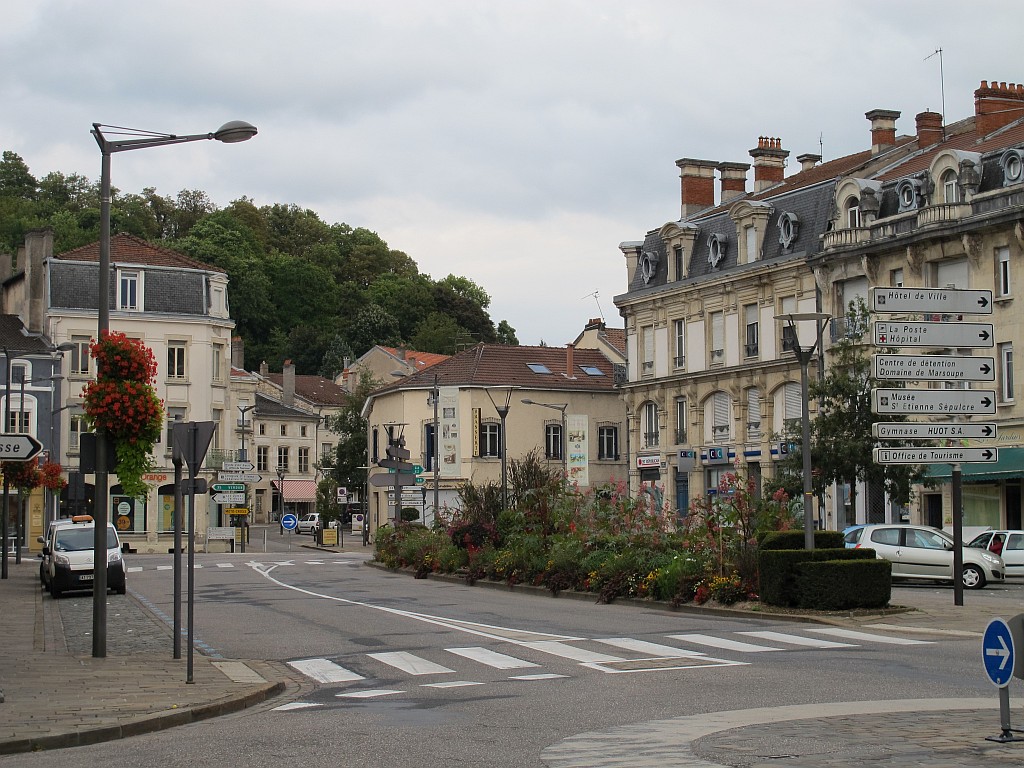
Langres is built up on a hill 3 kilometres from the little port. It’s a hellava steep climb. Both of us needed to stop and rest every now and again. We saw a bus go past but never thought to look for a stop. It is exactly the sort of place we hoped to see on this trip. An old walled village with towers and gates, many still in tact. Langres is apparently one of the 50 most beautiful places in France. We had to sneak another day out of our hectic schedule to see more of this lovely place.
One thing that really irks me is some people have unlimited travel time on the waterways. Yet I have a 90 day limit. We met some Brits who had been in France for 18 months. It comes down to where you’re born and has nothing to do with your character or integrity. EU, British, Australian and a few other nationals are free to spend as much time as they wish in France. The rest of the world need a visa. So Nelson Mandela or the Dalai Lama would have restrictions despite their humanitarian efforts and the Yorkshire ripper or any other criminal born in the right place can roam France indefinitely.
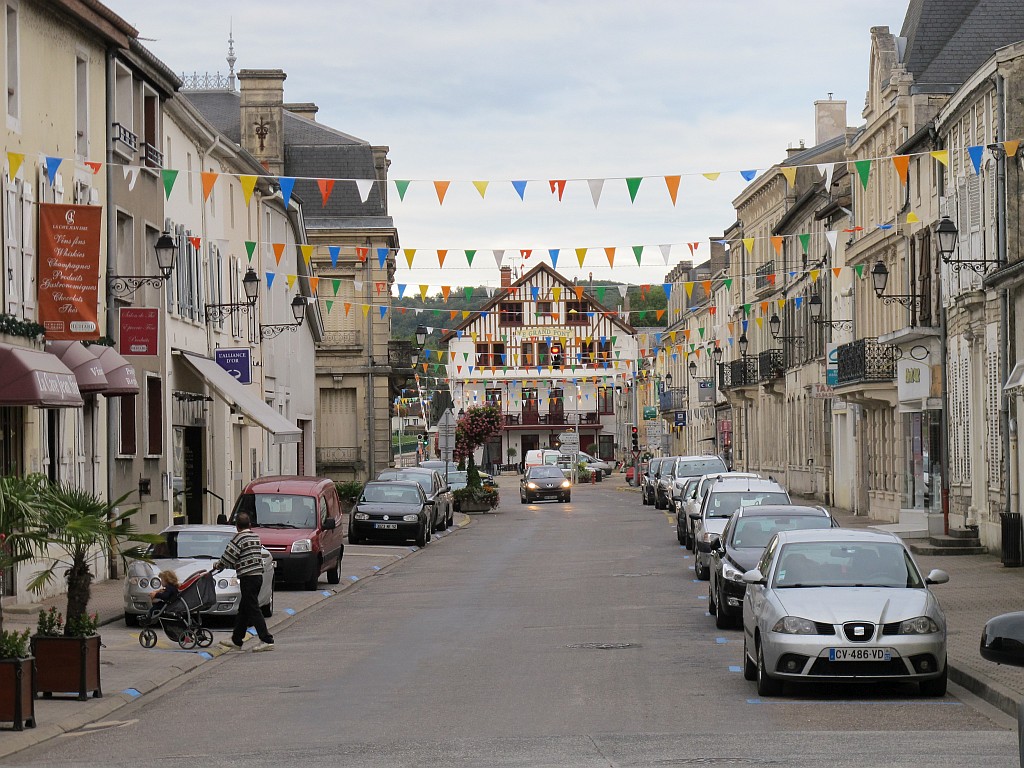
Langres
We made a slow start to the next day and ambled back up the steep hill toward the old city. En-route was a local supermarket. We popped past to check what they had and what time they closed so we could shop on our way back to our boat. Supermarkets in France often have restaurants where you can get bargain meals. There was a brasserie there but I suspect it was privately owned. Locals were standing around the bar having a café or a glass of wine and buying Lotto tickets. An elderly couple were having an early lunch. We decided to have a café and something to eat. I was surprised that the staff were drinking wine along with the customers. Before noon as well. Things work differently in France.
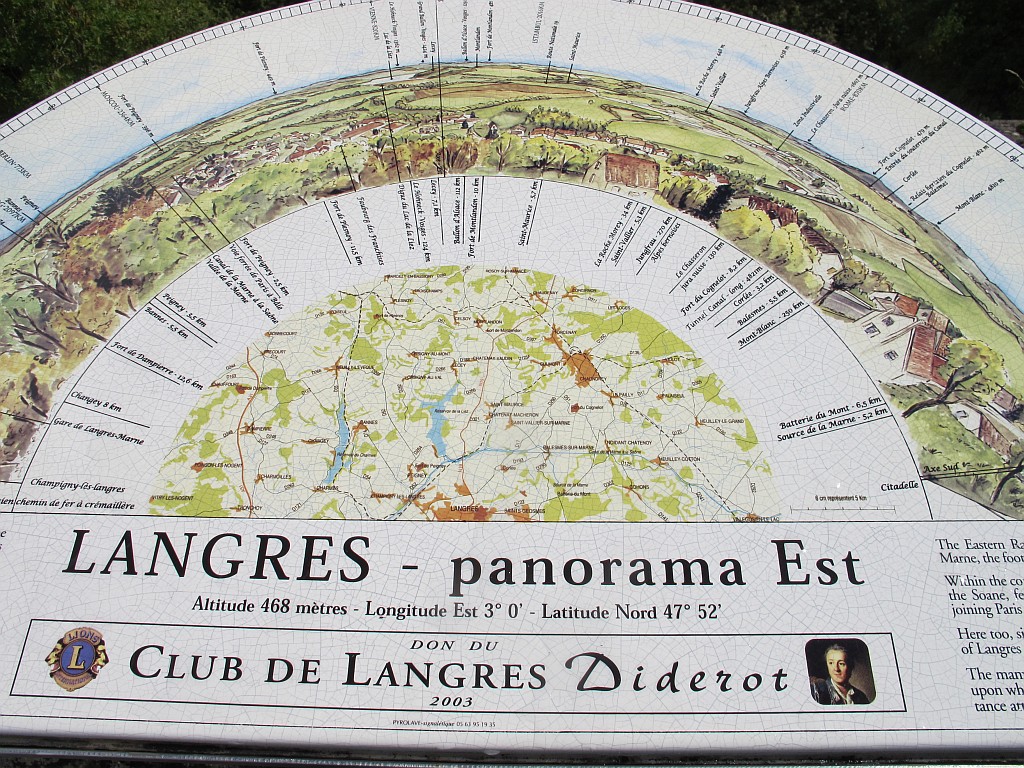
Map of panoramic view from Langres
The cheery waitress came over and rattled off a whole bunch of stuff so fast. My other half and I looked at each other and tried to decipher what she had just said. Then it dawned on her – we were Anglais. We quickly mentioned that we don’t eat meat and she picked up the menu and tried to find something for us. Every suggestion she made had cheese. In the end we let her go off and get creative knowing our meal might have have cheese. I got a big plate of salad and tomato with diced potato and baked goats cheese on French bread. It was tasty and she tried to accommodate us which we appreciated. Our waitress was thrilled to get a tip. They don’t seem to expect a gratuity in France.
Lac de la Liez in the distance
Back up the hill we found the outer wall that circles Langres and set about walking it. The circumference is 3 kilometres long and the views are incredible. On a clear day you can apparently see the Alps. We hoped to see the Des Vosges mountains which are a little closer but I think it was too cloudy. There is a map showing you what you can see and where. Then we popped into the Tourism Office to catch up on Internet related stuff like e-mails. And bought some sinful foods at the Boulagerie/Patisserie. Which we devoured with a cup of tea back at our boat.
Old wall and towers around Langres
We had some catching up to do after a day out so made an early start. We followed a French boat toward the first lock. The locks are supposed to open at 09.00am but nothing happened. We saw the French lady the boat in front on her mobile phone. At 09.20am a lady lock-keeper arrived to get the locks going. She helped us through the first and the second lock. Then she mentioned that there were no lights in the 5 kilometre long Balesmes Tunnel. Did we have a searchlight so we could make our way though? This we did not have. She gave what we have come to know as the Gallic shrug and left it at that. My other half managed to connect all our extension leads together and plugged in our re-chargeable torch to make sure it had power. Then he turned on all our navigation lights.
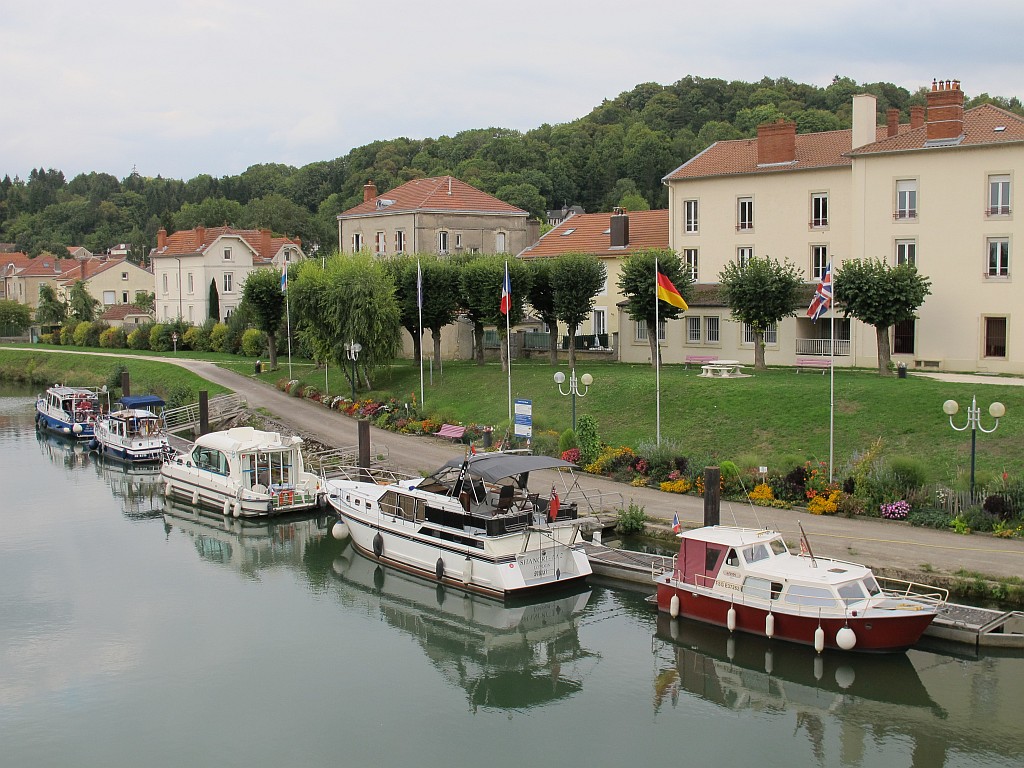
Joinville was lovely. We arrived on a Tuesday evening when they have late night shopping – until 19.00pm. We stayed on the banks of a hotel. Good facilities, electricity, water and yes – they had wi-fi! There was space for about four boats. One of which was a beautiful old wooden Dutch barge with four similar looking barefoot, long haired, bearded French blokes in scruffy clothes and one elderly lady. Not sure if she was the matriarch or a sugar mommy. Our initial impressions of them were not favorable I’m ashamed to say but they rushed to help us tie up, offering their own mooring stakes. I felt so bad for judging them on appearance. They were heading for Montpellier and ultimately Las Palmas. Wow! That was ambitious boating if ever.
It had become now routine to get going as soon as possible and keep going as long as we could. We knew one thing, we did NOT want to be behind the old Dutch barge. Lovely as she is, and benevolent as her occupants were, she would be going very, very slowly. We couldn’t afford any additional time delays. As we were leaving Joinville, who should we see moored at another spot further along? The Belgians! They who caused us so much grief with their fuel leaking into the water. That made us even more resolute to keep going as much as we could.
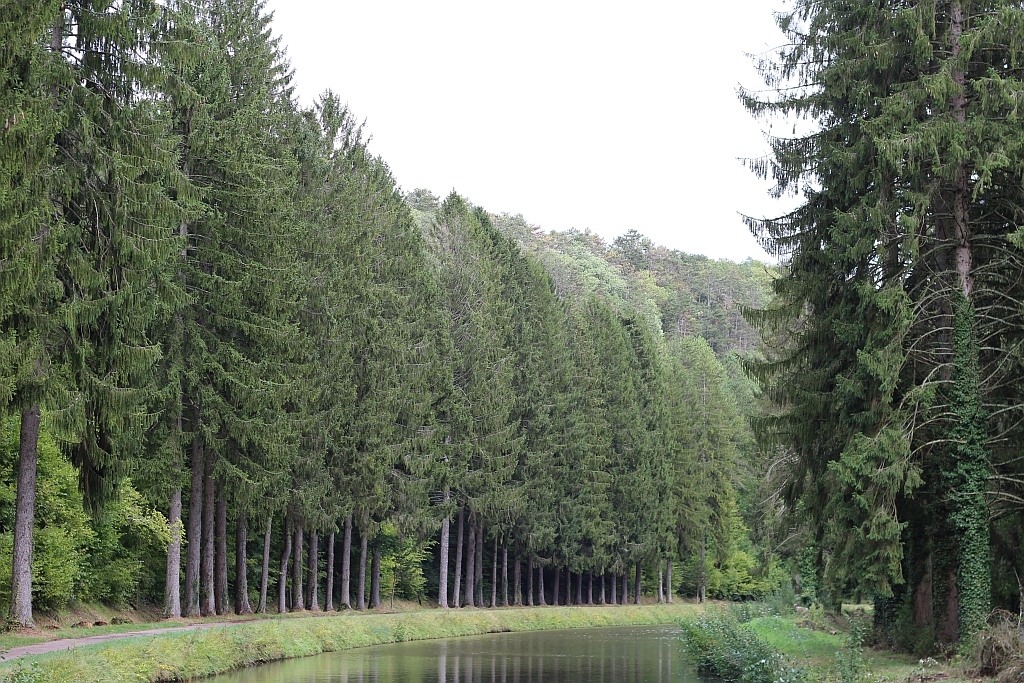
The canal en route to Joinville
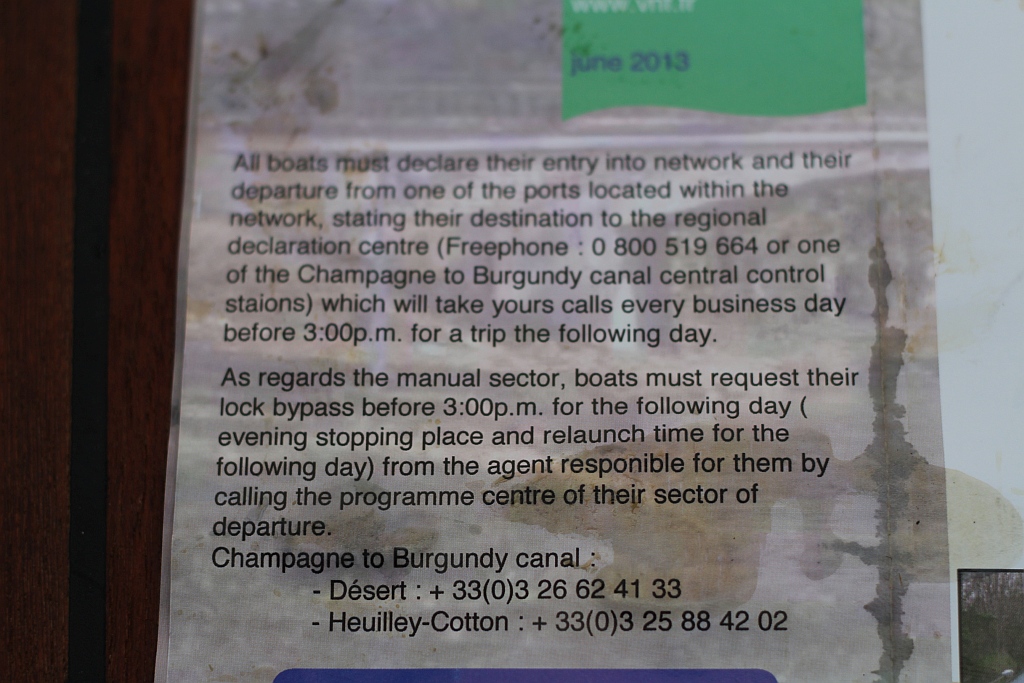
We managed to get the remote control to work. Even if it meant pressing it a few times until we got a green light despite dire warnings never, ever, to do so. Only twice did we encounter no lights at the locks. Both times the lockies were actually doing repairs and had disabled them. These lockies saw us coming and were most helpful. In fact this pair of lockies were fabulous. VNF should clone them. They were furiously greasing hydraulic arms, clearing weed from the waterways and opening bridges for us. The one guy spoke English willingly and they even helped us tie up our boat that night. They also pointed out that we were required to pre-book a lock-keeper to take us through the manual locks the next day – before – 15.00pm. However they would take care of it. We had heard this before. Time would tell.
Joinville
Our stop that night was Viéville. Also shrouded by tall trees and a beautiful and peaceful spot. We had hoped to get a little further but an almighty wind came up and blew our boat all over the place. Rain plus thunder and lightning helped us make the decision to stop. We didn’t want to risk entering or exiting locks in those conditions. Fortunately we had been doing this continuous boating in perfect weather. Not too hot. Nor heavy rain or cold. The weather forecast had predicted rain but we had been lucky to avoid the worst of it which helped us get that little bit further each day to catch up the extra distance we had incurred. Further inland weather changes are not as drastic or as extreme as they are closer to the coast. Which is probably why boating in Champagne and Burgundy is so popular.
Viéville
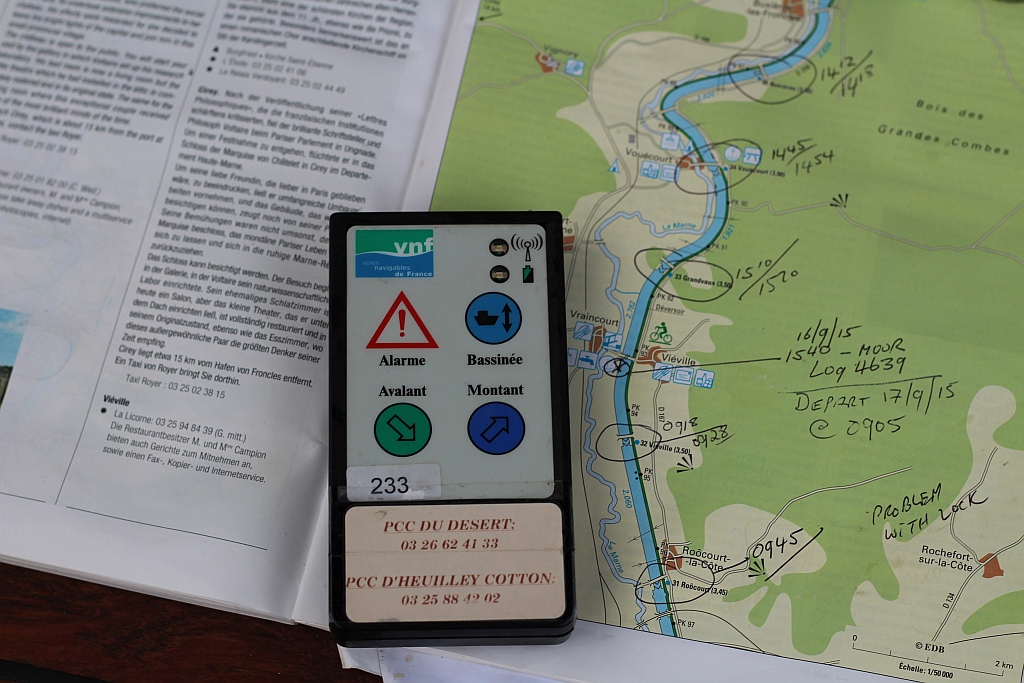
The next day we were full of confidence that we had – at last – got the lock thing mastered. As we entered our second lock, it would not close behind us. Another phone call. Luckily the number to call was stuck with tape onto our remote control. It was also on a leaflet given to us when we received the remote for this section of the canal. To be fair, VNF always send someone to sort out issues. Usually within half an hour. But half an hour here and ten minutes there add up to an hour plus a day. Something we never anticipated. We wondered at times if we were stupid or plain unlucky. Each time we asked other people if they had difficulties with the locks, without exception everyone had experienced some degree of problems.
When the eclusier (lock-keeper) arrived he had more bad news. The wind from the day before had blown a tree down blocking the canal after Lock 28. His suggestion was for us to stop at a pontoon just before Lock 29 and tie up, then phone the control office after lunch. We did as advised and got ready for a walk along the tow path to see this great catastrophe, but also hopefully to find out when we could get moving again. The weather had turned and rain was pouring down. I was glad for a change of clothing. Five metres away from our boat a VNF van passed us and we flagged them down. According to them the canal had been open for some time. We tied up for nothing. One can only conclude these guys don’t speak to each other.
Stuck in a lock
Motoring at a brisk walk or slow jog pace along the canal is mesmerising. I saw faces in the trunks of the trees and clouds. It was early autumn and the tips of the trees were turning golden and rust coloured. Leaves were floating softly to the ground. Blue cranes lurched from just ahead to further ahead as our boat approached them. One wonders why they never fly away. Ducks, a Kingfisher or two and even the odd water rat darted in front of our boat. Yes, our fate was in the hands of VNF and their locks but at this point they were our only worries. Without Internet we had no idea what was going on with our families and in the world. The banking system could have collapsed or a third world war could have broken out and we would be blissfully unaware.
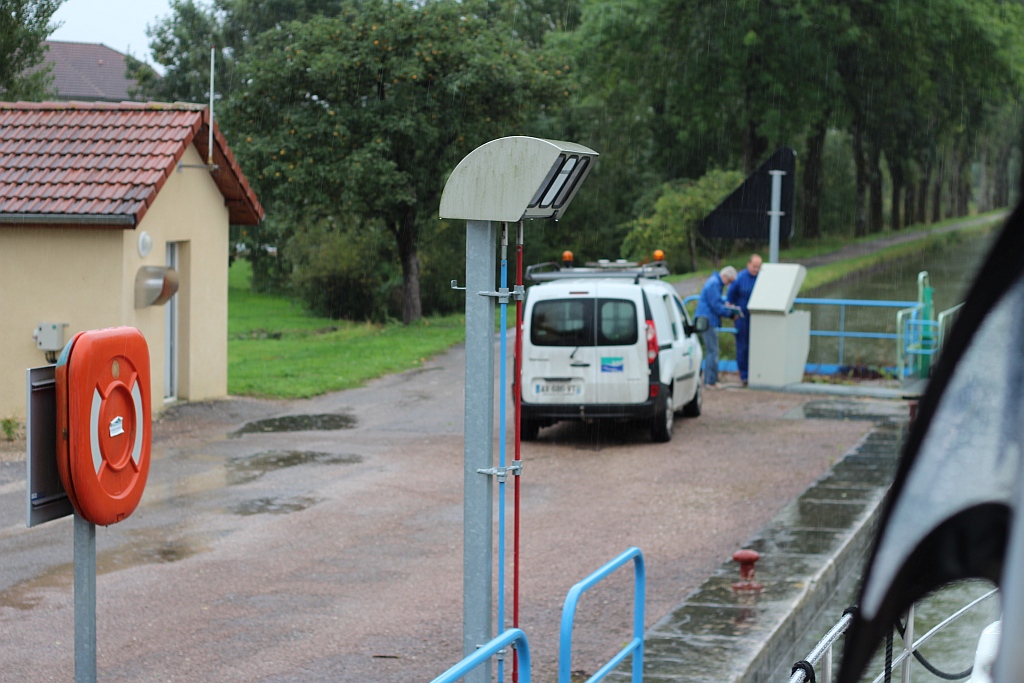
VNF trying to fix the lock
Our boat passed sleepy little villages and old lock-keeper houses. Some empty and lonely. Some were homes. I have no idea if the occupied lock houses are for VNF staff or are sold off to gain income. We noticed quite a few quirky ones. There is a tendency to place pots or wheel barrows or old ploughs over the front and fill them with bright coloured plants. Garden ornaments are another popular feature at these houses. One had a plethora of gnomes but just two of them were flashing their private parts. Another home was a shrine to the French star Johnny Hallyday. A giant cut-out of him loomed in the upper window and he was painted on the wall at the front of the house.
From Pargny-sur-Saulx we did another 21 kilometres plus 8 locks and arrived in Vitry-le-Francois at 15.00pm. The region we traveled through is known as the Valley of Seventy referring to the 70 locks descending into the valley. And the seventy ascending up and out the valley. From brochures and travelling through we could see it was a lovely region. There is a green cycle route that follows the canal. I must say the tourism office at Vitry-le-Francois were outstanding. We mentioned we had a key from Bar-le-Duc and they got hold of the regional office for us. They paid us back our deposit and we returned the key to them. We knew we needed extra fenders with all the bouncing in the locks and they located a boating shop who were happy to drive out to meet us on the waterways with fenders. They also gave us a weather report. Kudos to them. We did a quick walkabout in Vitry-le-Francois and resolved to get going the next day for Saint Dizier before the rain set in.
When we arrived back at the marina we noticed a noise coming from our boat. And could see water pumping out the bilge. Instant panic! We turned off the water pump and opened up the decks to hear water dripping and saw the hull was full of water. Have I mentioned how lucky I am that my husband is a handy guy? He checked the water tanks. Empty. He took off his shoes and as he stepped onto the carpet in the bedroom he noticed it was waterlogged. That gave him a clue. He checked the shower and it turned out a pipe to the basin had slipped off. The water pump reads that situation as an open tap and pumped 750 litres – our entire water supply – through that pipe. The water had run all over the cupboards, spilled out the bathroom and into the carpet in the bedroom.
Vitry-le-Francois
Luckily we have a boat full of tools and spares. And someone who knows what to do. My other half re-fitted the hose and clamped it back on. He checked all the other hoses. And added that to our growing list of things to ultimately have replaced. We lifted the carpet, placed it on the back deck and mopped up the water. Fortunately we had access to unlimited water and were able to fill our tank. At a wild stop this would have been a disaster situation.
The next day was another full day with 30 kilometres and 14 locks. Except we were ascending again. More deep locks. I walked between the locks if they were close together but would jump off the boat just before the lock if they were too far apart. Naturally the remote failed a few times. The itinerant lockie exchanged it for us. And the lights didn’t work at one of the locks. But by now we were getting used to things not working. We were also travelling with a carpet draped over the front of our boat which might have appeared unusual.
Waiting for a big barge to squeeze through a lock
We arrived in Saint Dizier at 17.00pm on a Sunday evening. Not a lot we could do at that time except have a quick walkabout, then back to the boat for a shower and a glass or three of wine. The approach to Saint Dizier is industrial and not particularly appealing. The first mooring point is next to derelict buildings and the second mooring point is a mass of concrete opposite a huge big empty looking place called Centre Nautique. There are electrical and water points at the second stop but they require tokens. We spoke to a French couple tied up there and they had no idea how or where to purchase these tokens. If locals couldn’t figure it out what chance did we have? So we resolved to stay put next to a glass recycling point. Cars drove up and flung bottles into this thing all night long. My other half had business to take care of the next day which required wi-fi. We would have to find a wifi cafe or some way to get Internet.
Our next day was a much needed slow start. I got on top of clearing and labeling my photos, caught up on this diary and cleaning. My husband spent the day sorting out a bunch of issues via e-mail and on the phone. He was back and forth from the Tourist Office so he could have access to wi-fi. I should have tried to see Saint Dizier but it was raining and I had no desire to. It’s amazing how a mooring spot can affect a person’s feelings about a place.
St Dizier
One thing we could have used is an honest and truthful account of which places to stop and which to avoid. I found a book called Barging into Burgundy by Gerald Morgan-Grenville in amongst a stash inherited from my husband’s cousin lurking in a cupboard on our boat. It was printed in 1975 yet it’s surprisingly apt in many respects. He describes Saint Dizier thus – “Soon we were entering the vastly unattractive industrial complex of St Dizier and from here to Vitry the canal runs straight, through plain scenery without distractions.” So maybe it wasn’t just me. The French waterways guides paint every place in a perfect light. But I think it unwise to tempt people to the less attractive places. Those become memories and associations.
Truthfully, the trip from Void to Saint Dizier wasn’t the most exciting. Morgan-Grenville wasn’t impressed the upcoming part of our trip either. He says of Chaumont – “The town has been badly damaged and is not worth a visit.” His main beef was two airfields nearby and supersonic planes flying so low that apparently windows shattered. We heard those planes a few times and had planned an extra night there but after reading that decided to give Chaumont a miss.
St Dizier
I’m reluctant to be unkind about a place because people live there. There is beauty in everything if you look deeper. On the way into Saint Dizier at one of the lock houses a super friendly guy was bragging about the wonders of this region. About MIKO ice cream and local Champagne. I barely understood him but he believed Saint Dizier was too wonderful. To be fair once we left Saint Dizier, the area on the other side of the marina heading south was much nicer. And the scenery only got more and more beautiful. Not far from Saint Dizier was a gorgeous little stopping place called Chamouilley. By the time we got to our next stop Joinville we were feeling a whole lot better about our holiday.
And . . . we realised that the trick to getting the remote control to work, was to ignore the VNF sign telling us when to push the button. This section of the canal the receiver was inside the lock and the closer we got to the lock the greater the chance it would work.
We tied up that afternoon in a place called Ligny-en-Barrois. There was a petrol station right next to the marina. It would have been ideal to top up our fuel canisters but we were too scared to carry any diesel on our boat given the circumstances of the past week. It was a nice enough town but we had no time to explore as we needed to locate a supermarket before the shops closed. There was a Carrefour just over 1 kilometre out of town. And a Brico store which is what they call a hardware shop in France. We took a walk with our wheelie shopper bag.
Ligny-en-Barrois had Internet if you sat right outside the toilets. And it had clean facilities. The shower allowed 10 seconds of luke-warm water. I had to wash my hair with one hand so I could keep the other hand free to push the water button. My other half and I met a lovely Australian couple also trying to get wifi outside the toilets. Their boat was similar to ours, a Dutch steel motor cruiser which they bought around the same time as us. They had done all their boating in France and were heading toward the Netherlands. The opposite to what we had done. We got some really useful tips from them. One thing I wanted to see was what they did with their radar arch. The maximum height on the French waterways is 3.50 metres – with the odd exception. We had to drop our radar arch every morning and it was not only taking up space on the back deck but we kept knocking our heads. Not an ideal situation when dealing with ropes in locks every 500 metres. It’s always nice to meet fellow English speakers and share experiences.
Ligny-en-Barrois
Our next day was much easier with only 16 locks and 15 kilometres. While it’s easier to set your ropes locking down, the water levels inside those locks was so high that our boat fenders kept finding their way onto the quay and were not protecting our boat. Also the bollards to tie the boat up were so small our ropes kept popping off. They put the bollards at weird intervals so we were either almost at the front of the lock, not close enough to the pole to activate the automated locking process or our ropes weren’t long enough to tie up at both ends. But after what we had been through that was plain sailing. Never-the-less, pressure to get to our end point in good time was causing us both quite a bit of anxiety.
I was too scared to use the remote control but my husband seemed to have the knack. At one of the locks he pushed the button and the flipping thing wouldn’t work. Again. He tried a few times. Still nothing. We had an action replay of the day before. Me hopping off the boat and walking to the next lock to ask for help. Muddling in French to try and explain. Desperately trying to understand what the call centre said to me.
My other half activating the lock
They managed to open the lock from a control centre. Fortunately the remote control worked after that. We stopped around 15.00pm at Bar-le-Duc and planned to take a much needed day out. The marina was right next to a motor-home facility. They seem to do that in Europe – put all the travelers and happy campers together in one place. A lady pitched up at 18.45 to 19.45pm at the office next to the marina. My husband paid for our two nights, plus a R20 deposit for a key to the facilities and got his receipt to display in the window.
Bar-leDuc
Bar-le-Duc had an old city and a new city. We found a walking guide in English at the marina and went to explore the lovely old medieval section of the town. We also had a meal at a Middle Eastern type cafe. Nothing sexy, a plate of chips and a salad sandwich. With sauce. Plus a pichet (carafe) of red wine. It was nice to do something different. The covered food market was a bit of a let down. A huge hall with only four vendors. However right opposite was a fabulous organic food shop called Bio Clair. Oh. My. Word. Lots and lots of fantastic food options for us. All the things we couldn’t find in any of the supermarkets were available and then still more options.
Meal out in Bar-le-Duc
The predicament we found ourselves in was because we had to add extra distance to our planned trip as a result of the Canal des Vosges closing and us finding out far too late. We had to to do quite a bit of back-tracking to get to an alternate route. It was partly our own fault. No-one was surprised the canal was closed. Apparently canals in France flood or don’t have enough water and close often. It would have been nice if the lock-keepers had asked us our route and offered advice but it would seem in France it is incumbent on a traveller to foresee any potential problems. The canals in France are divided up into priority canals and non-priority canals. France is big country with 8 000 kilometres of waterways and major waterways take priority over smaller ones. These little under-used canals do not get sufficient attention. Understandably. We would have to be better informed in future travels.
Bar-le-Duc
It was also apparent that very few if any people working on the waterways could or would speak English. We would have to improve our French. You would think in this day and age VNF would have something in place to allow for waterways travellers who don’t speak French to receive assistance? Particularly given the frequency a person experiences some kind of glitch passing through the locks?
We made a point of asking fellow travellers if they had problems with the locks. Our experiences were by no means unique. I remembered the words of the Australian guy we met with his Dutch wife returning after spending a few years in France. He commented that things are a lot cheaper in France. But nothing works. Certainly not a day had passed for us without at least one problem with either the telecommand (remote control), the locks or the lock-keepers on the waterways. All this added unexpected time delays to our trip. One other thing we had to do was allow a LOT more time for our trips.
Leaving Bar-le-Duc
The next day we wanted to get to Pargny-sur-Saulx. It was yet another long day so we got ready nice and early. My other half went to return the key at Bar-le-Duc. And collect his refund. The office was supposed to open from 8.30am to 9.30am. By 9.15am we gave up waiting for anyone to arrive and left with the key, leaving a note on the door with our mobile number. No-one bothered to call.
The male lockie helped us with our ropes as the locks are deep. You can’t see the bollards from down below inside the lock. Fortunately the other boat had solved his problem and there was no diesel in the water. We went through two more locks with the Belgians.
At the next lock things went pear shaped. We didn’t have much space at the back of lock. We thought the lady lock-keeper would help us but she stood watching us battling to reach our ropes up 4 metres without lifting a finger. My husband left the engine and came to help me get my ropes around the bollard and next thing our boat drifted and bashed into the Belgians. Fortunately it wasn’t anything serious but the lady lockie chose that precise moment to tell us our boat was leaking diesel. There were two bystanders helping her translate for us. No-one could see it but she insisted. The Belgians asked me what was going on so I explained. They got off their boat came over and a big fat conversation went on between them, the lock-keeper and the bystanders most of which we didn’t understand. And then they all agreed there wasn’t diesel in the water. There were traces of old oil but nothing serious. She opened the lock and we went on our way.
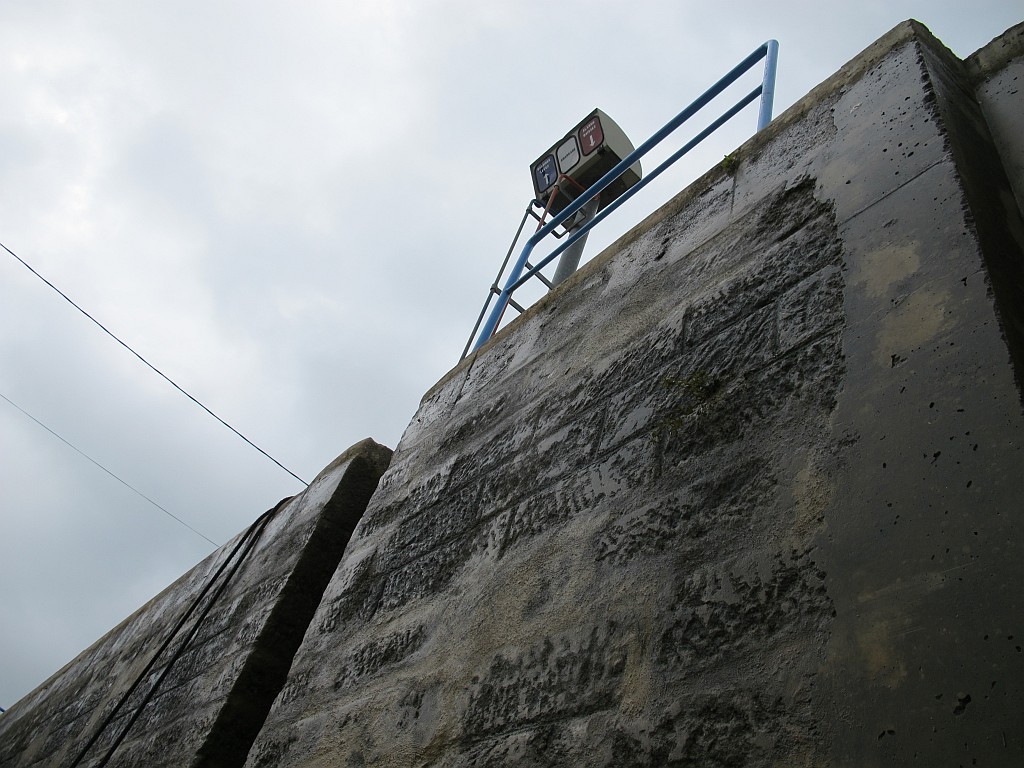
Looking up from inside a deep lock
We did a few locks with the Belgians and then they stopped for lunch. We made a point of carrying on to the next stopping place so we could continue our journey without them. There was no doubt about it the lock-keepers were keeping an eye on us and it was making us decidedly uncomfortable. The map had a stopping point in a tiny little place called Void which turned out to be right next the local VNF offices. After tying up we walked to the first lock so we could get a sense of what to expect and hopefully read any notices they put up next to the locks. These notices have vital information like – the closure of Canal des Vosges – but in normal sized font on an A4 sheet of paper – and in French. But even that would be OK if we had time to read them. The automated locks allow you three minutes to exit before closing so reading them is actually not possible.
VNF van
While we were at the lock, a lock-keeper arrived and luckily we managed to converse in Fren-glish with a few gestures thrown in. He answered all our questions and our journey through the next day’s locks, the returning of the VNF remote control (telecommand) and our passage through the 5 kilometre long Mauvages tunnel was arranged.
When we got back from our walk to the lock, who should be parked right next to our boat? The Belgians. I feel so bad to say this but they were the very last people we wanted to see. We considered moving but decided to stay put and deal with whatever the day presented. We also decided that I would go for a run on the tow path with our boat-hook so I could help with the ropes at each of the 12 locks in the chain.
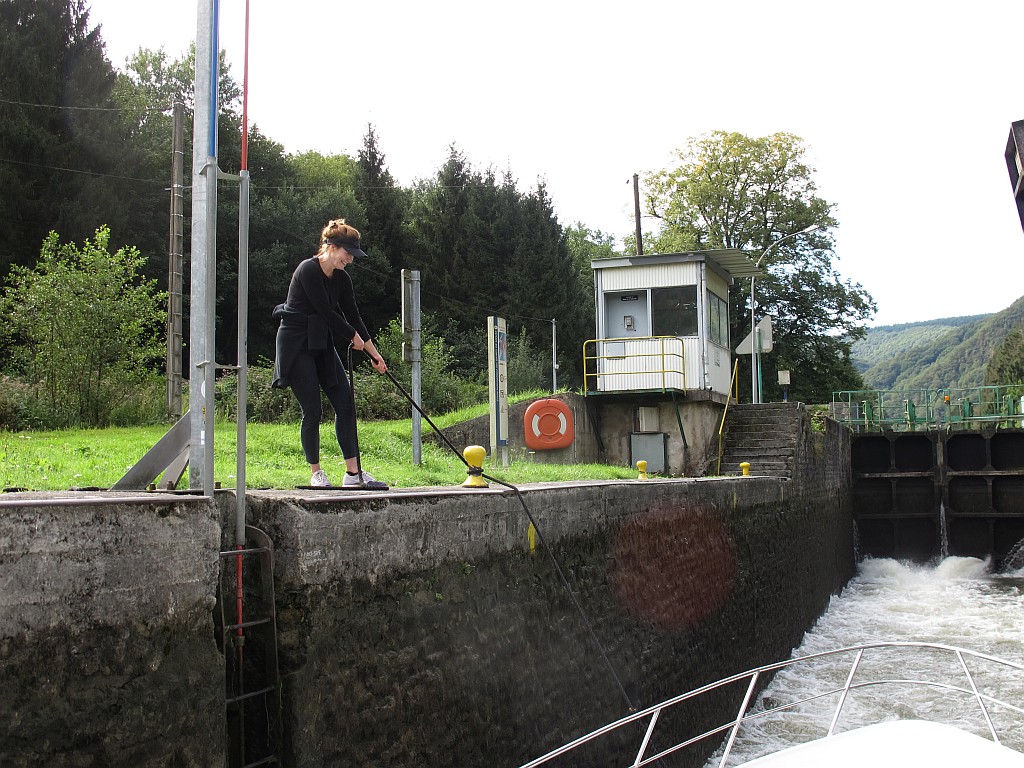
Helping hold the boat from the side
Another early start the next morning but this time I was in my running gear on the tow path. The lock-keeper was at the first lock only. He showed me how he likes to do ropes. I got some handy tips. We gave back our remote control and he predicted we would get to the tunnel before 13.00pm. We soon developed a little routine. I would help us and the Belgians tie up and then activate the lock. Once the lock gates opened I would jog 500 metres to the meet the boats at the next lock. I got in a 10 kilometre run that day. We got to the tunnel in good time and after a short wait were able to go through. The Mauvages tunnel allows passage at fixed times each way. The guide book says they tow the boats through the tunnel but we were allowed to go through on our own steam. A lock-keeper cycled on the tow path next to the boats. It takes an hour to get through the tunnel. My word it’s cold in there. Quite an experience.
It had been a good few days of hard boating and lock upon lock so we stopped at the first stopping place just past the tunnel. Another really small place called Demange-Aux-Eaux. We didn’t even try to explore it but I don’t expect we would have found much. It was a tranquil spot. We like those.
Inside the Mauvages Tunnel
The following day was yet another day of boating and ceaseless locks but we had to push ahead so we could make sure we got to St-Jean-de-Losne. Fortunately we were locking down. A lock-keeper met us at one of the locks and gave us a new remote control for the next batch of locks. I was the first one to push the button on the remote control. My first attempt – nothing happened. I tried again and still nothing. I was convinced I had caused the lock to shut down. We tried to pull the boat to the side of the canal so I could walk to the next lock and hopefully ask for help. The water level was so low that we ran aground before we could get close enough for me to jump off. Out came the gang plank and I managed to get off the boat with our French-English phrase book and my reading glasses. I left my husband to get the boat unstuck which thankfully he managed to do.
There was an intercom. Good start. Naturally no-one speaks English so I did my best to explain the problem. The lock-keeper who gave us the remote arrived in his lock mobile while I was walking back along the tow path. I jumped into his van and my met husband with the boat at the following lock. The lock-keeper opened the lock just like that. He said he would take us through the next lock to see what the problem was. If the remote was faulty, he would exchange it. This lockie was a hellava nice guy. Talkative too. Problem was I didn’t know what we was saying. We passed the French-English phrase book back and forth.
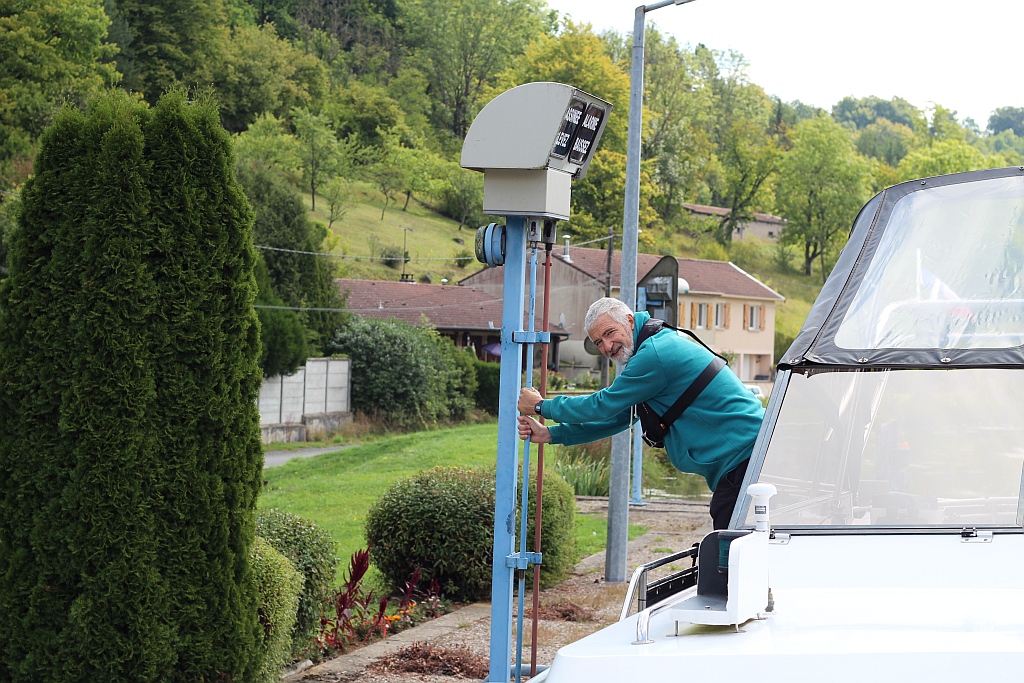
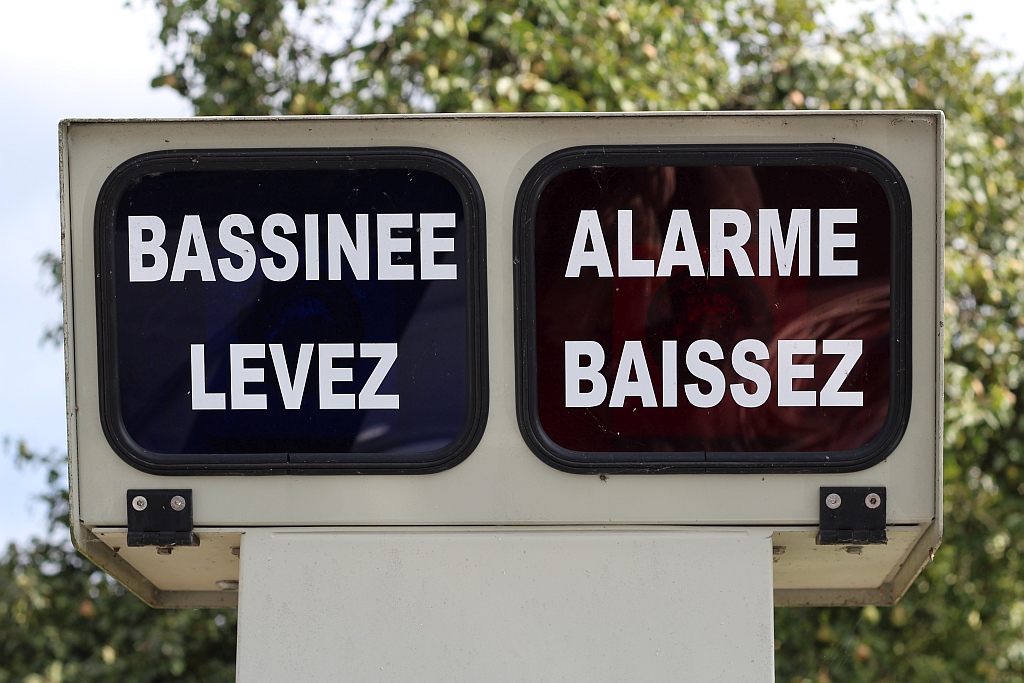
Raising or lowering lights at the lock
Of course everything went perfectly with the remote control and we felt like complete idiots. The lockie explained that we must be the right distance from the activator. And we must point the remote toward the receiver. I suspected we had tried to get too close and gone past the point where the signal would be recieved.
My husband shared our respective travel plans with the German couple. They asked which way we were going to St Jean-de Losne. Then asked if we knew that Canal des Vosges was closed. No we did not know that Canal des Vosges was closed! That was part of our intended route. I’ve mentioned how hot it’s been a few times. There was insufficient water so that canal was simply closed and we had no idea this had happened. Our travel route went up in smoke at that moment. Just like that! My other half is British. He’s welcome to stay in the EU as long as he likes. I hold a South African passport and am only allowed 90 days in the Schengen countries. Our travel plans would use about 87 days. This was already a tight trip and the very last thing I needed was to be stranded on the waterways. My husband could manage the boat on his own with great difficulty. But not with a dislocated finger.
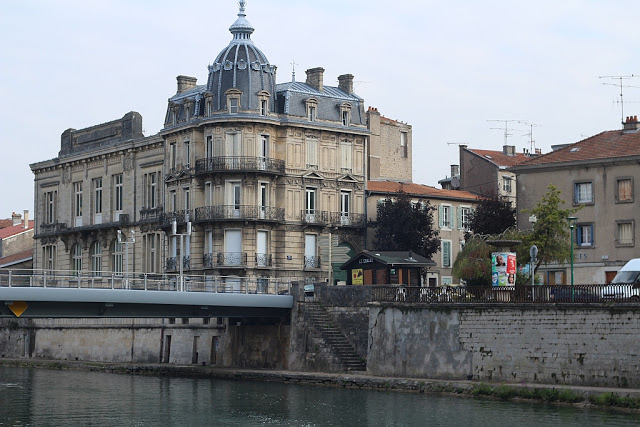
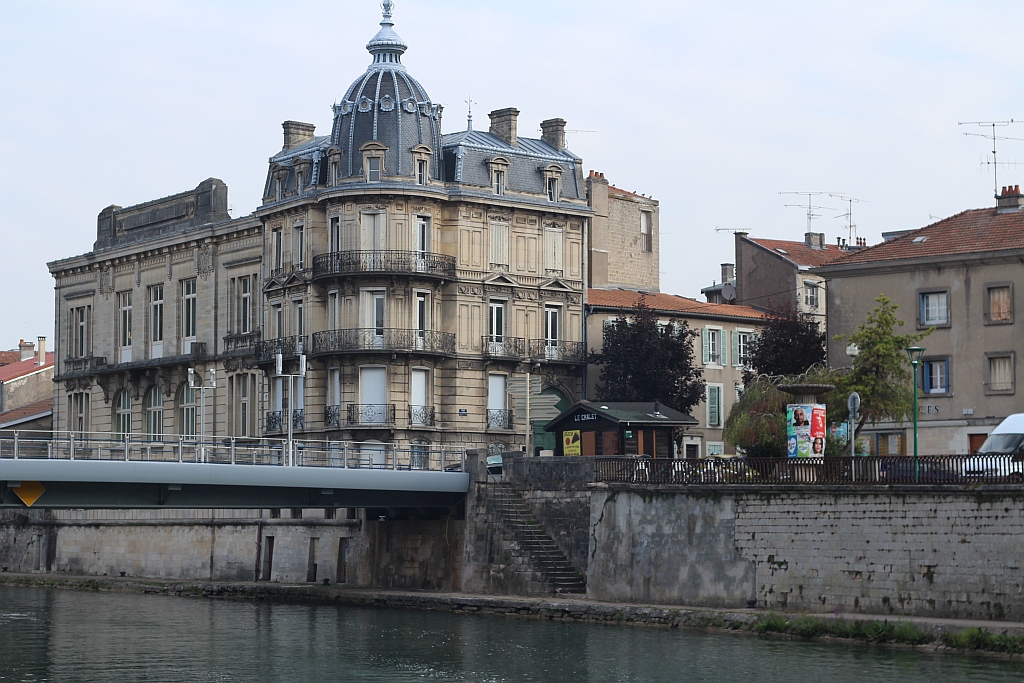
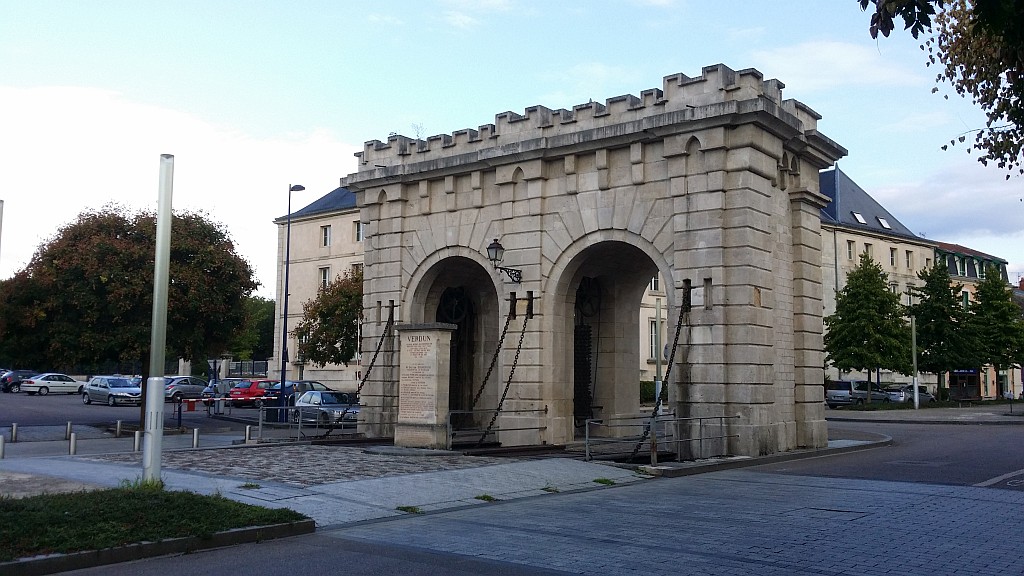
Verdun
There must be websites and apps with all this kind of information but we had yet to discover them. That evening we took a look at the various maps and considered our options. Our intention was ask as much as we could from various lock-keepers and fellow cruisers as it was unlikely we would have Internet anytime soon. An alternate route at this late stage would add considerable extra days onto our trip. One thing we knew for sure is we were going to have to put in as much motoring as we could.
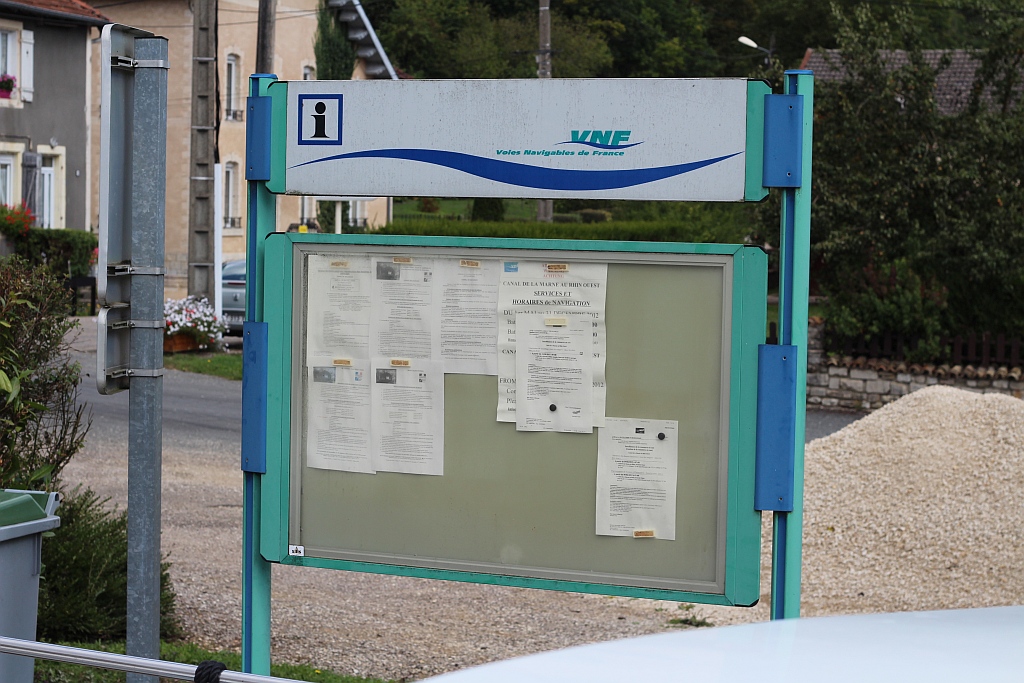
Rather important notices about closures that we missed
The next morning we left Verdun along with another boat and waited outside the first lock. The lockie was a friendly chap and confirmed that yes, Canal des Vosges was definitely closed. We waved goodbye and a new lock-keeper greeted us at the next lock. He kept gazing into the water and we wondered if there was weed or something lurking there. As we were leaving the lock he shouted after us pointing into the water saying “Huile” (Oil). Our immediate thought was that we were in trouble. Shangri La is over 20 years old and although she comes out the water every year and her engine gets a full service, we have no idea when she last had an overhaul.
En route to St Mihiel
Small confession, she does smoke a bit first thing in the morning. We’ve been led to believe this is normal with engines when they travel at slow speeds and never heat up properly so not been too worried about it. We had been going very, very slowly on the canal. The German couple told us that waterways officials boarded their boat twice in France and once in Belgium this year. The authorities looked over their papers, checked their boat complied to regulations and made sure they had the requisite safety gear.
At the following lock, the lock-keeper was at it again. He was going round and round the lock talking to us in French. He was prattling so fast we had no idea what was going on. Next thing he was on his phone. More hectic conversation. Now that we looked in the water we saw rainbow coloured streaks. You could smell diesel. The guy on the other boat climbed off his boat and came to speak to us. One of the boats had a problem and neither of us could leave. What we didn’t know was how to deal with this. All good and well saying there’s a problem but some solutions would have been helpful. Like maybe locating a mechanic for us? We had no idea what to do on a Saturday morning stuck in a lock 4 kilometres outside of Verdun. In France. No one around us spoke English. Our french was way inadequate.
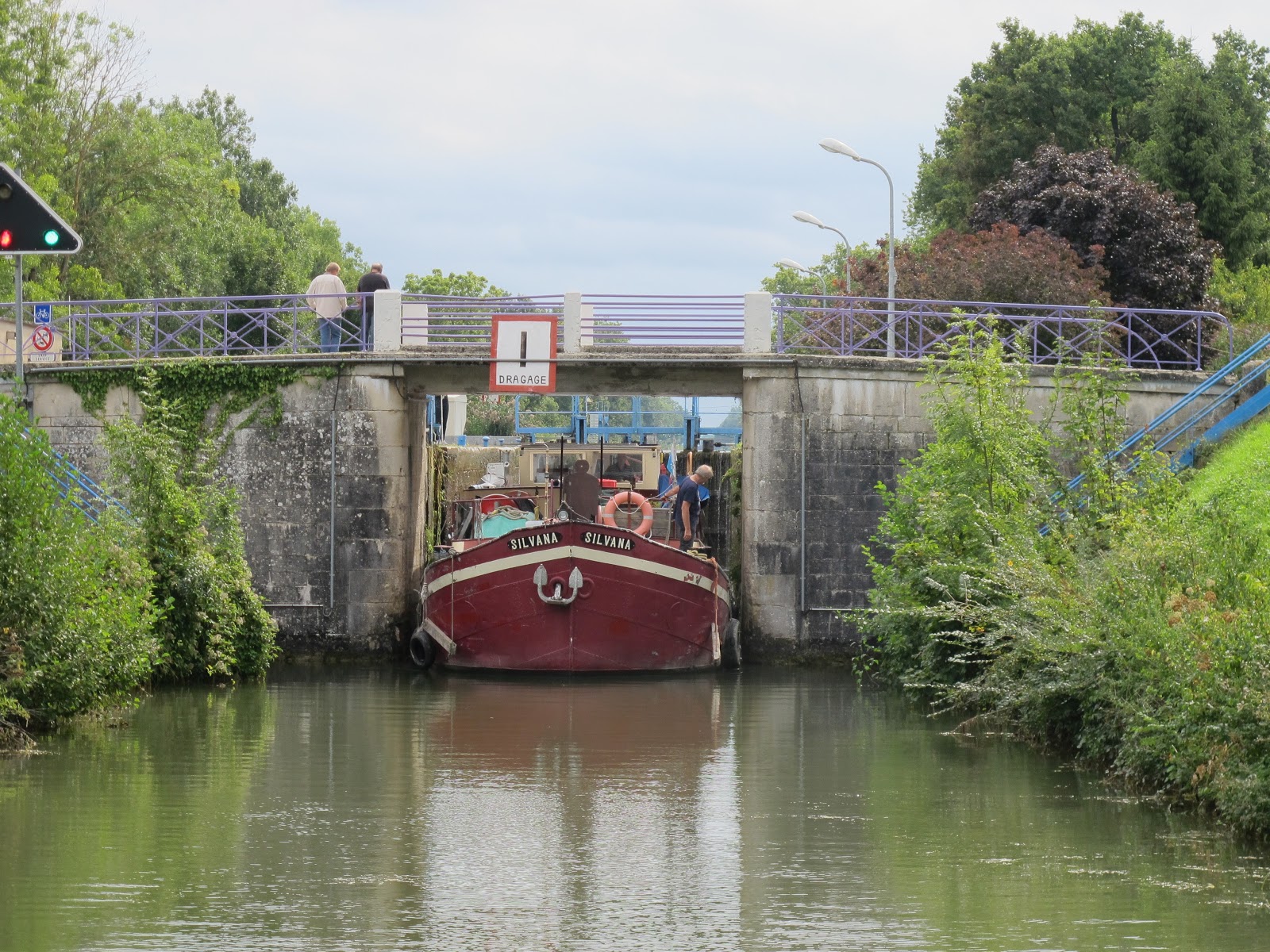
Manual lock
With both engines off my husband and I soon realised it was not oil in the water. It was actually diesel and it wasn’t coming from our boat. The other boat had been running their engine in the lock which was creating turbulence and dispersing the oil back toward our boat. That made it difficult to tell who had the problem. The other boat opened up their engine and were doing all sorts of things including putting dish washing liquid in the hull. We stood watching this not knowing what to do. Eventually both boats were allowed to leave the lock. At the next lock – and last lock with that particular lock-keeper – we specifically asked if he was happy and he said “Tres bien”. What a relief.
St Mihiel
The next five locks we had another lockie help us though. Both of us were making a point of checking Shangri La and no doubt about it, the other boat was spewing out diesel but we weren’t going to say anything. The current lock-keeper wasn’t complaining and the last one had said he was happy so we weren’t worried anymore. As our boat and the other boat came toward St Mihiel where we planned to tie up we saw a VNF (Voies Navigables de France) white van parked on the road next to the waterways. The Belgian couple tied up and the Belgian guy came to help us with our ropes. We had bonded with this couple over the oil spill drama after all. Next thing we saw another VNF van parked at the quay next to St Mihiel and a guy in a VNF outfit on the quay. He went up to the Belgian guy and a conversation ensued. He handed his phone to the Belgian guy and there was more speaking. We feared we may be next on the phone but fortunately not.
St Mihiel
My other half went over to the Belgians to chat. The Belgian guy said his fuel pipe was leaking into the hull and his automatic bilge pump was pumping it out into the water. He had a spare fuel pipe and was about to replace it. Apparently the VNF people had said they would be checking up on him and if it happened again they would report him to the water police. We did not want to share a lock with them again after that.
The following day we let the Belgians go ahead and held back half an hour before we made a start toward the first lock. At the second lock, we saw double red lights – which means the lock is out of action. And parked next to the lock were – the Belgians. As we were about to tie up too, the lights changed and the locks suddenly opened. We had to go in with them. No way out of it. And inside the lock was not one, but two VNF vans. And two VNF lock-keepers. These are supposed to be automatic locks but we suspect VNF were indeed checking up on the situation. To say we were stressed is an understatement.
A person has to request passage via the manual locks