Friday 4th September 2009
After breakfast we checked out and walked to the main train station. Two tickets from Toulouse to Lezignan-Corbiers, came to €38.00 for both of us. We arrived in this sleepy little town and found the only taxi driver at the café next to the station. He was having lunch. Priorities are different in France. He still had two other passengers to drop off before us. They were waiting for him to finish his meal. We decided to eat at the café too.
Canal du Midi
They served us each an enormous baguette with Brie, a coffee and a tea, all for €8.00. The presentation of the tea was a little different – I got a small cup of boiling hot water with a tea bag in it.
The drive to Loca-boat passed through ancient villages and vineyards that were planted way back in Roman times. One got the feeling life has not changed much in these villages. Local villagers sat outside their old stone homes and watched the world go by. A barking dog or a bicycle passing was about as busy as it got.
At Locaboat we had our handover and set off immediately as we needed to buy food and cleaning items. We tied up at the next village, Paraza, and asked some people walking past in our best pidgin French where we could find the local grocery store. They asked if they could speak in English. But of course!
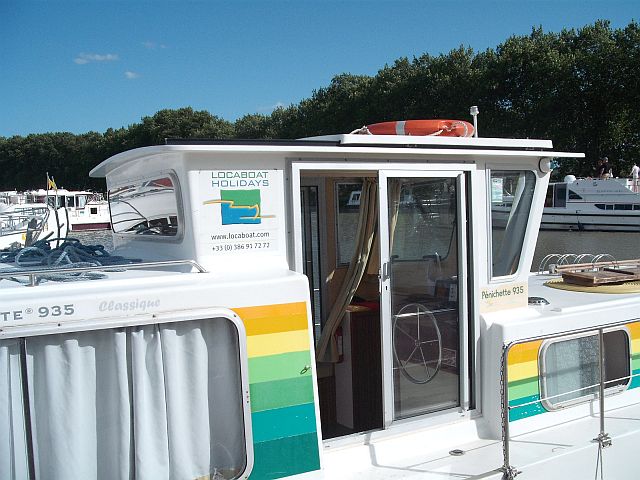
Our Penichette boat
They said it wasn’t much of a store but directed us up the road. We scrambled up a thorny bank and meandered along lanes that twisted and turned until we found the local ‘epicurie’. One has to remember to look out for cars coming on the opposite side of the road in France or one can walk right into a car. We managed to buy the absolute basics and headed back for a quiet night on the canal. Sleeping well is a given in such tranquil surroundings
Saturday 5th September 2009
At the Locaboat mooring
Our plan was to head along the canal to Narbonne, track back, and then head in a different direction to our final destination, which was Negra. We stopped en route at Ventenac d’ Aude hoping to shop. Buying supplies was not as easy as we thought and our attempts to get guidance from locals proved amusing to all. At times it was like playing a game of Charades with a word or two thrown in and plenty of smiles.
We passed Le Somail and decided to brave it and eat at a bar/restaurant type place we saw close to the canal banks. Nice to be able to check out potential places to eat as you cruise the canals. I’m vegetarian and the French don’t get why anyone wouldn’t eat meat. However they served us a divine salad with warm goat cheese on bread, a demi-carafe or ‘pichet’ of wine, a bottle of water, a cheese platter to share with bread, and two coffees or cafes as they call them. Our meal excluding tip was €32.00.
Le Somail
Back at our boat we got going again. Further along the canal we decided to stop at Capestang. Voila! At Capestang we finally found a supermarket. And after a shop-up we promptly found an even nicer supermarket. C’est la vie!
We both went for a short run along the towpath. I stopped and ate wild black berries growing along the banks of the canal. Our mooring for the night was picture book perfect. There was a crowd of riverboats under a bright full moon. We could hear of the strains of other people chatting and cutlery on plates. Meanwhile we tucked into a meal of baguette, cranberries and Brie with a fresh vegetable salad. We both slept soundly.
We flew in to a warm, slightly overcast day in Toulouse, the pink city of France, and the epicentre of aeronautics and aviation. We planned to arrive and leave via Toulouse for our canal boat holiday along the historical Canal du Midi.
The French style of doing things was immediately apparent as we spent our first hour making our way to the hotel. We had done a basic French Speaking course to be on the safe side. We like the Michel Thomas method of learning a language. We did try a language school but forgot all they taught us. With Michel Thomas we were able to at least make ourselves understood and string words together.
Maybe we were lucky, but we found the French helpful and friendly, contrary to expectation. It started at immigration. Border control let you through with a stamp in your passport and skipped the harrowing interrogation some countries find necessary. It’s a much nicer way to start a holiday.
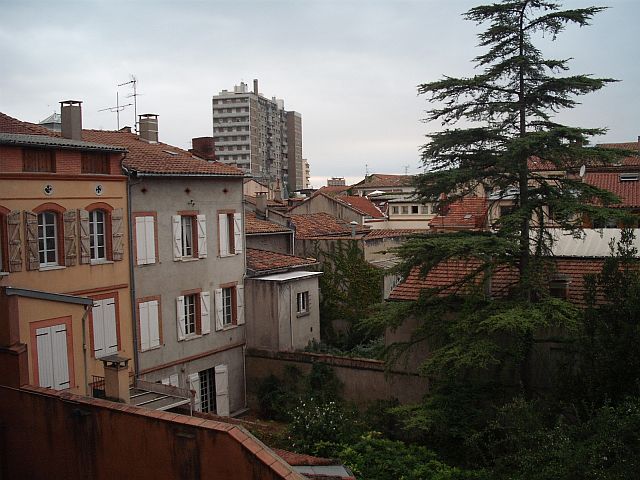
View from hotel room
The airport was clean and their information or ‘accueil’ went beyond what was required to help us. They phoned the Ibis Hotels to find out which one we’d booked into. Who knew there were three? And they gave us plenty information and maps so we could find the shuttle bus, all in perfect English.
At least two people saw us with our map and offered us directions as we walked to our hotel so we eventually hid our map. We were not expecting the French to be so helpful.
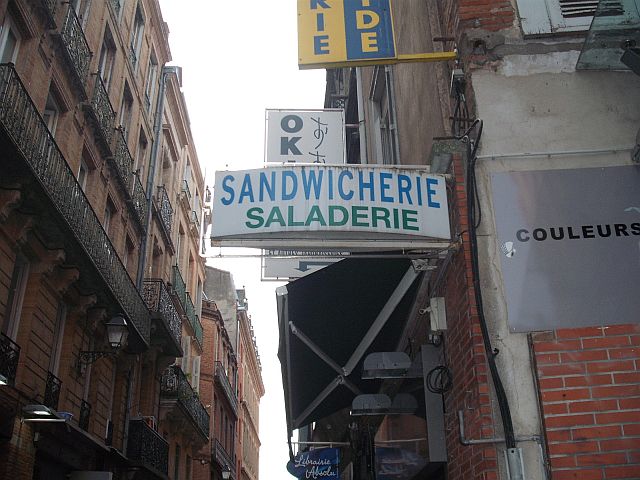
Anglicization going on here
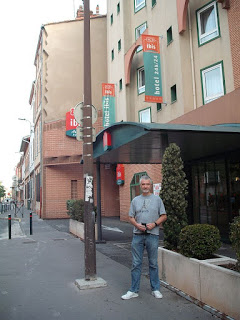
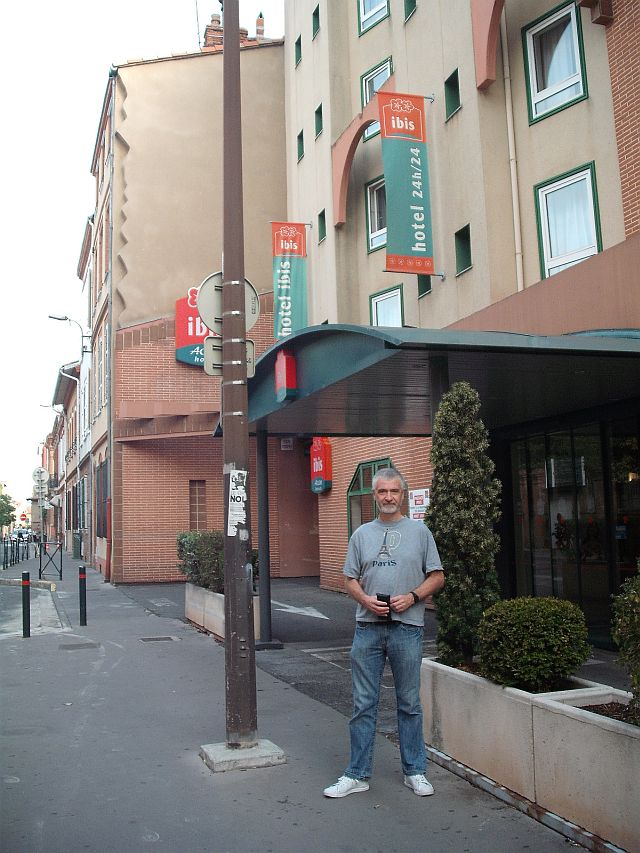
After checking in and showering we popped out for a bite and promptly changed our minds. Toulouse is bigger and so much prettier than we imagined. We bought snacks and went back to our room to furiously read up on Toulouse and what to do. We like Wiki travel for travel information. wikitravel Toulouse
Our rudimentary French was slowly coming back. The complimentary Wi-Fi was great but you sign-on in French. And one has to be able to ask things like, “Can I drink the tap water here?” or “Where is breakfast please?”
We were glad we have made the effort to learn basic French many times.
Wednesday 2nd September 2009
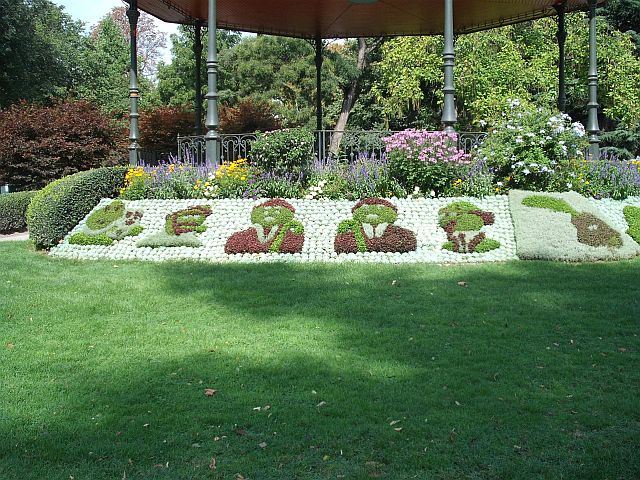
Jardin du Plante
We like Ibis Hotels. Ibis Hotels Booking on-line is easy, and the rooms, although cosy, are always clean and comfortable. We opted to have the hotel French style breakfast at €7.50 each, which was a spread of the usual fruits, cereals, pastries as well as some regional foods such as cheeses, tortilla and good coffee.
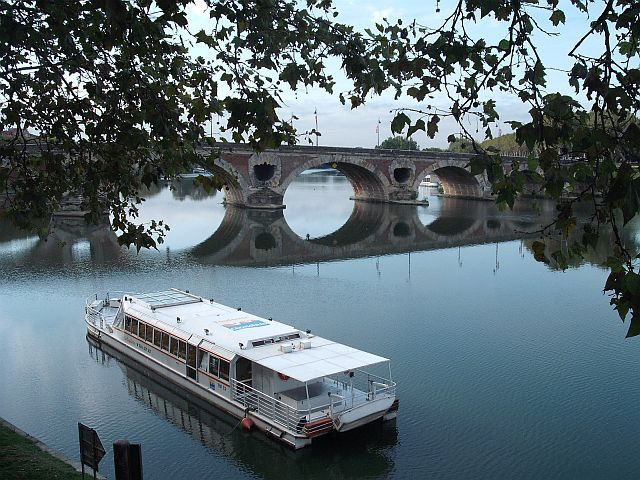
Pont Neuf on the River Garonne
We had two days to explore the city on foot before we collected our boat. Toulouse is the 4th largest city in France. It’s home to Airbus, the aeroplane manufacturers, and has the 2nd highest number of universities in France. The modern energy contrasts sharply with the old architecture of the city. We strolled through cobbled walkways passing by cafes and buildings with typical Mediterranean architecture, terracotta roofs and shutters on the windows.
Then we went to the city gardens, which had fountains, sculptures and plants grown to resemble faces and objects. We ambled along the Garonne River and the Canal du Midi, which was built in the 1600’s, and was a vital link between the Atlantic Ocean and the Mediterranean Sea.
At lunchtime we remembered the superstores in France often have cafeterias, which offer local cuisine at excellent prices. We found Monoprix, a block away, and we each had a plate of assorted fresh salads from the buffet, boiled eggs, a small carafe of red wine to share and two carafes of water.
Not bad for €10.00?
Streets of Toulouse
The French style of eating is right up our street. They utilise lots of fresh vegetables. Fruits and salads are common components of a meal. Plain tap water and a small glass of wine usually accompany food. They take their time to enjoy lunch, which is from 12.00 to 14.00. Everything comes to a complete halt lunchtime in France, as people head home, baguettes in hand, to enjoy their midday meal.
That said that, we avoided the pricey French Bistros and Brassieres. The challenge of deciphering what we could receive on our plate, as well as the prices, kept us on the streets where we found great food. We regularly ate at Lebanese cafés where a huge combination mezze and salad platter would cost around €8.00 each, and a large carafe of wine to share (500 ml) was about €4.00.
We ended the evening with a stroll along the Garonne River, which came alive at night with students engaged in various activities along the banks.
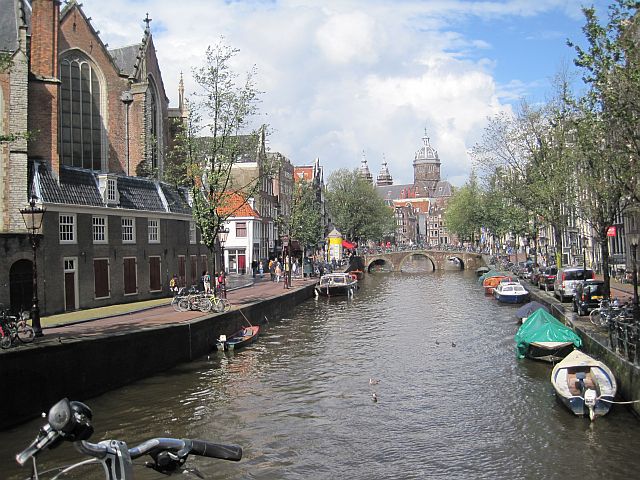
After our boating trip we spent a long weekend in Amsterdam. There are gazillions of must-sees and you can’t possibly see them all. We narrowed it down to the things that make Holland unique.
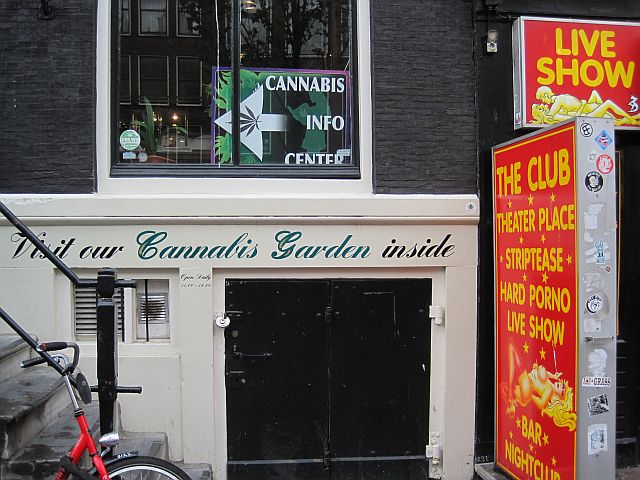
Our pick was a canal cruise, the Cannabis College and the Marijuana Museum.
We also did the Sex Museum and the Erotic Museum. We’re not likely to see museums like that anywhere else in the world so we decided to see them while we were in Amsterdam.
Were they all that? It was interesting to learn just how many uses cannabis has, apart from getting stoned, and they showed us some of the different ways it can be taken. Same with the sex museums. People are turned on by really strange stuff and you get to see it. Not for the prudish. You are warned before you go into a room where there is graphic and disturbing material. But they mainly have exibits of erotica going back eons and from all civilisations.
What it is really wierd though, is to walk the streets and smell the aroma of weed coming from the various coffee shops. My head knows that it’s an illegal substance, so it’s quite a head twist watching people smoking in public without fear of breaking the law. The distinct smell of cannabis pervades the city.
Add that to the constant clanging of the trams moving swiftly past and you could close your eyes and know you are in Amsterdam.
The Grasshopper Coffee Shop
We walked about and took in as many of the recommended sights and areas.
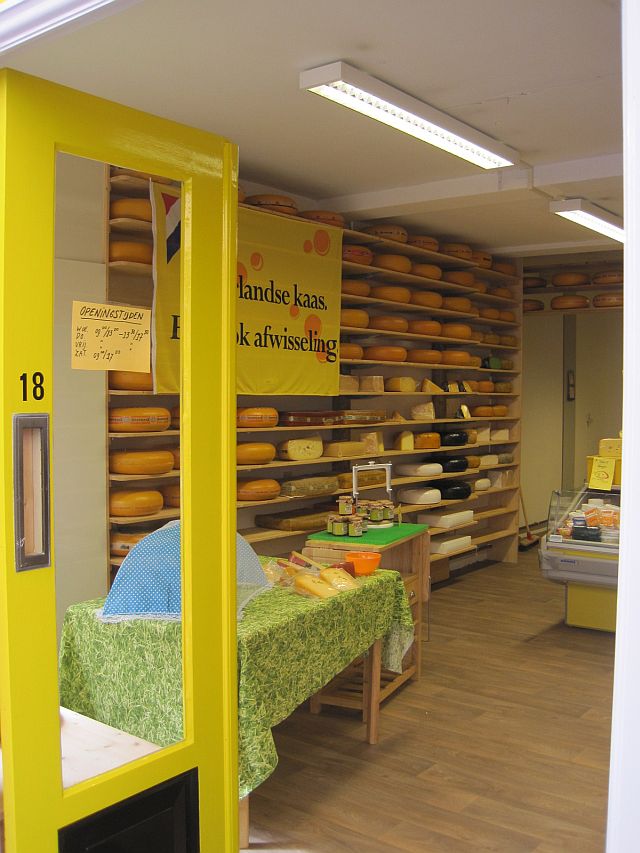
Cheese tasting and shop
We also enjoyed just being in the city and strolling the streets observing the goings on. If we passed a cheese tasting shop, then we would pop in, or have a coffee at a cafe and watch the world go by. Our obsevations were that the biggest customers of the coffee shops and the ladies in the red light district are NOT Dutch.
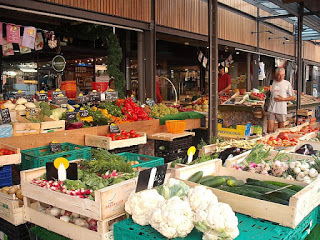
We found markets all over Holland. They seem to be in different towns on different days. The food stalls allow tastings and put out morsels for you to try. Be warned – you will end up buying – and eating – a lot of food. We consumed our body weight in cheeses, cookies and Belgian beers.
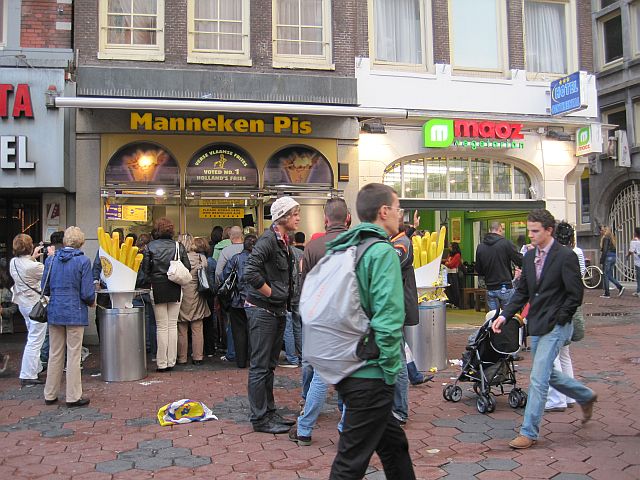
Dutch frites or a Maoz falafel for lunch???
My favourites were Speculaas cookies and Dutch apple pie. The beers are served in brandy style glasses with the name of the beer on the glass at local watering holes. Our favourite beers were Leffe and Grimsberg. These two have a sweeter, almost nutty flavour and aren’t fizzy like most lagers. One warning – they pack nearly double the alcohol content of other beers.
We tried a cheese and apple pancake at one of the pancake bars. Not a combo I would have thought of, I have to say, but nice all the same. Dutch liquorice is highly addictive. I managed to wolf down a half kilo bag in two days. It comes sweet, mint, honey or salty. I got a mixed variety bag and I can report – they are all good.
Since I don’t eat meat, the best value for money, and the best food for vegetarians, came from Maoz. They let you go back to the salad bar as much as you want to top up.
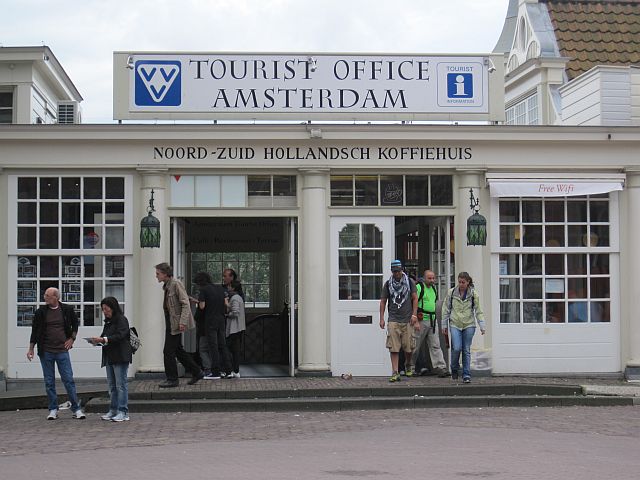
Tourism office or VVV
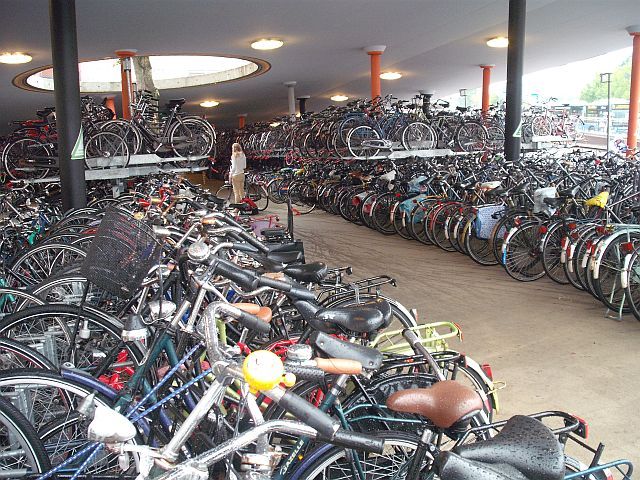
We had fun looking out for quirky boat names and even quirkier cyclists. There really, really are a lot of bicycles in Holland. I was surprised to learn they have right of way on roads. They also don’t wear helmets. Kids grow up riding bicycles so riding a bicycle is like breathing to the Dutch.
They manage to do all sorts of things whilst cycling. Like; chat on a phone, apply lipstick, carry babies on their backs, hold an umbrella. Pedalling in the highest of heels doesn’t seem to present a problem.
You have to keep your wits about you crossing a road as bicycles hurtle past in all directions. Amsterdam is not a pedestrian friendly city.
The Dutch tourism offices do not have an “i” sign, but rather a triangle shaped VVV board. It stands for Voor Vremdelingen Verkeer and is pronounced “fear, fear, fear”. The VVV offices are not always free standing. They pop up in museums and even in a sports shop in one town.
The ubiquitous trams
Many shops close on Mondays for some reason in Holland. Even in Amsterdam. Once we realised this we made sure we did our visits and shopping between Tuesdays to Saturdays.
Here are a couple of handy links for visiting Holland –
Holland Tourism
Visit Holland
Timeout Amsterdam
Lonely Planet Amsterdam
View fro Ibis Hotel Stopera
For accommodation we used Housetrip and bagged ourselves an fully furnished apartment right in the central city area. You could also try Wimdu or Airbnb.
The wonderful thing about the open, warm Dutch personalities is you can ask them for directions without fear of offending them. You are likely to be rewarded with enthusiatic help and friendly conversation.
It’s a great city and a lot more than just sex and drugs. Just rememmber to pack a rain proof jacket. It rained every day we were in Holland. Especially in Amsterdam. In Amsterdam, it must have rained ten times a day.
I am going to dispense a little bit of advice to wannabe boaters. Not that I am an expert, but I have done a few boat trips now.
1. One week is never enough. You hardly get going, and before you know it, you have to return the boat. You also lose a day as you don’t get seven full days and nights. A fortnight is best.
2. Most canals boat holidays don’t require boating experience but it does help. Manoeuvring a boat in tides and wind is not easily done. For a sailing holiday, consider doing a boating course. You can do a 6 – 8 week competent crew course which will give you the basics.
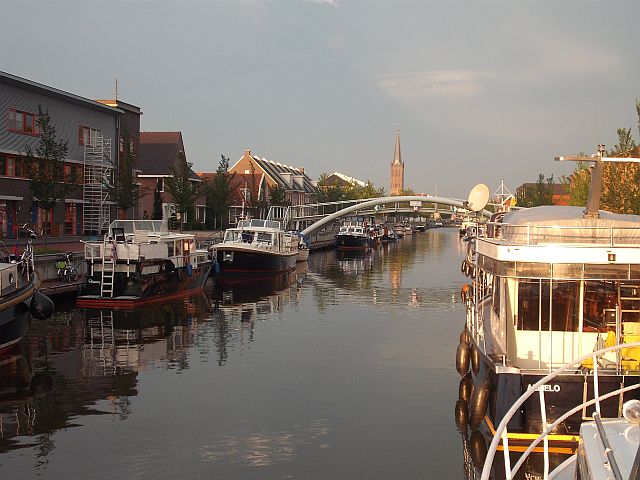
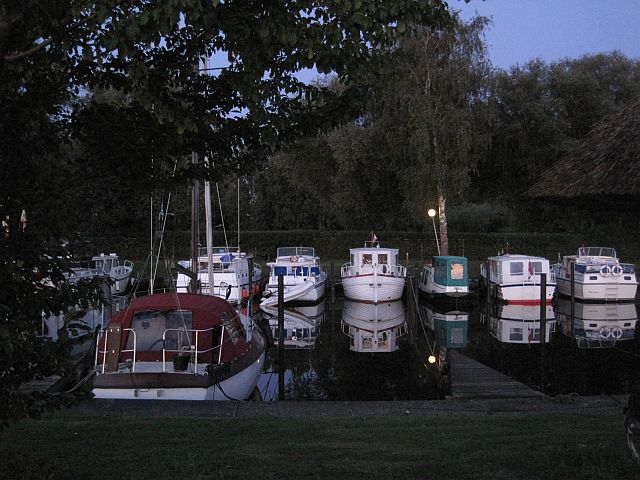
Mooring in Steenwijk
3. For the person handling the boat, you need to know that a boat doesn’t drive like a car. Rather go slowly and get a feel for the wind and the currents and work with them to move the boat. We have seen people with no clue heading off full throttle and bashing boats. Less is more with a boat.
4. Rather plan a shorter distance and enjoy the trip than travel further and have to travel at speed to return the boat in time.
5. Try to travel in a loop, rather than there-and-back, to vary the scenery.
6. You need to be aware that boating usually is done in the countryside and you can’t always pop into a 24 hour superstore or pharmacy on a whim.
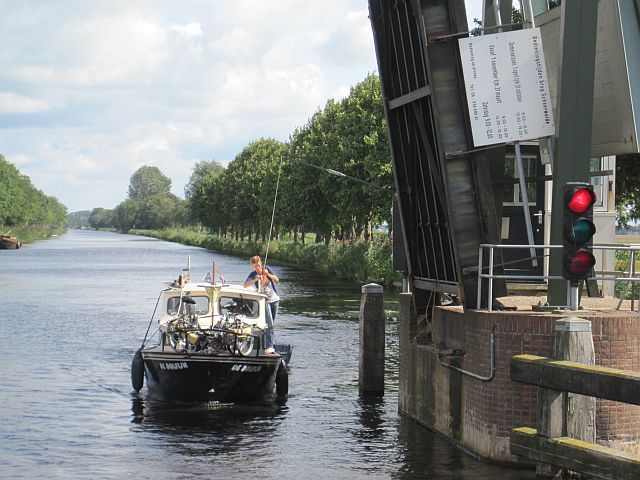
Toll bridge on the canal
7. Boats are compact. Space is limited. Pack as little as you can get away with.
8. The perception that boating is elegant and luxurious is a complete myth. You will have much less water than you are used to. You will bump your head and shins moving about in the cabin. Don’t even think about wearing heels.
9. Boat loos take some getting used to. They don’t have regular flush systems.
10. Pack working gloves to handle ropes. Garden gloves will do. Use heavy duty hand cream every night to soothe dry chapped hands. Also pack a sunhat and maximum factor sun cream.
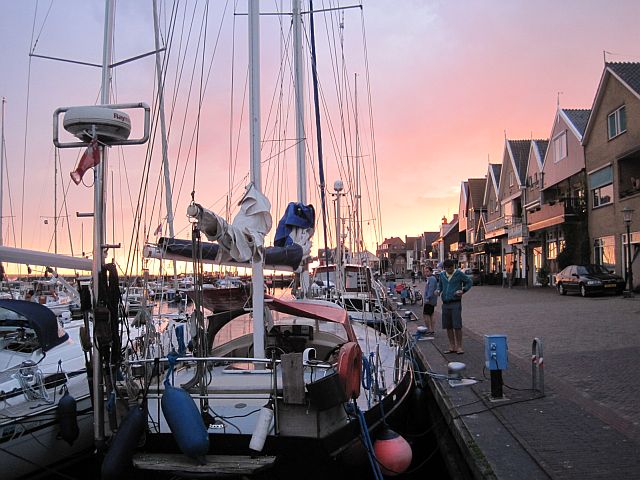
Mooring in Urk
We self-catered on our hire boat which brought costs down. Most towns had a supermarket and we would buy their own-brand foods which were even cheaper than our own-brand foods back home.
If we were lucky to find one, we would shop at a LIDL or an ALDI. The prices at ALDI are excellent. A 750 ml bottle of French red wine was €2.29; a 120gr tub of walnuts was €1.79; sliced pumpernickel bread 500gr was €0.35 and 125gr punnet of raspberries cost €1.79.
On the KLM airplane to Holland, the first thing I noticed was how jovial the Dutch passengers were. The people in the row in front were leaning over their seats, chatting to the people next to me and laughing. A lot. I remembered the exuberance of the Dutch supporters during the 2010 Soccer World Cup. Cape Town turned bright orange during the Holland games. A massive party, including an orange double-decker bus, had travelled down to South Africa to follow their team. The Dutch are without doubt, a happy, hearty, friendly nation.
One of the many colourful cyclists
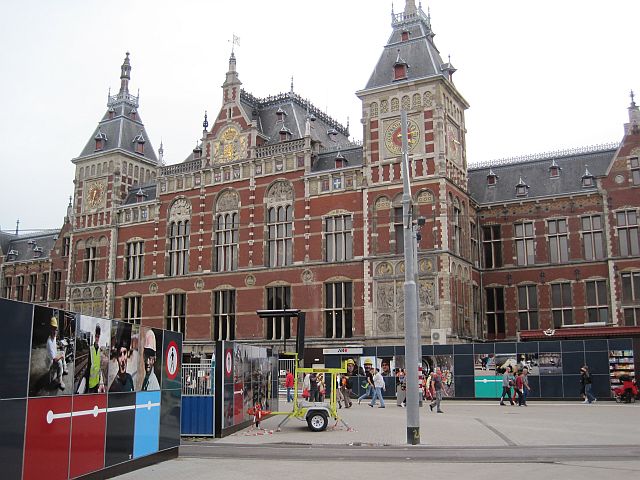
My other half and I arrived at Schiphol Airport in Amsterdam. From there, it was a 2 minute walk to the train station next door where we took the train to Amsterdam Centraal. And from there, you can get anywhere. The Dutch all speak English so we had no problem buying tickets. The fare was €4.20 each from the airport to Amsterdam Centraal Station.
Our first night was spent at Ibis Hotel in Stopera which was a 30 minute walk away. We could have taken a bus but after a day of sitting on planes and buses we were happy to walk. The hotel is fairly central and our room looked out onto a canal. The Ibis/Accor group are often our hotel of choice as they are well priced and it’s easy to book in advance. Breakfast is optional with Ibis hotels. Ibis Hotel.
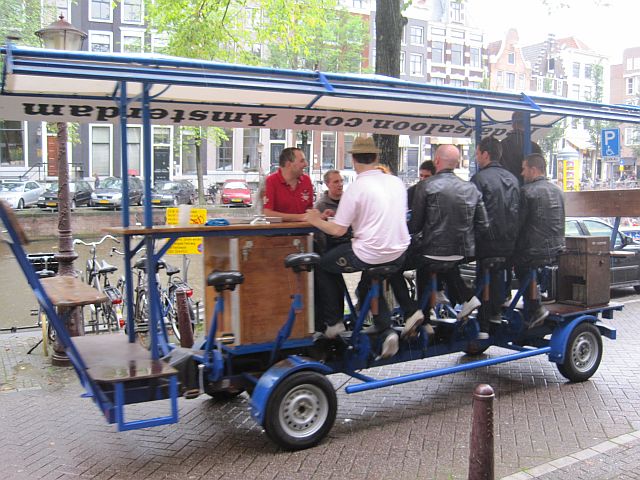
Bicycle beer bar
Internet is usually free in the lobby. If you can get a chance to use it. Check prices before hook up to the net in your room. You may be in for a shock.
IBIS tend to do a local style breakfast so it varies from hotel to hotel. A Dutch breakfast would have been €15.00 each. We decided to take to the streets and find our own breakfast. The receptionist guided us to a quaint spot called Bagel and Beans where we each had a soy milk chai latte and a goat cheese with chives omelet which came to €16 in total.
Abandoned bicycle
This was a boating holiday for the most part. My other half is a master mariner and an avid boater. He had pre-booked a charter boat from a place called – Yacht Charters Urk. Although we have a good few boating holidays under our belts, this one was special. This boat was a Dutch steel motor cruiser. My other half has designs on one for us one day. Two things struck me about our boating time in The Netherlands. Firstly, how different the countryside is from previous boating holidays in Europe. The Dutch canals are wide, busy, commercial and a lot more modern for the most part. Big working barges barrel along the canals. This is in contrast to the narrow canals and olde worlde scenery we encountered in the UK and France. There, one only encounters leisure boats.
Family day out on a bicycle
The thing that my brain had a hard time dealing with is the logistics of a country that lies 5 metres below sea level. Everything works the wrong way around. Usually a boat “locks up” when one goes inland. In Holland, one “locks down”. Locks are the waterway equivalent of an elevator or stairs. Boats can’t go up and down slopes so they move through locks to go up or down in stages. Normally water runs toward the sea. But in Holland, well it’s different. For more on locks, boating and waterways visit Waterway Wanderer.
Bicycle parking bay in Gronigen
The next day we took the train from Amsterdam Centraal to Lelystadt to be met by the charter company rep. The trip was 45 minutes and give or take 45 kilometres. The train ticket cost €9.00 each. A big plus with doing a charter boat holiday is your accommodation and your transport are one cost. This particular charter cost €1250.00 per week.












.jpg)