1. Don’t pack light colours. They look grubby in no time and you don’t want to be worrying about your clothes getting dirty. Pack mostly black or dark colours. They probably also get grubby but at least you can’t see it. Black is also versatile. It goes from day to night easily. And it all goes into one wash load. No one wants to sit waiting for different loads of washing to get done on holiday.
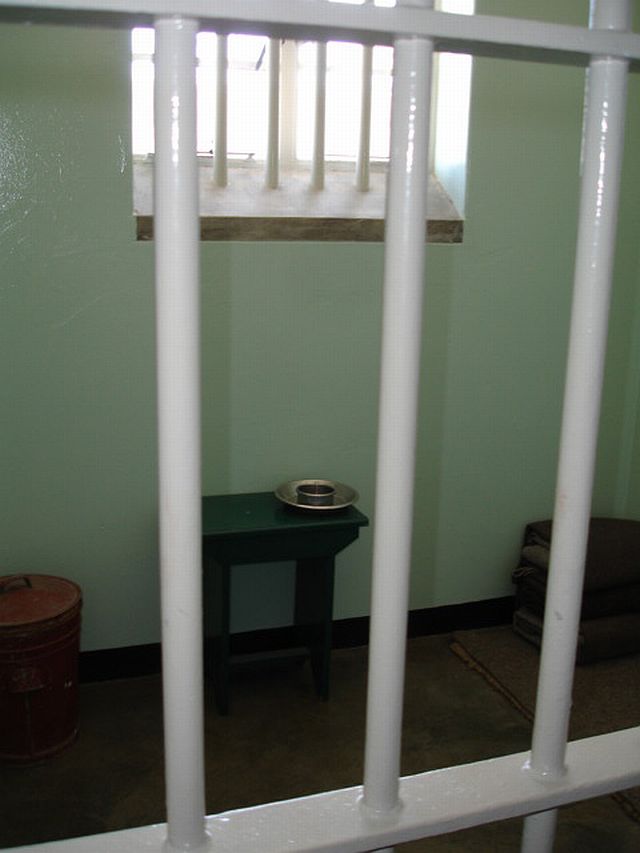
Robben Island – Nelson Mandela’s cell
2. Choose lightweight hand luggage and suitcases. The limit for most airlines is 23 kilograms. If you start with heavy bags, it doesn’t allow you to pack much. Plus you might have to carry your luggage around. Not all destinations are suitable for a wheelie suitcase. Think of the stairs to the London Victoria underground station. Not fun!
3. Running shoes are perfect for walking about and the odd run if you are up to it. Wear them on the plane in case your feet swell. Pack flats or lightweight shoes for going out at night or visits. Heels are best saved for when you are at home.
4. If you have over-shopped then pack heavy items like toiletries and shoes into your hand luggage when you fly home. The limit on hand luggage is on size, not weight.
5. A cloth tote bag is perfect replacement for a handbag or in-flight bag. It’s squashy and you can fit lots into it. It’s also light.
6. Weather can be unpredictable so pack clothing you can layer or clothing that is versatile. A tank top can be worn alone on a hot day or as a pull-over on a cool day. You can also sleep in it. Cardigans are light and fit snugly under a jacket on cold days.
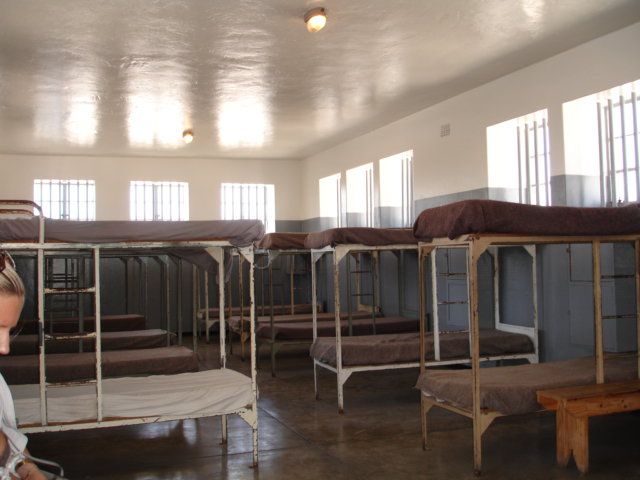
Robben Island – prison cells
7. Use your casual wear to sleep in. Why pack pyjamas as well?
8. Pack drip dry and easy hand-wash fabrics. You can rinse your clothes at night and they will be dry in the morning.
9. Scarves are light and an easy way to give a repeat outfit a fresh pop of colour.
10. Don’t pack heavy gold or silver jewelry. Rather take lightweight plastic for a bit of fun; or pack rope and string type accessories. Plus, you don’t want to have to insure your jewelry. You are going on holiday to relax and have fun.
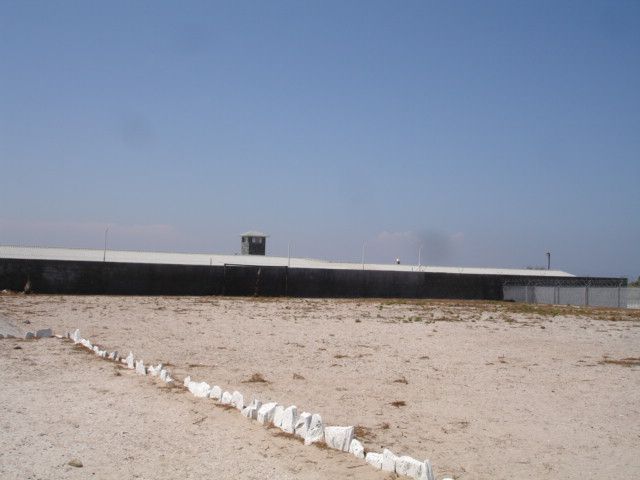
Robben Island – guard tower in distance
11. Always, always, make sure you can manage your luggage. As in, don’t take tons of suitcases. You just might have to carry your own luggage and if you have more than you can manage, you will not be happy with yourself. Don’t bank on someone else carrying for you. Things do go wrong.
12. Ensure you have copies of all your important details with you at all times. Think flight details, addresses of accommodation, medical insurance, passport, etc. Not everyone is welcome when they arrive at a destination and immigration officers can ask some really obscure questions. If you have all your information on you, you can refer to it. You could get lost or have an accident. Then you will need it. Keep it all in a clear plastic Ziploc bag or water proof file and – keep it on you.
13. You have to accept that if you are travelling, perfectly styled hair might be a challenge. Practise easy hairstyles before you go so you can relax and enjoy your holiday rather than getting hung up about hair. Think easy pony tails or a classy chignon.
14. Pack products that do double duty. Some soaps double up as shampoo. Hair conditioner can also smooth dry skin. And pack your toiletries in clear plastic Ziploc bags. Toiletry bags are bulky and don’t always contain leaks. With clear plastic bags you can see at a glance where your toiletries are.
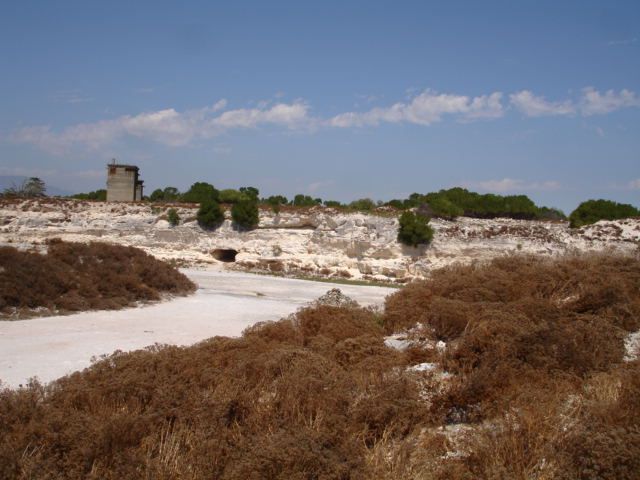
Robben Island – prison
15. Pack make up that works harder. Lipstick for example can be used as blush. Avoid heavy powdery make up on holiday. You will either be on the beach or working up a sweat walking about. Face powders can look a mess in no time and touch ups aren’t easy on the move. Plus you are likely to be wearing lots of sunscreen so cream based make up is your best bet.
16. Do pack plenty maximum factor sunscreen and a lightweight sun hat. Chances are you will spend a lot of time outdoors and you don’t want to get burned.
17. Keep a spare set of underwear, wet wipes and a toothbrush with you, along with your important documents. Flights run late; baggage goes missing; tours end far later than planned. Stuff happens. You might have to wash and freshen up in a hurry and you will want fresh underwear and clean teeth.
18. Slip slops are super handy. They double up as slippers, plus are a really good idea when walking around in communal areas such as on the beach or at a spa. On a hot day they can be worn out. They are light and take up very little packing space. Haviannas come in a range of fun colours and they last forever.
19. Yet one more thing to consider carrying is a lightweight, water resistant windbreaker. Umbrellas are a nuisance to carry and they get confiscated at the airport. At least if the heavens open, you are dry with a windbreaker. And if it gets chilly it keeps you warm.
20. Never, ever pack valuables such as cell phone, camera or lap top into your main luggage that goes into the hold of an airplane. Keep that sort of thing on you. You luggage will be scanned and insider thieves might help themselves to your new I-Phone or inheritance jewelry. Always lock your suitcases if they are out of sight.
Go to – My Holidays and Trips – at the top of this page to read about other places we have visited. Or just click on – this link.
Crime statistics are vastly different from area to area in South Africa. You can access the numbers on-line by going to the South African Police Services (SAPS) website and having a look at their reports. Certain areas are no-go zones; some are only bad at night, while other areas are perfectly safe to walk around at night.
Most governments and authorities say South Africa is a safe destination with few complications – provided you observe the basic safety recommendations. Most of these safety tips would apply to any destination. The areas that tourists tend to visit in Cape Town are on a par with London or Paris with regard to personal safety.
Here are 21 basic health and safety tips for Cape Town and South Africa.
1.Do not carry and wear excessive amounts of high value items or openly flaunt valuables in your car or on your person. Keep them in the safe at your hotel or guesthouse.
2. Do not talk to strangers, hitch hikers or allow beggars to accost you. Avoid eye contact and ignore street people. They will leave you alone if you walk on, or if you drive past them. Keep car windows closed and doors locked if there are people milling about at traffic intersections.
3. Don’t go up a mountain without a guide or unprepared and always let someone know if you intend climbing a mountain. Weather can turn in under an hour and thick mist can make it impossible to see your way down. There have been muggings on the mountains.
4. Don’t think wild animals are cute. Baboons can get violent and lurch at your car to access food. Hippos and elephants have been known to charge and flatten people.
5. Malaria kills hundreds of people in Africa every year. You don’t have to swallow drugs but do take precautions. Artemesia, an herbal supplement, is an alternative to drugs. You can also rub citronella oil on exposed skin and wear light clothing to cover exposed body parts.
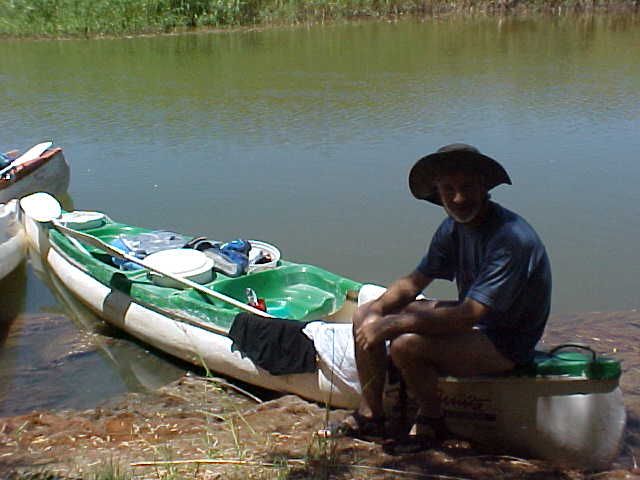
Relaxing on the banks of the Orange River
Some say the quinine from gin also helps keep the mozzies away. Others say mosquitoes favour people with a sweet tooth and high blood sugar. Skip dessert in high-risk areas.
6. Mini bus taxis might be an affordable form of transport and the choice of most locals, but think twice. They have the highest number of vehicle accidents and are not worth the risk.
7. On the subject of mini bus taxis. They are known in South Africa as “one more” buses, because no matter how full they are, there is always room for one more. By using public transport such as mini bus taxis and some of the trains where people are packed in like sardines, you are also at risk of contracting tuberculosis.
TB rates in South Africa, and in particular the Western Cape, are high. You only need to be next to someone with TB who coughs or sneezes to become infected.
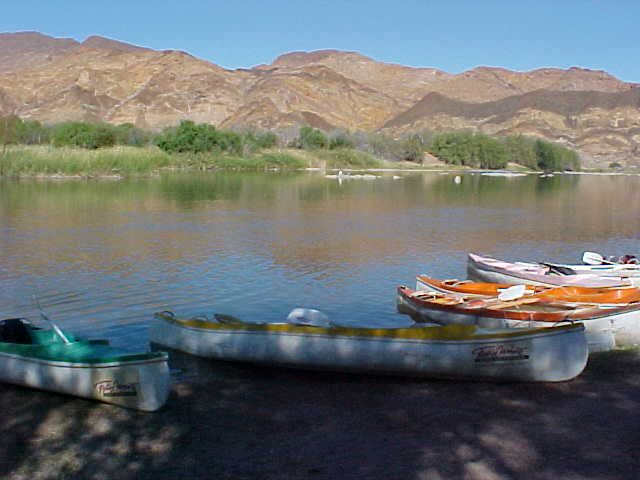
Canoes waiting to go river rafting on the Orange River
8. Pedestrians are unpredictable on South African roads and more pedestrians die on South African roads than any other category in South Africa, including mini bus taxis.
9. Avoid darkly lit or quiet places at night. That should be obvious, but for some reason, people still stroll through parks alone after midnight.
10. If you are unsure about an area, ask your guesthouse or hotel first, before venturing there.
11. Make sure you wear full factor sunscreen and even better a sun hat as well. South Africa has high rates of skin cancer. Fair skins and skins that are not used to sun are the most at risk.
12. Packing your valuables like jewelry, cameras, cell phones, net book or note book into your main suitcase is not a good idea. Certain airports in South Africa have a reputation for insiders who work together once your bags leave your hands.
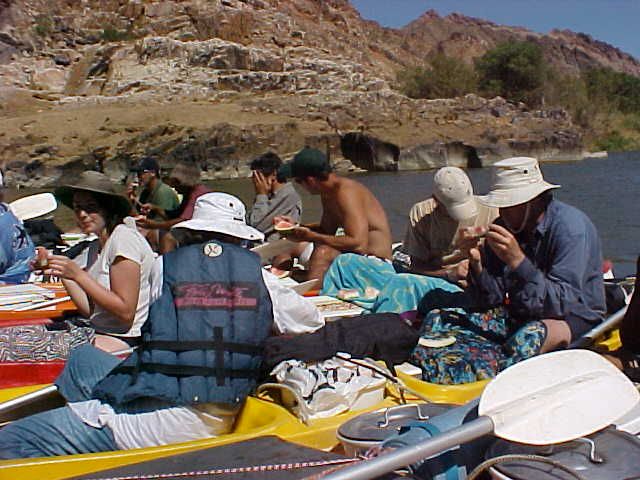
Stopping to enjoy ice cold watermelon on the Orange River
The X-ray staff inform the handlers who help themselves to your possessions. Keep those items on you in your hand luggage and don’t leave any handbags or hand luggage unattended. In Africa, if it’s lying around, it’s up for grabs. Always lock your suitcases.
13. Unprotected sex with a stranger is not a good idea. Sub Saharan Africa has the highest HIV infection rates in the world. And there is always the Hepatitis family that you might be exposed to. No glove, no love.
14. Think twice about swimming in a river. Especially water used by rural settlements. Cholera and Bilharzia do occur in South Africa. And definitely don’t drink water in rural areas, unless you know it is safe.
15. Make sure there is a lifeguard present when you swim in the sea. Some beaches have strong back-currents and even good swimmers can struggle to make their way to the shore.
16. Patting pets can sometimes be a bad idea. Every now and again it happens that a domestic animal is infected with rabies.
17. Street kids might seem sad and you may want to reach out to them. Don’t! They are skilled pickpockets and crime is how they survive. You can make a much bigger difference by donating money to a charity that educates and rehabilitates them, than by appeasing your discomfort and giving money. That money only goes toward gang leaders or drugs and the kids do not benefit one iota. That’s not all; by giving beggars money, you teach them that begging is a lucrative way to survive. There is no dignity in grovelling for money on the streets.
Claiming a space to sleep for the night – under the stars
18. There are illegal moneychangers who promise great exchange rates. They take your money and you wait. And you wait. And you wait. They never come back. Change money the way you are supposed to. With a reputable agent or bank.
19. It should be obvious that drug dealers are criminals and if you are inclined to recreational drug use, just know that you are making yourself very vulnerable and exposing yourself to criminals. You can’t cry if you get done in. Likewise, prostitutes are often drug addicts and desperate. They will look for a chance to grab your money and run. Happens anywhere in the world and it happens in South Africa too.
20. Keep an eye on your credit card if you are using one. Watch it from the time it leaves your hand until it comes back to you. There have been instances of credit card skimming in South Africa.
21. Finally, if it sounds too good to be true. It is. There are foreigners operating in South Africa who run advance fee fraud or 419 scams. They promise amazing stuff and all you have to do is advance some of the money up front. With hindsight most people who get caught realise that it should have been obvious that they were being done in. If you are on holiday, relax and have fun. Forget wheeling and dealing and you wont get caught off guard.
Go to – My Holidays and Trips – at the top of this page to read about other places we have visited. Or just click on – this link.
1.Cape Town has a Mediterranean climate. Hot in summer and wet in winter. Average summer temperatures are around 20’C and winter temperatures average around 15’C. Daytime temperatures are warm to hot. Winter rainfall is around nine days a month. Summer days are usually dry.
2. Tipping is expected. A tip of 10% on the total bill is customary. If a 10% “service charge” is added to the bill for a party of six or more, then an additional tip is not required. We once had a “service charge” added to a light breakfast for two at a well known vegetarian eatery in Long Street. That was really cheeky. Keep an eye open for this “service charge” so you don’t end up double tipping.
3. The five traditional MUST SEES are Table Mountain; Robben Island and the V and A Waterfront; Cape Point and Chapman’s Peak Drive; The Winelands and Kirstenbosch Botanical Gardens.
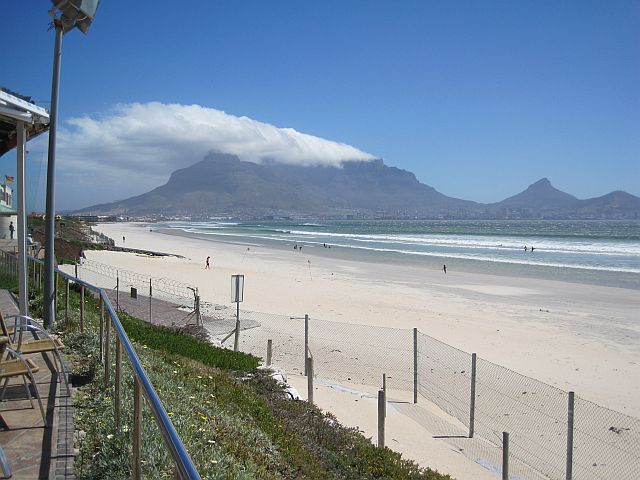
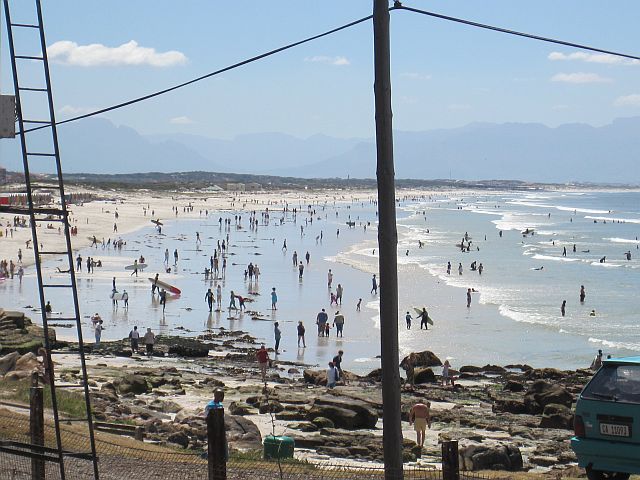
Camps Bay Beach, Cape Town
4. Since everyone is trying to see the same attractions they do get crowded. You can buy a ticket in advance from – Webtickets to avoid queuing up on the day.
5. Table Mountain and Robben Island are weather dependant attractions so make sure you get them done early in your stay in case you have to come back due to bad weather.
6. The MiCiti bus from the airport to town is an absolute bargain at just over R50 a head. It takes you to the Civic Centre in the heart of Cape Town. From there you can catch either a train, another bus or a taxi to your accommodation. MiCiti are also worth considering for getting about Cape Town. A trip from the city to Blouberg costs around R10 and covers more or less 20 kilometres.
7. I recommend Rikkis taxis for getting about. They are London style cabs. You can ride a “share cab” from one end of the city to the other for approximately R40. Find them on-line at Rikki Or you can phone them at 0861 745 547.
8. Search through this Cape Town oriented travel blog for loads of ideas about where to go and what to do. There are photos accompanying each post. Fancy a train ride to Simonstown right alongside the sea; or a bike ride to Blouberg passing Milnerton lighthouse and Flamingo Vlei? It’s all there in older posts.
9. While most locals use mini bus taxis, and they are without doubt the most cost effective way to get around, I don’t recommend them. They are inclined to be a law unto themselves and have the highest stats when it comes to vehicle accidents. They should definitely be avoided at night.
10. Hiring a car is easy in South Africa and most airports have the usual companies well represented. Do be aware that is illegal to park on a yellow or red line anywhere in South Africa. It is also an offence to park on a pavement or facing oncoming traffic. You must park facing the direction you were driving. South Africans drive on the left hand side of the road. Roads in South Africa, particularly in the urban areas are good. Be aware that some regions have an abundance of toll roads.
Milnerton Beach, Cape Town
11. Although South Africans have not done enough to counteract driving under the influence of alcohol, authorities are committed to cracking down hard. Roadblocks are becoming more and more common. Stop and searches for drugs are increasing. Just say no.
12. The sale of alcohol is forbidden on Sundays in South Africa. It is possible to find the odd place with a special alcohol license if you are stuck on a Sunday. Ask around. And you can’t buy beer or spirits in supermarkets. Only wine.
13. Tap water is perfectly safe to drink in the major cities in South Africa. Avoid drinking water in rural areas, unless you know that it is safe.
14. Not all petrol vendors accept credit cards. They have only recently been introduced and some places have catching up to do.
15. It’s illegal to consume alcohol on the beach or public places. But, you can take a basket of snacks and a bottle of wine up Table Mountain or to Kirstenbosch Botanical Gardens. I can’t explain this discrepancy.
16. People forget or don’t realise that South Africa has 50 million people. Cape Town alone has close on 4 million people. We get asked if our guesthouse is close to the beach or the mountain. There are lots of beaches and mountains in Cape Town. I suggest that people allow at least 3 – 5 days in Cape Town. It’s best to be centrally located as most of the attractions are in and around the city.
Muizenberg Beach, Cape Town
17. South Africa has self-appointed car guards all over the place who “guard” your car. Some of these people are desperate refugees from Africa with no status in South Africa. Being a guard is the only source of income for them. Others are common criminals or drunkards who wouldn’t be able to tell a car from a rock. Do you tip them? It’s your call. If they can stand on their feet and speak coherently, I tip. If not, I don’t.
18. Cape Town has some excellent Blue Flag beaches but the seawater is cold. The Indian Ocean is warmer and is on the False Bay side of the Cape Peninsula. Muizenberg and Gordon’s Bay will have warmer sea. On the Camps Bay side of the peninsula is the Atlantic Ocean and it is definitely cold.
19. The standard of accommodation and restaurants in South Africa is generally high and usually great value. You should find South Africans are a friendly and helpful nation. You can expect good service.
20. Cape Town International Airport is approximately a 20 to 30 minute ride from the city centre. If you are driving, make sure you budget extra time during peak hour traffic. The N2 highway to the airport can get very congested and traffic stands still.
Go to – My Holidays and Trips – at the top of this page to read about other places we have visited. Or just click on – this link.
If you are reasonably fit you can walk Stockholm. I chose to walk the city taking in; Gamla Stan or the old town, Drottninggatan, which is their high street and the NK and Galerian malls where the well heeled shop. Stockholm is a fashion forward city but with a pared down twist. You will find a branch of H & M on nearly every corner. I am not a museum person but there are plenty for those who do, however, I do like grand old churches. S:ta Clara kyrka in the city is special.
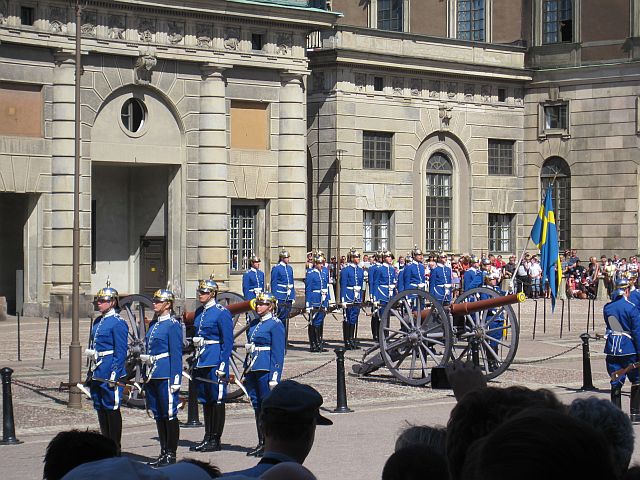
Changing of the guards
Gamla Stan is an absolute must-see. Try visiting between 11.30am and 13.00pm when you can watch the changing of the guards at the Royal Palace. It’s a major production. I did chuckle when the guards did an interesting high kicking jog into the parade ground.
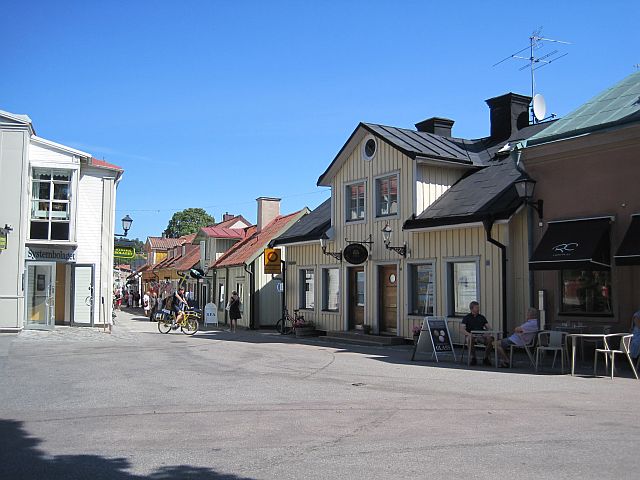
You would be remiss if you didn’t take in at least one, maybe two of the islands. The contrast between the concrete high rise city and the traditional laid-back islands is vast. I chose to go to Sigtuna Island on the advice of many. It has been lovingly preserved and I got to see old homes and how the Swedes lived a few centuries ago.
Ferry to Sigtuna Island
They still have summer houses on the islands where they retreat and escape the rat race of city life. On Sigtuna Island I found runic stones, museums, castles and church ruins as well as the Church of Maria which in still use and dates back to 1247.
Skansen, on the green island of Djurgården is another must-see. It was the hunting island in days gone by. They have a zoo full of Nordic animals as well as traditional old houses and villages, an amusement park with scary rides and lots of open land. At Skansen there are also plenty museums. You can visit a cafe to taste traditional Swedish cakes and cookies, you can watch glass blowers in action, visit the pottery or watch the animals being fed at the aquarium. Get there by ferry or take the tram.
I had to visit IKEA. Diagonally opposite the Tourism office is a free bus to the biggest and best IKEA in the world. IKEA is set in a large building and you work your way from the top spiralling down in a clockwise direction taking in all sorts. Think – office decor, kitchen cabinets, linen, space saving gadgets and loads more. Plan more time than you think you will need. They have a cafe with bargain meals. I had a spinach and feta pancake for SEK29.
Sigtuna Island
Swedish food doesn’t lend itself to vegetarians. They are inclined to meatballs and mash type cuisine. That doesn’t mean there aren’t plenty fancy global and fusion restaurants. There are, but you will pay dearly for a meal out. At a sushi spot, my other half and I shared some Korean pancakes, then we had a tofu stir fry and one beer each. Our bill came to SEK 750. I will say, the portions were generous and the food was excellent. You frequently smell the aroma of waffles being cooked on a griddle to make ice cream cones as you walk the streets. This is one time to permit a sweet treat.
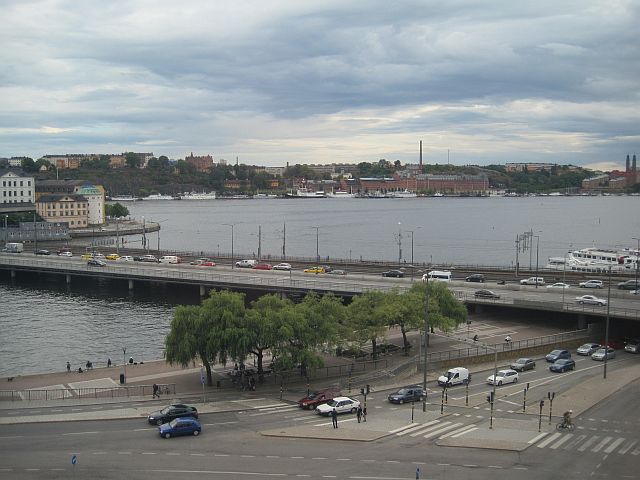
View from Sheraton Hotel
I was incredibly lucky that I was the recipient of a few nights hospitality and great advice from a friend which made my stay that much more affordable and ensured I got to see the best of Stockholm. My other half and I stayed in his summer house in Åland Island with him. We spent the last four days at the Sheraton Hotel which is located in the city centre. Accommodation prices are steep. The tourism office has a couple of computers visitors can use to find accommodation. Or you can view more on this link – Accommodation Sweden
When you think of Sweden, what comes to mind? How about, ABBA, Bjorn Borg, leggy blondes, the Nobel prize, IKEA, Electrolux, Absolut Vodka and Volvo. Swedes have a sensibility about them that is evident in their people and design aesthetic. They use the word “lagam” which means not too much and not too little, just in the middle. And that is exactly how they are.
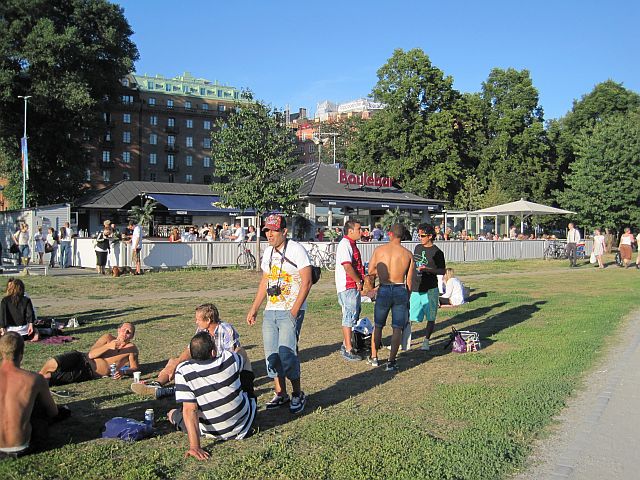
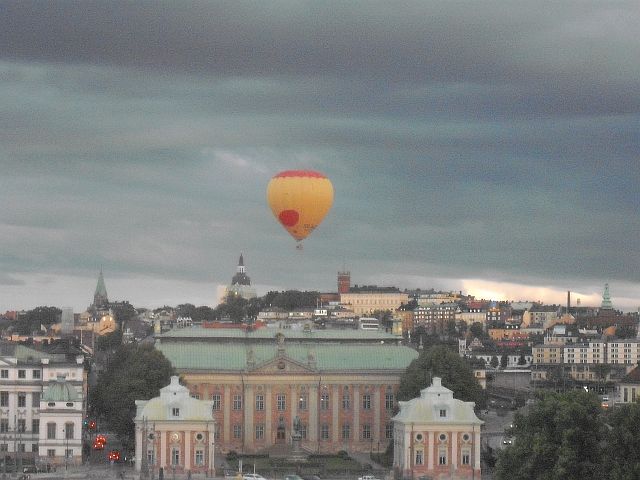
I liked that they don’t insist on helmets for bikers, they allow drivers to use their cell phones, they permit drinking in three of their public parks and hot air balloons are free to coast quietly over the city skyline. They assume that the public will use enough sense to act responsibly. Clearly in Sweden, they do. The Swedish royal family send their children to the same schools they expect their subjects to attend. No wonder the Swedes like their royal family.
The leggy blonde bit is also true. I saw the highest concentration of attractive woman, and men, in a wholesome sort of way, than I have seen anywhere else.
Public park
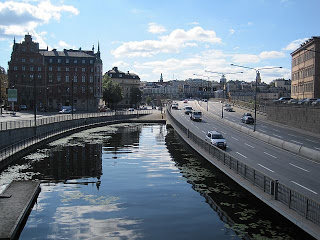
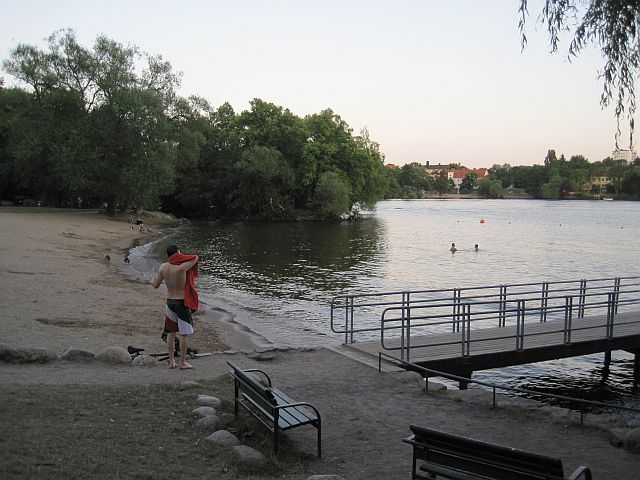
As the plane flew in to land at Arlanda Airport I peeked through the window and saw forests and lakes. They say that Stockholm is one third forest, one third lakes and one third city. Stockholm is not a land mass as such, but an archipelago of 14 islands linked by 52 bridges. This makes it one of the greenest cities in the world. On a sunny day you will find Stockholm residents swimming, cycling, walking or running about. They happily bask in the sun and are spoilt for choice with places to go.
Heading north, the country becomes mainland but Sweden has 93 000 lakes in all. Sweden is clean and the Swedes pride themselves on their clear lakes. The water is good to drink and you can safely swim in their waters. Sweden has a law called – Allemans rätten – which allows all people right of access to natural land. Again, their inherent sensibility allows such a law to work.
Hot air balloon over the city
The summer months in Sweden are from June to August. For the rest of the year it is cold. Really cold. The winters are also dark. The cold sets in from October and lasts till end of April. You can do a winter snow break in Stockholm if you fancy something a bit different. You might even be lucky enough to see the Northern lights. Just remember you also get 24 hours of night around that time of the year depending how far north you go.
Every single person I encountered spoke perfect English, so language wasn’t a problem at all. A few handy words are “hej” (pronounced hay) which is hello and goodbye; “tack” (pronounced tuck) which is thank you and “gatan” means street or road, it follows on after a street name.
Bicycles for hire
Scandinavia has a reputation for being beyond the purse of the average person. While Norway is off the Richter scale expensive, Sweden is the cheapest of all the Scandinavian countries and is manageable on a modest budget. Tour prices are around SEK300 – 500. You are looking at SEK40 for a single ferry ticket to Skansen Island. A meal out can cost from SEK100 – 400. I tended to buy a take-out salad and a sandwich, then find the nearest park to relax and eat. That would cost about SEK70 – 80. A coffee at a cafe costs around SEK40. The northern areas of Stockholm are classier and you will pay more. The southern areas were a lot more laid back with a meal costing SEK85 including a drink.
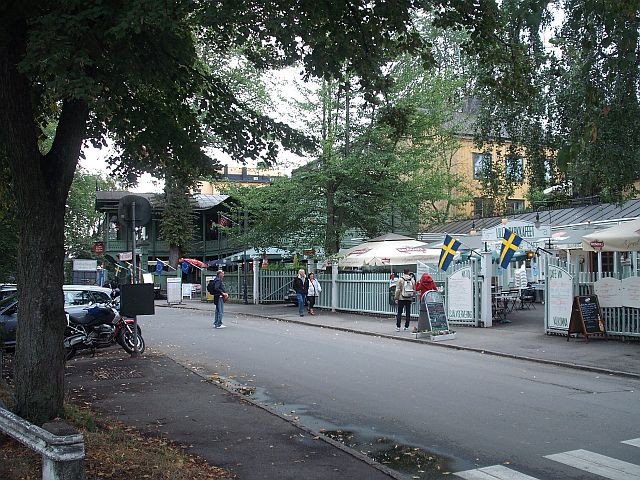
Skansen
There are a number of options for getting to the city from Arlanda Airport, which is a good 40 mins from the city centre. I chose Swebus over the high speed train, plain and simply because it was cheaper. You could also take a Flybussarna bus. Click on this link for more – Flygbussarna. These busses run regularly between the city terminus and the airport and cost about SEK99 one way.
A beach in the city
You can also avail yourself of a travel card for 24, 72 or more hours. This card allows you to ride any bus, overland train or tube train. The card costs a nominal amount and you are looking at about SEK250 for a 72 hour card. I had a SL card. Go to this link for more – travel card. Just be aware that it is cheaper to top up your card at the local supermarket – Pressbyran – than at the train stations. I can’t explain this. You could also hire a bicycle. For more follow this link – Citybikes.