For the most part on this trip we saw Dutch registered boats. Our guess is about 90% of the boats on the waterways are locals. Another 9% are German owned boats And obviously the closer one gets to the German and Belgian borders the more of those boats are on the waterways. We saw very few other nationalities. Two British boats, one Swedish and one from Denmark.
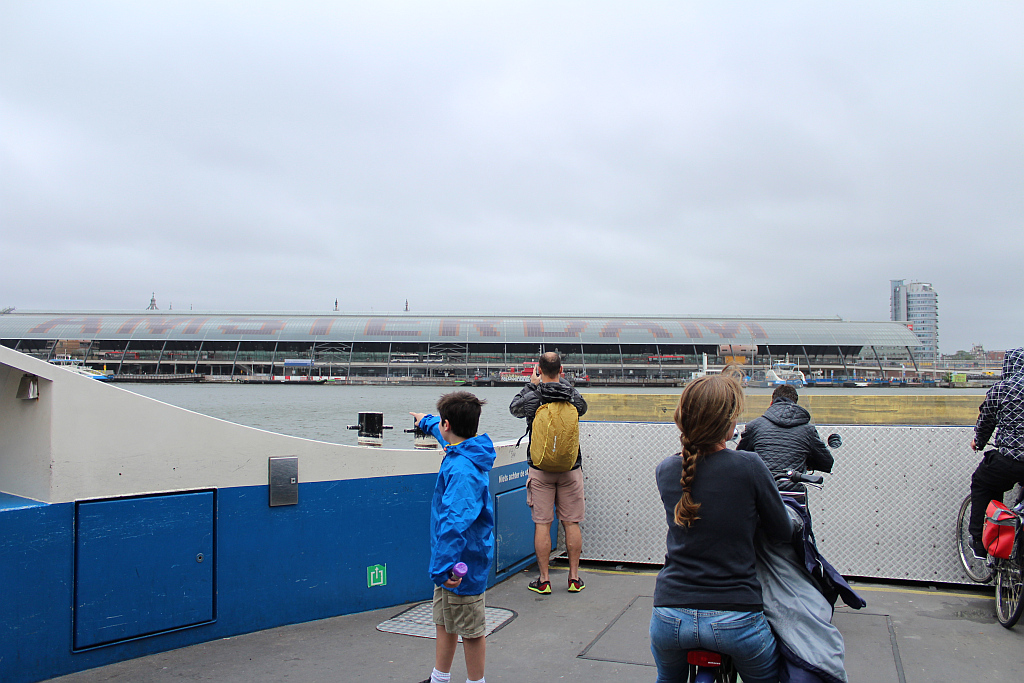
Since we arrived late – and we had Internet – sort of – we caught up on comms and chores on the boat. The following morning we caught the free ferry across the Ij into Amsterdam which was heaving with humans. Hen and stag groups – or whatever the occasion – with team T-Shirts seem to be the thing in Amsterdam. I guess people come to party. We saw a good few people who over-did it on magic mushrooms, weed or strong beers and were looking more than a little worse for wear.
Free ferry across the River Ij
And that’s another thing I will never understand. Tourists don’t seem to venture past Damrak in Amsterdam. It’s groaning with people shuffling past each other gawking at the girls in the red light district. I get that the openness about sex and drugs is a novelty. And for sure our first trip we did the
obligatory walk past the ladies in the sex area. And we visited a kinky museum. Or two.
Nowadays we skip Damrak and head straight to the outer suburbs. Food and drinks are cheaper and it’s just a whole lot nicer. If you’re not keen on a walk then catch a tram. Even better, take short day trip by train out to Alkmaar, Haarlem, Delft, Gouda or Utrecht. They also have lovely canals with cruises, Dutch architecture, a town square, markets, yummy food and all that one expects – but minus the hoards of tourists.
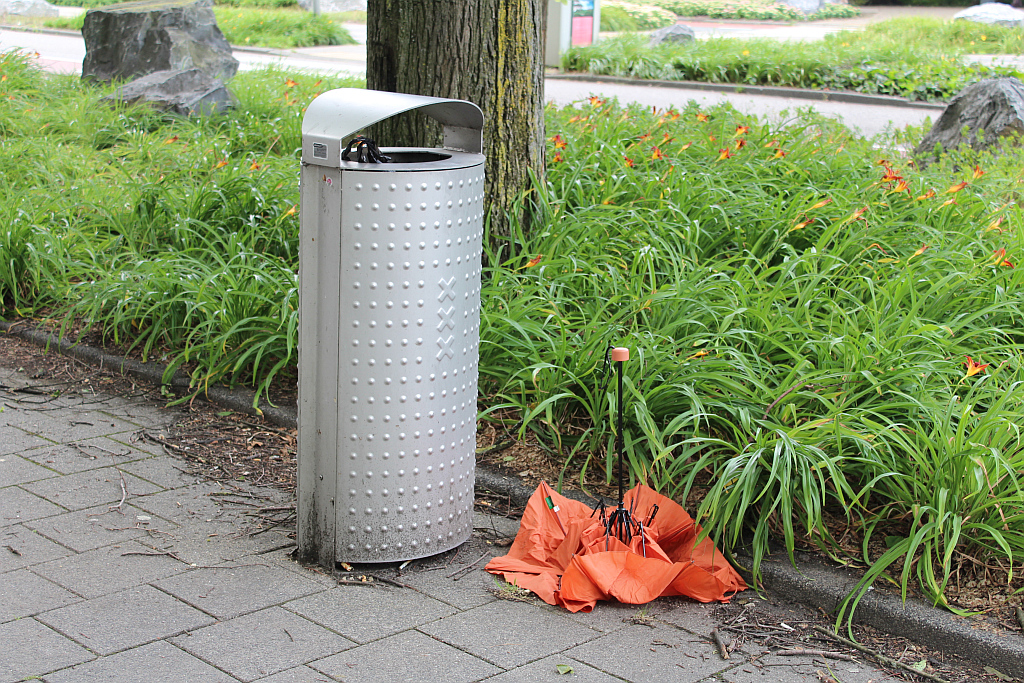
Abandoned umbrellas after the storm
We struggle with Internet on the waterways. For four reasons. Reason One – while there is wi-fi in some marinas, a person needs to be near the modem, which is usually in the havenkantoor (harbour office). If your boat is not moored close enough, then the signal is not strong enough. Reason Two – our boat is made of steel, wi-fi signal is not able to penetrate the boat. We usually have to sit on the outer perimeter of the deck to get some signal.
Reason Three – is the sheer number of people all trying to get signal. At Compagniehaven we speculated there were around 700 boats. Sure, not all were trying to use wi-fi, but each boat has at LEAST two people – however most boats are likely to have a family or group of friends on board. There are simply too many people all trying to get on-line. Reason Four – people use wifi gobblers. I never even knew these things existed until another boater told us about them. He uses a thing called Wifi Rogue which he bought in America. Apparently they suck up available wifi signal but I really don’t understand how they work
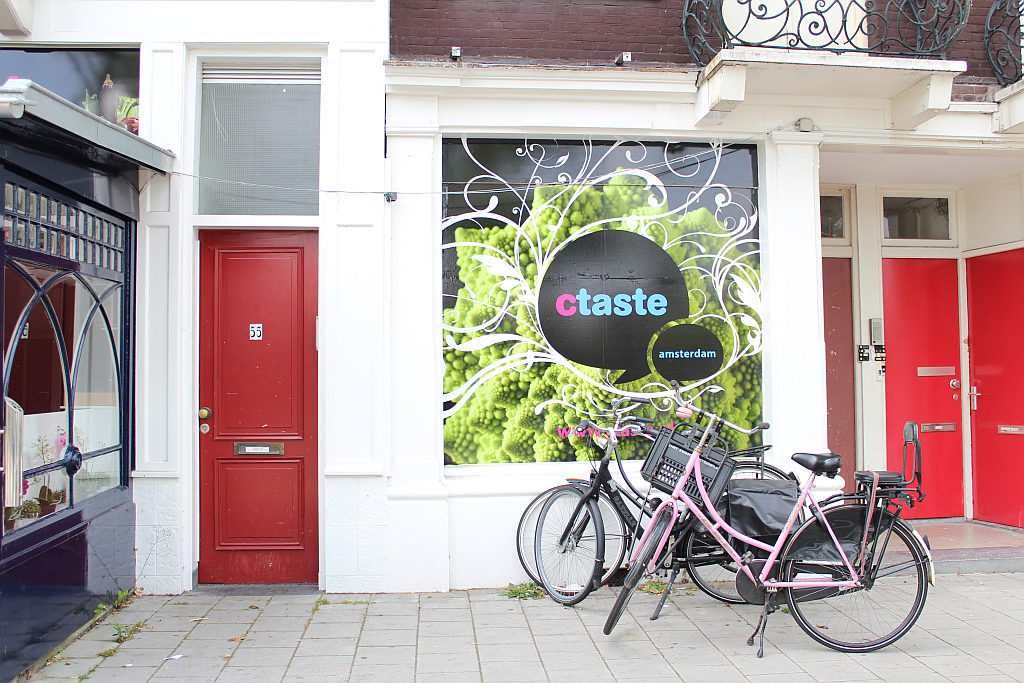
Eating in the dark at C Taste
We’ve been to Amsterdam a few times now and rather than pack in museums or a canal cruise, we like to go walkabout and visit places we liked before or find new places to like. Our first day in Amsterdam we wanted to do a shop-up at our favourite store – Marqt. Everything is organic and ethically sourced. They also only accept credit cards. Which is a nice change for us. Foreign owned shops such as Zara or H and and most hotels accept credits cards but Dutch owned businesses will not take credit cards. Even large chains stores like their supermarkets are not interested. They will accept a local debit card which we don’t have.
We also booked at a place called C-Taste, more on that later, where they will accept a credits card but add the bank fee onto the bill for your account. I suspect in Amsterdam there is a bit more tolerance for credit cards but not elsewhere.
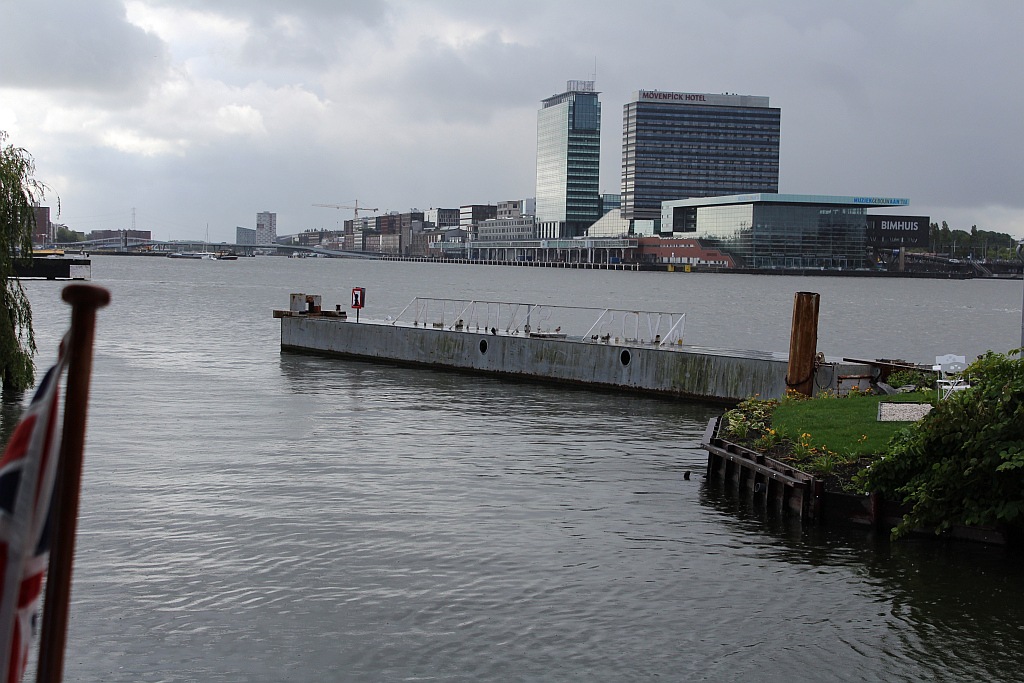
View from Sixhaven marina
We ended the day at a pub in De Pijp area and had a Belgian beer while watching people going about life. It never ceases to amaze us how the mix of motor vehicles, trams, bicycles, tricycles, tandem bikes, mobility vehicles and humans all manage to go about their journeys without crashing or fighting. I get scared just crossing the road with all the activity.
Before going back to the boat we had a pita at our favourite spot Maoz. For €5 you get a white or wholewheat pita pocket, 3 falafel balls and unlimited salad and sauces. Yum. Our second day in Amsterdam we wanted to go to the Albert Cuyp market. We’ve been before and it always gets a mention in the What To Do in Amsterdam guides.
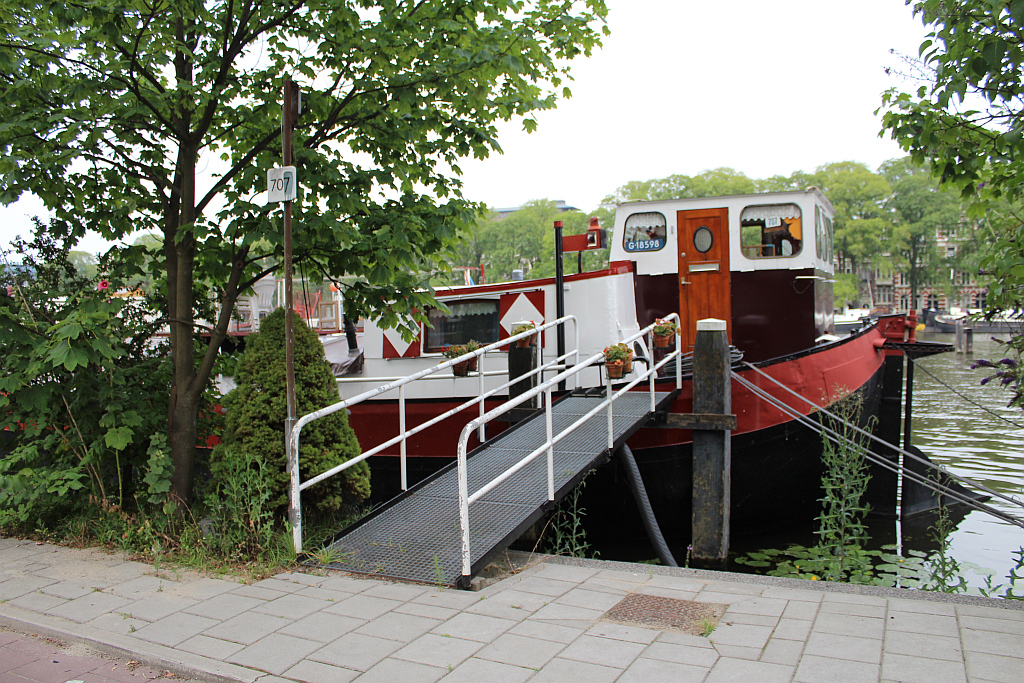
House boat in Amsterdam
Plus the guy double-banked next to our boat from Friesland was raving about it. We thought we would give it another try. It’s lots of the same stuff really. Mostly cheap clothes and fruit and veggie stalls. The prices aren’t that much better than the supermarkets but we love the novelty of shopping at produce markets. They sometimes have things you don’t often see. Like purple carrots. We had to try those.
The weather was atrocious. Freezing cold, howling gales and horizontal rain. How does this happen in the height of the summer and holiday season? There were broken umbrellas aplenty next to rubbish bins. We decided to catch the tram back to Dam and head for one of our favourite veggie places in the Jordaan area for a bite – Bolhoed. Amazing how bad weather sends people indoors. The number of people of the streets was vastly down compared to the previous day. We were also pleased not to be boating in inclement weather.
The captain having a break from the rain at Bolhoed
Since we’ve discovered Happy Cow (happycow.net) we’ve visited all sorts of amazing veg friendly eateries on our travels. Bolhoed (bowler hat) have vegetarian, vegan and raw food. After a meal at Bolhoed we’d had enough of being out went back to the boat to keep warm and dry. The rain lashed down and our boat bounced for a few hours more and then just like that, the weather lifted and the sun came out. We heard the following day that the tram service was suspended due to a tree blowing over and debris on the track. That’s the Netherlands for you. Four season in one day.
This story continues – on this link.
From our wild stop we journeyed along straight canals, through the polders, heading inland and south in the North Holland province. Not sure how the Netherlands came to be called Holland. Holland is actually a province. It’s a bit like calling the USA – Texas or the UK – Yorkshire.
And that’s not the only thing I don’t understand. The system of building a dyk or bank to close off the Zuiderzee creating their polders still confuses me. The Dutch aren’t sure themselves when the process of holding back the sea started. The pretty windmills we associate the countryside – along with Friesland cows, cheese, clogs, funny white hats and brightly coloured tulips – served to pump out water. Today they have modern pumps doing that job. But consider what would happen if the pumps stopped working? There are still rivers flowing into the Netherlands. And it rains. And there is a coastline. What about global warming and the possibility of a rising ocean?
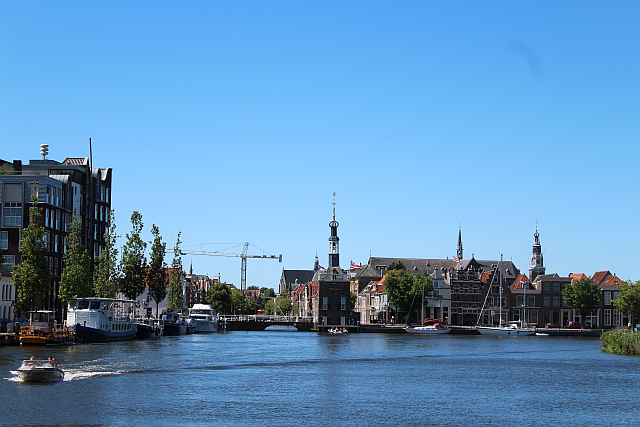
Approaching Alkmaar
So while the Dutch people sought to protect themselves from the ravages of the North Sea and create land from the bed of the Zuiderzee, they face an ongoing issue to keep water at bay. No doubt the innovative Dutch people have considered all this but it does add an extra dimension to national security. No wonder there are so many floating homes in Holland. The polders, which are essentially the old sea bed, are a much as 6 metres below sea level. I find it humid when we’re in the low lying areas. Particularly on a hot day. The weather can fluctuate quickly.
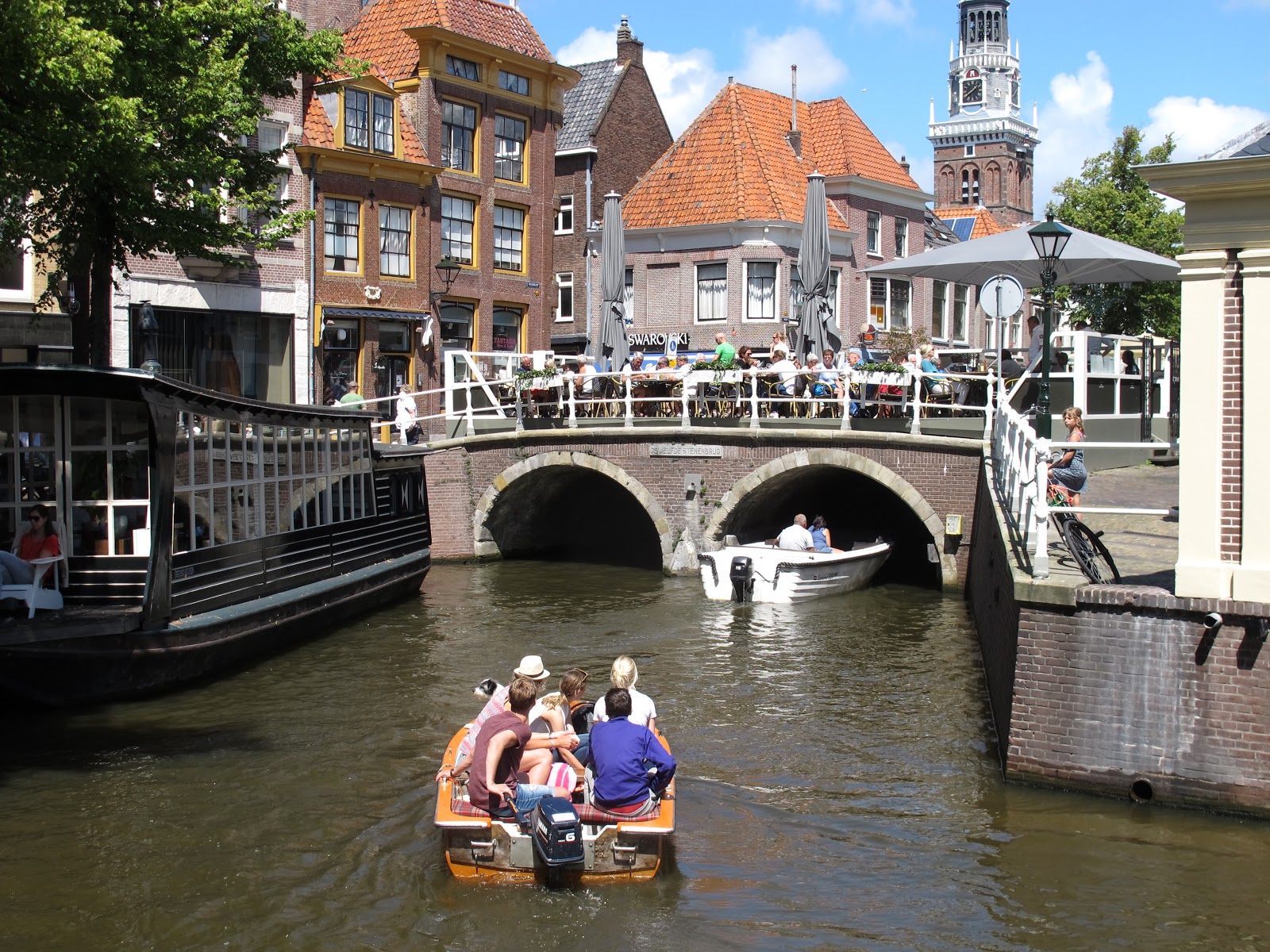
Our next stop was Alkmaar. (prounounced Alekmaar) Another Dutch medieval town and well worth visiting. Many towns in the Netherlands were built with a moat around to encases the old city. Plenty old towns and cities survived the bombings of the Second World War so their buildings are still in tact. It’s worth remembering that Holland was occupied during the war and certain areas were heavily bombed. Alkmaar doesn’t appear to be one of those places. What to do? Head to the VVV (tourist info) and get a map. And then just get lost. Wander around the streets. Alkmaar, as do all the other medieval towns, has festivals, markets and museums. A Beatles museum and a beer museum were the two that piqued our interest.
Alkmaar
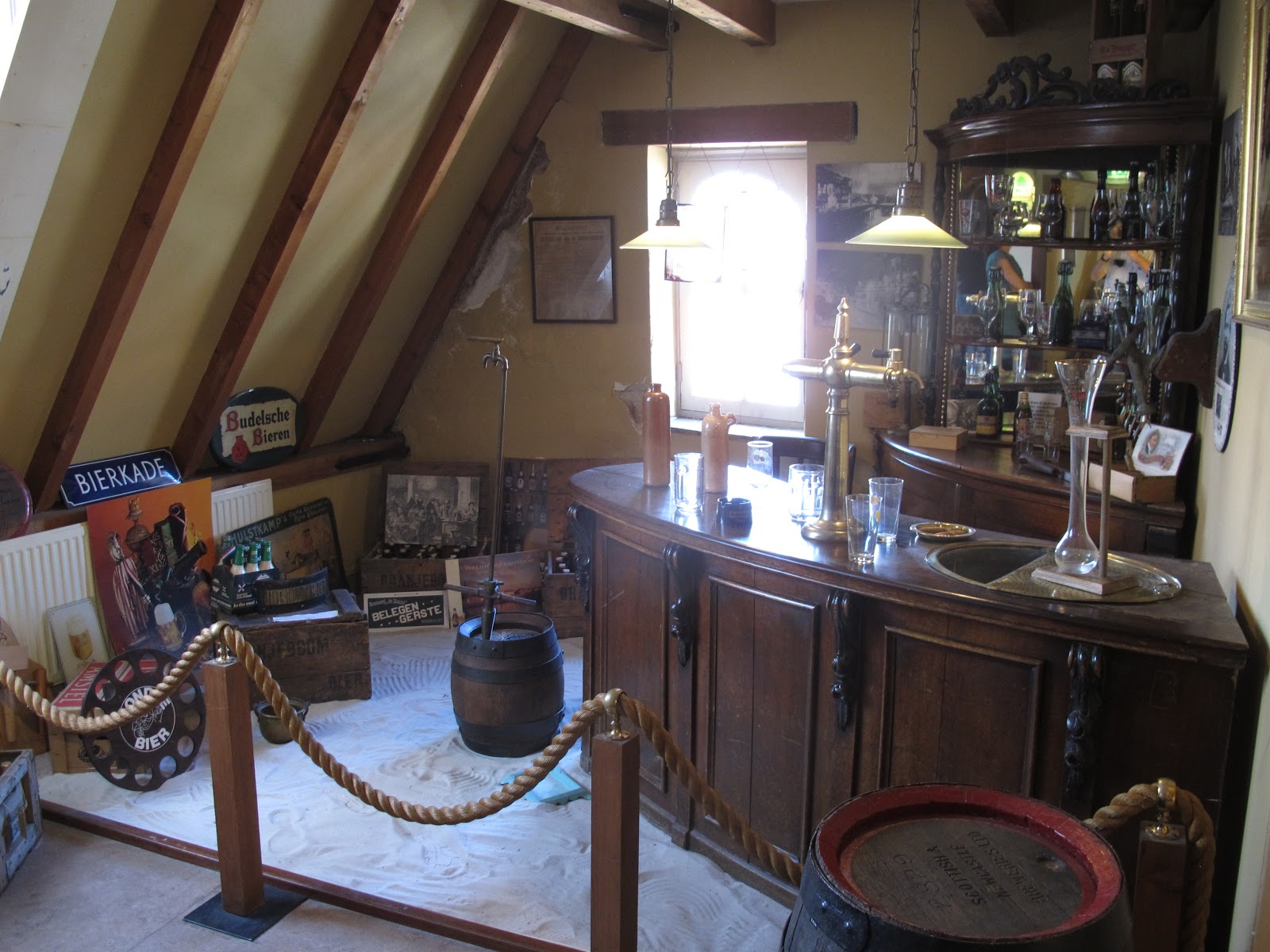
The Beer Museum was a modest €4 and had video presentations, mostly in Dutch but one was in English. Three floors of information – luckily also in English – and a pub at the bottom next to a canal where you can try one of over 50 beers at a discount. Our attempt to try the local beers failed as they didn’t have them in stock. We ended up having a Grimbergen donker ale (dark ale) which is one of our favourites anyway. The canal was bonkers busy with people in slopen (dinghys) barelling past each other with more or less boating skill causing the odd bump. You can hire a dinghy and take yourself on a trip through the maze of waterways.
Beer museum Alkmaar
On the subject of drinks to try, beer is top of our list. The Netherlands have a vast selection of regional and national beers. Our best Dutch beers are Texels and Brand. We often discover a divine beer in a local pub and never find it again. Heinken and Amstel are famous local beers but they are lagers. Most pubs also have plenty Belgian beers. Often made by Trappist monks. We love their malty dark ales such Leffe, Grimbergen and Westmalle. You can get pils, cherry beers, weiss – more types of beers than you can ever imagine. Some of them pack an alcoholic punch – up to 11% alcohol – so drink with care. They’re usually served in a matching glass freshly rinsed with water. Why do they do that? I really don’t know. Might have something to do with the foam. We finished our day with a walkabout and a shop-up before heading back to our boat for a jog (one way to explore and get some exercise) and an early night.
beers
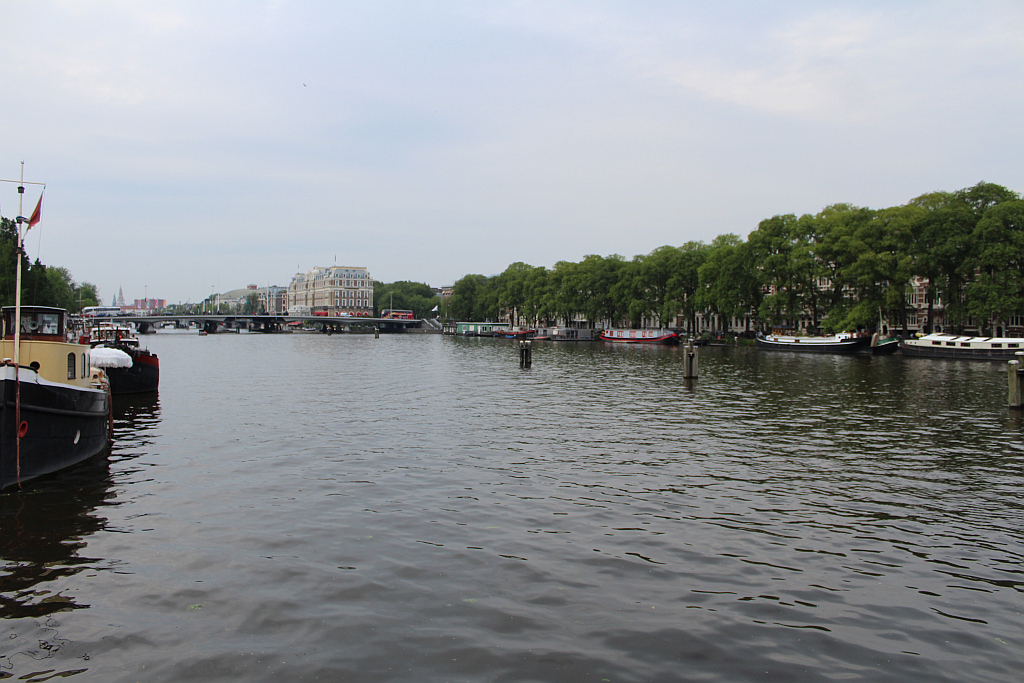
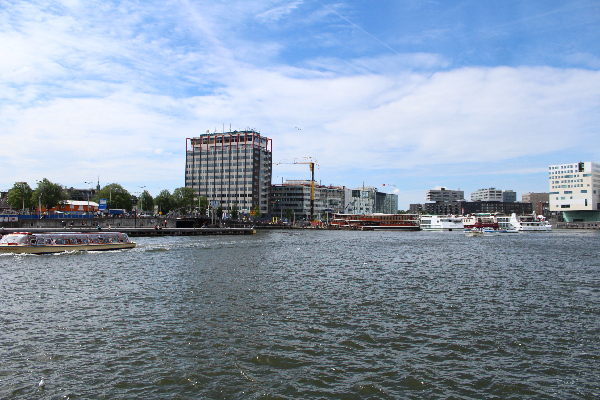
Our next trip was via the Noord Hollandsch Kanaal via Zaanstad into the Noordzee Kanaal which becomes the Ij River and runs through Amsterdam. We’ve been to Amsterdam on our boat before and headed straight for Sixhaven. It’s not the only marina, but we knew what to expect. The Ij River in Amsterdam is wide and the banks are home to factories so the route is industrial. Which means you get to share the waterways with big working barges. Who always have right of way. They come from way behind you and push right past you into the locks. Never mind how long you’ve been waiting. You hope there is enough space for you. Or hope another barge doesn’t come while you’re waiting to enter the lock. Because they will get right of way. One very good reason to avoid commercial routes.
Inner canals of Alkmaar
However we like barges when there are bridges as they make sure they get opened and we don’t have to call the bridge operators on the VHF radio. We come from South Africa and speak Afrikaans. Which is an old version of Dutch from the settlers way back when. Somehow Afrikaans has developed it’s own words and pronunciations of words. We sort of understand Dutch if they speak slowley or if we read it. Highbrow newspapers excluded. But we prefer not to have to figure out what the operator said. Or ask again and again until we understand.
Approaching Amsterdam by boat
Sixhaven has a sharp entrance and the moorings are tightly packed. Sixhaven can get very, very full. I’m happy to do deck duty but I’m way too scared to park our boat. I would hate to manoeuvre a boat in Sixhaven. It’s a bit like a Rubik’s cube situation. The havenmeester toggles boats and the ingoing or outgoing boats glide past other boats in tight proximity. We also had to cross the channels in the River Ij. Which meant dodging the ferries and barges. Scary stuff. Sixhaven has had a bit of a renovation. They have a lovely brand new ablution block.
We never for a second thought we would spend as much time in the Netherlands as we did. There is so much to see and the Dutch are geared for water travel. I started blogging about our boat when we did the northern areas of the Netherlands – Drenthe, Groningen and Friesland in 2013. In 2014 we explored the middle and southern areas taking in places like Delft, Rotterdam, Utrecht and heading into the Limberg region down to Maasbracht. For such a small country Holland has over 6000 kilometres of inland waterways.
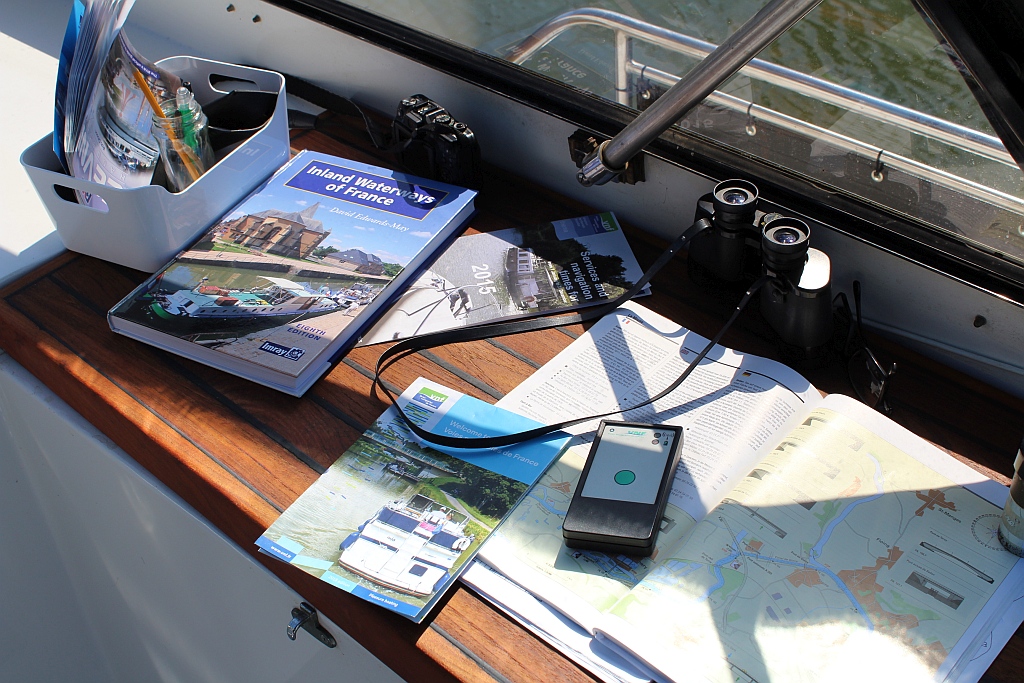
French maps and remote control
One day we were having a chat to some people on a boat next to us and they opened a map of the waterways of Europe. That’s when we realised the sheer scale of connected waterways. A person can travel by boat from Holland through Germany through Poland through Belarus to the Ukraine all the way to the Black Sea. Or from Germany up north via Denmark to the Baltic Sea and Scandanavian countries. Or from Holland via Belgium to France. From France it’s possible to head back up and across the English channel to the UK. Other countries such as Austria, Czechoslovakia, Slovakia, Hungary, Bosnia and Serbia are also accessible to avid boaters. No doubt about it, we had to move on.
Last night in Zwartsluis
This is the story of our journey from Zwartsluis in the Netherlands via Belgium to St Jean De Losne in France. One continent, three countries, five cities, 44 towns, 77 days, 298 locks and 1274 kilometres in total.
Our last few days in Zwartsluis were about tying up loose ends. Final repairs, topping up on food and fuel, squaring up our account with the marina. Since we were going to cross the Ijsselmeer, timing in terms of weather was paramount. It can get mighty breezy. Which is why it attracts a lot of yachts. We said goodbye to all the people we got to know and geared up for an early start from Zwartsluis across the Ijsselmeer to Enkhiuzen. The start date of our journey was Saturday 18th July 2015.
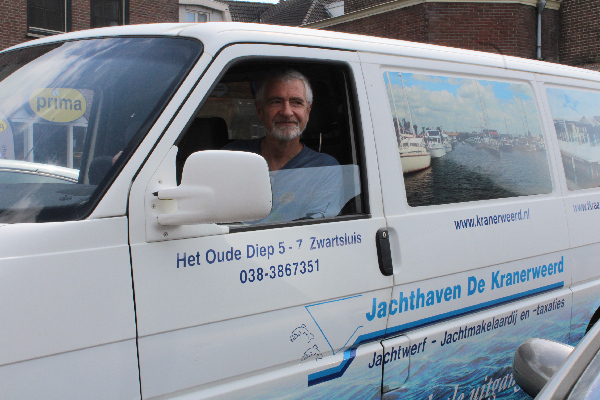
Using the van to load up on provisions
The wind was about Force 5 on the Ijsselmeer, enough to give us a bumpy ride at times. I was glad when we made it to Enkhuizen. We had four marinas to choose from. Not always the case I need to point out. Compagniehaven was the biggest marina I have ever been to. Could accommodate – at a guess 700 boats. The 3 other marinas although smaller were jam packed full of boats. We’ve experienced double banking on our boat. We’ve seen triple banking. In the municipal harbour in Enkhuizen – boats were tied up six abreast. Sextuple banking!
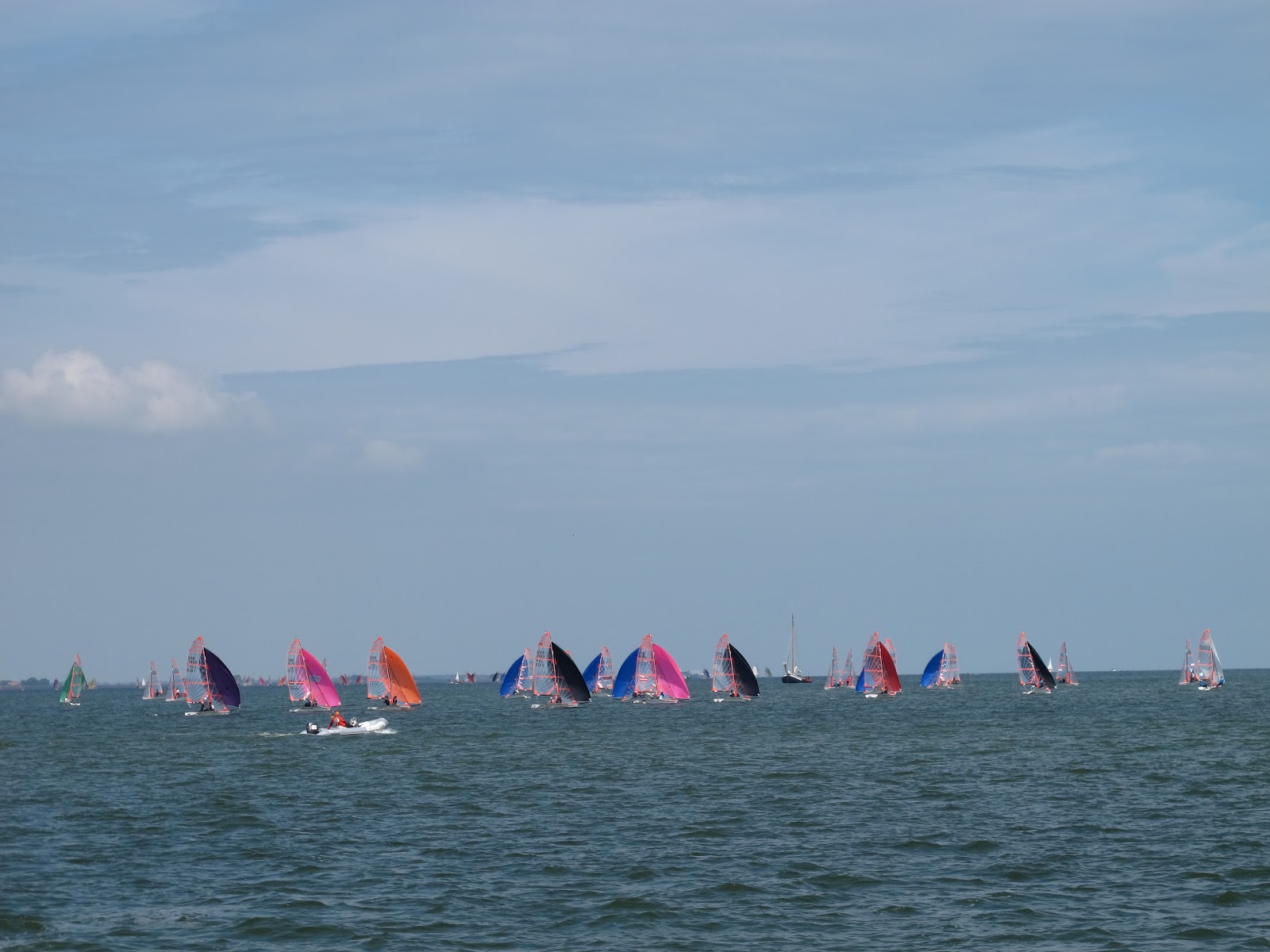
Sailing on the Ijsselmeer
Although my other half is a meticulous planner, and we have the Imray Inland Waterways guide books, it’s not always possible to know what to expect when arriving at a new place. The guide isn’t ever going to say a place is rubbish. They have more, or less, to say about a town which is something of a guide. And the name or size of a place doesn’t give much of a clue either. Some really big places have turned out to be industrialized and conversely tiny places were post-card pretty. Enkhuizen is a lovely touristy place with something we haven’t seen often – a Dutch beach! They also have the Zuidzee Museum which although pricey at €15 – is worth visiting. Not all Dutch museums have their information in English but this one did. We made the mistake of not allowing enough time for the museum. There’s an indoor part where they have exhibits and artifacts. But there’s also a huge outdoor section where they recreate an entire village. You can see a pharmacist, a cooper and a lime kiln amongst many others exhibits setup as they would have been back when. You can buy smoked herrings and Dutch sweets at the various shops.
Enkhuizen
They also have a walking route that you can follow on your own which takes you through and past the best bits of Enkhuizen. Since Sundays and Mondays tend to be pretty quiet in most places in Holland we knew we would need an extra night in Enkhuizen. The nice thing with planning and anticipating our journey, we had a bit of room to add or subtract a stop here or there.
Zuiderzee Museum
From Enhuizen we went back onto the the Ijsselmeer heading north, close to the coast, and popped back inland at Medemblik. Fortunately the weather was a whole lot better and it was a much calmer passage. We found a wild spot to overnight. Wild stops can be free but unlucky for us, this one cost €17. The havenmeester (harbour master) pitched up on his bicycle to collect his fee. Admittedly the wild stop did offer walstroom (electricity), water and an overflowing refuse disposal bin. But to put that in context, our night at Compagniehaven cost €26 and had everything you can think of, washing machines, supermarket and bakery, two floors of amenities and showers, restaurant, wi-fi, boat repairs and various items for sale. Utrecht marina cost us €12 including unlimited electricity. You still have to pay to use the showers at the marinas over and above the mooring fee. And you pay for electricity. And for water. It’s all metered and you drop in a 50c or €1 coin, or use a yachthavenbetaalkaart (yacht harbour pay card) which are only in use in a few marinas, press a button and it should work.
Wild stop
Your mooring fee is based on the length of your boat, the amount of people on board and sometimes a tourist tax. Private marinas are more expensive and usually offer the works – some even have a gym and free bicycle hire. Municipal marinas are cheaper but the facilities can vary from not so great to surprisingly good. Municipal marinas are often in the inner canals near the bars and shops. Nice to be in the heart of things. Not so nice if a group of rowdy people don’t want to go to bed, which certainly happens in the summer holidays.
Go to the start of this article by clicking – here.
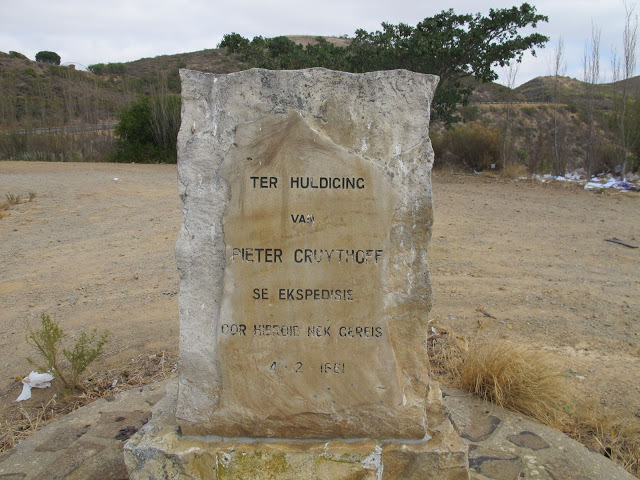
Pieter Cruythoff Memorial Stone
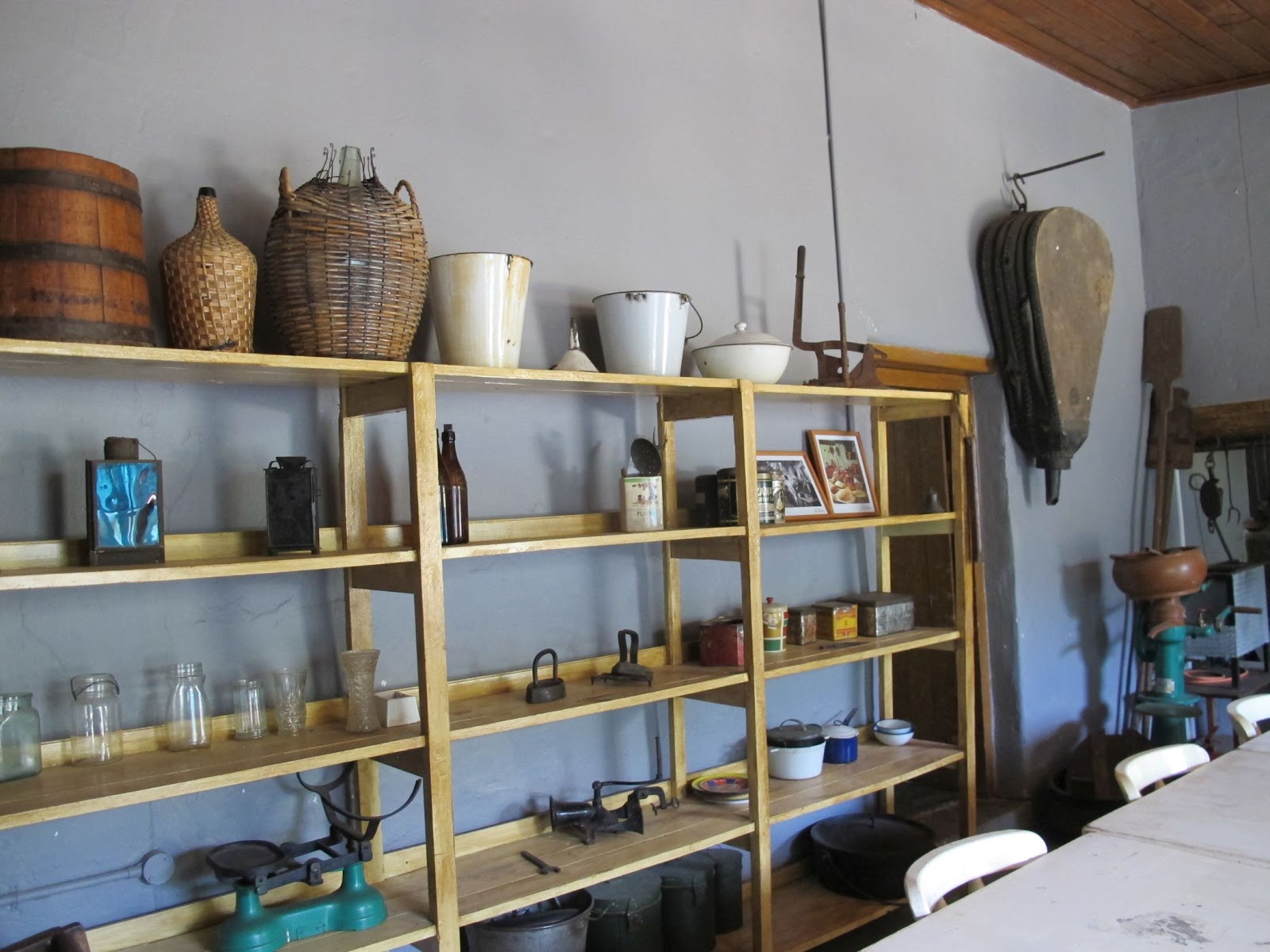
Another thing to do in the day is the the History Route. Download the details on www.riebeekvalley.info. It starts just outside Riebeek Kasteel in the direction of Hermon. We popped into Hermon thinking it would be as quaint as Riebeek Kasteel. It’s not. There’s a bottle store, a general dealer and an agricultural supply outlet. That’s it. The drive is not well marked but we managed to find most of the places or points of historical interest. We had to drive back and forth a few times before we spotted the Pieter Cruythoff Memorial stone. The museum at De Oude Kerk has genuine Boer (Dutch settler or farmer) day to day living items as well prehistoric tools. They have a touch screen information board where you can read as much or as little as you want.
Birthplace of Field Marshall J C Smuts
I loved the Jan Smuts museum at the PPC Cement factory. PPC is a bit of a blot on the outskirts of this pretty area but kudos to them, they have restored Smuts birthplace and turned it into a museum. You can see old newspaper cuttings and photos of Smuts. I worry that they have not been copied and the originals kept in a safe place but I consider myself lucky to have seen what they had on show.
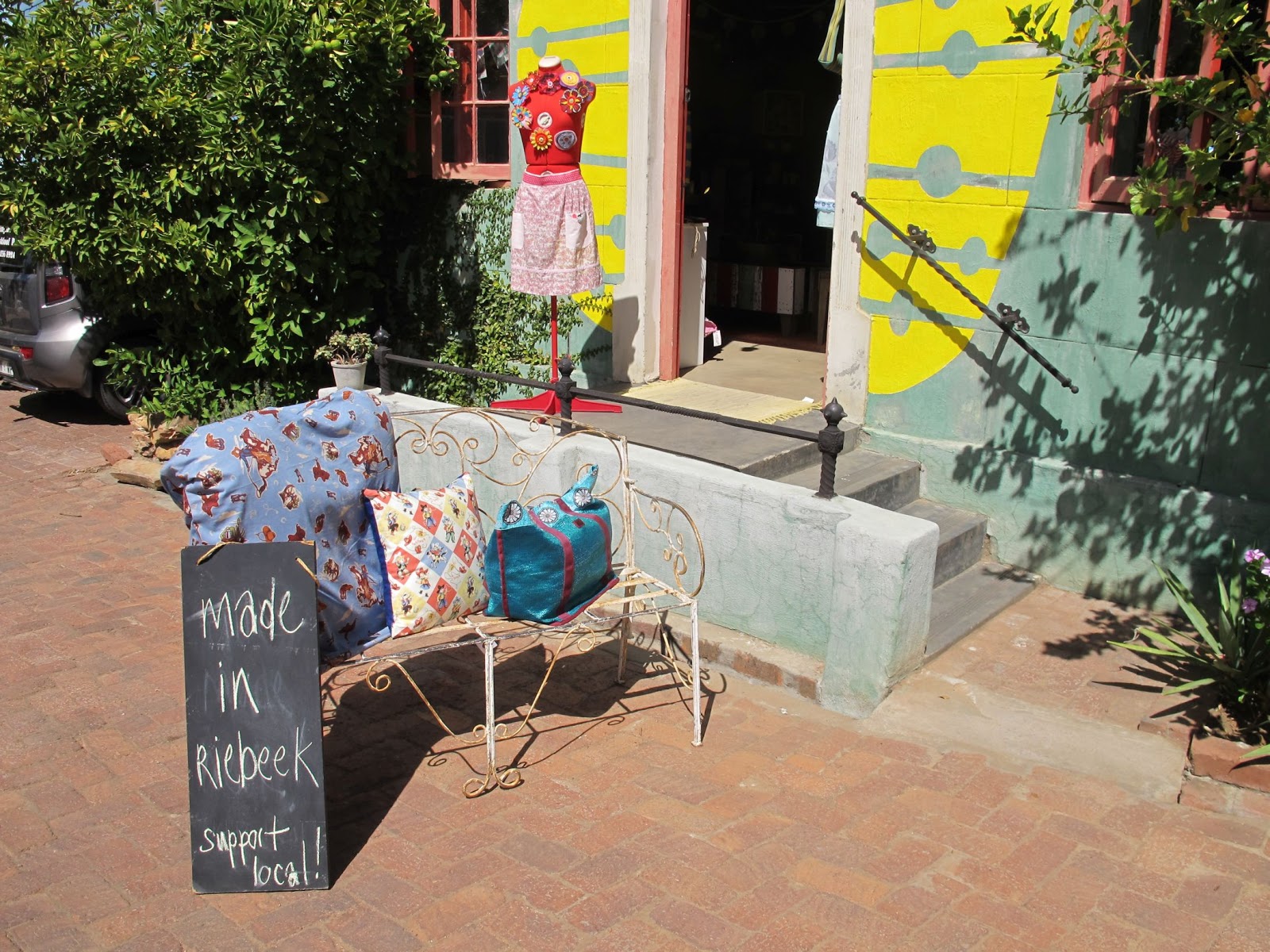
Local designs at a boutique in town
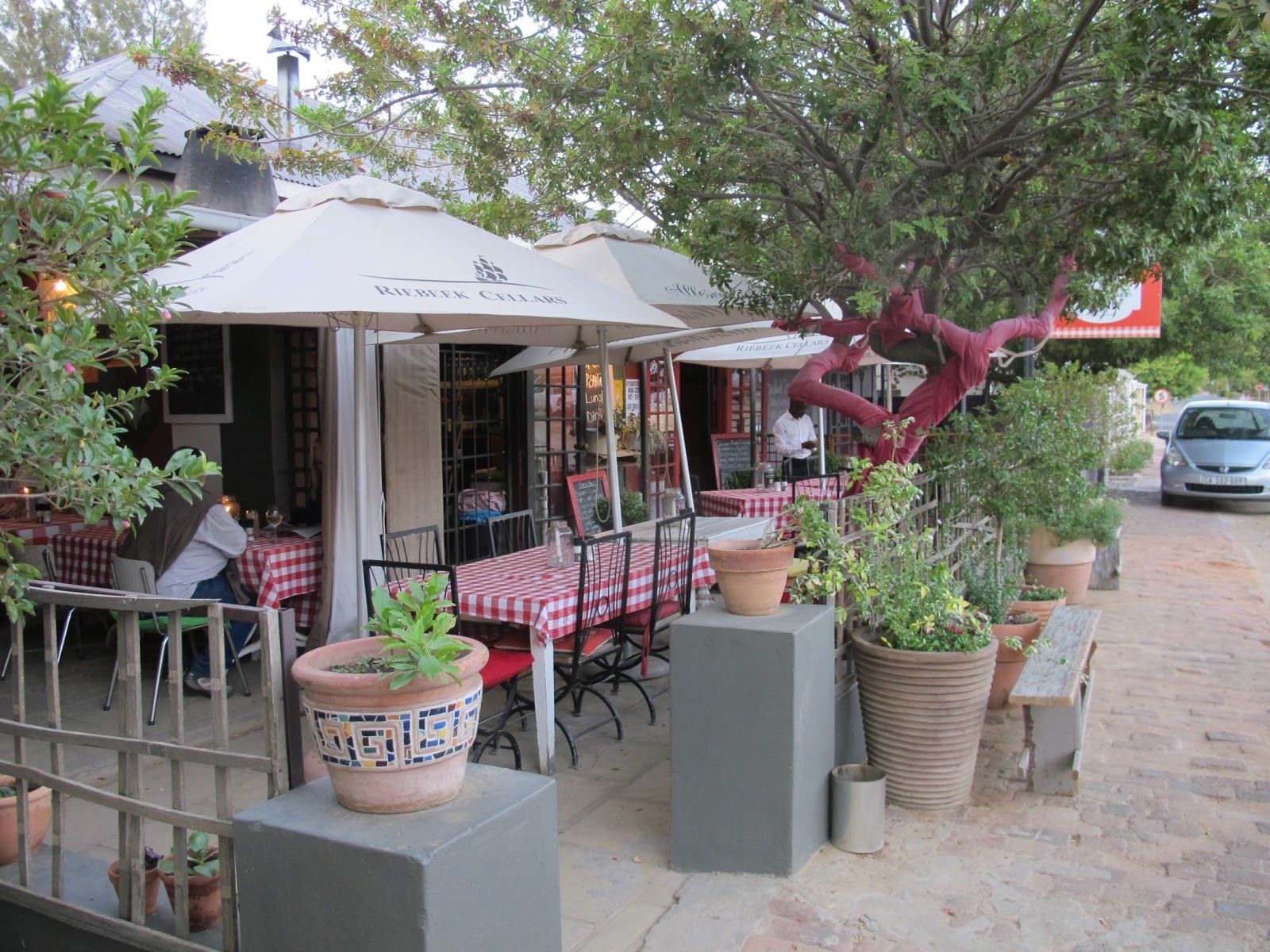
Don’t fancy driving? Well you could stroll around the central area taking in art galleries, boutiques, craft shops and eateries. We found art, ceramics, wrought iron work, clothing, home-made skin care products as well as jams and chutneys. That is by no means all there is to view or buy. RK has some rather out there decor in the eating places. Eve’s Eatery has a “chandelier” made from a bicycle wheel and various stuffed characters dotted around. They do a 3 bean burger which was good. We LOVED Mama Cucina. They do the very best thin based vegan pizza ever. It’s not on the menu but apparently they make it often so just ask.
The town square
Once the sun sets behind the mountain and the ambient temperatures drop, it remains light until the sun actually sets. Local residents come out in the cooler air and get fit walking, running, cycling or leisurely take their dogs for a sniff around. Kids come out to play or people head out for sun downers or a meal. We made sure we went walkabout with the dogs every day once it was cool and got to see as much of Riebeek Kasteel as we could. I loved the Beware of the Snakes signs. Not a common sight. We also got to see the tractors and trailers filled with grapes as farmer were furiously harvesting.
Local eatery
Since Riebeek Kasteel is a teeny tiny village, it doesn’t generate the same amount of light as a big city. Which means the stars shine brightly. The full moon is so bright it’s as if a light has been switched on outside. Even during full moon we could see Sirius, Orion’s Belt, Betelgeuse, Bellatrix, Castor and Pollux and The Southern Cross. How do I know this? My other half is a not so ancient mariner who still knows how to plot a course with a sextant. (He can tell the weather and time of day looking at the sky. The rest of us can download an app or map to do some star gazing. New moon is a perfect time.
Memorabilia at the Museum at Het Oude Kerk
After a whole week of time out we reluctantly made our way back home to face a never ending To-Do list. We were so lucky to have this break and should we come again, we know there’s lots to do. Having said that, doing nothing can also be fun.
Go to the start of this article by clicking – here.
Wijn Kollectiv Winkel
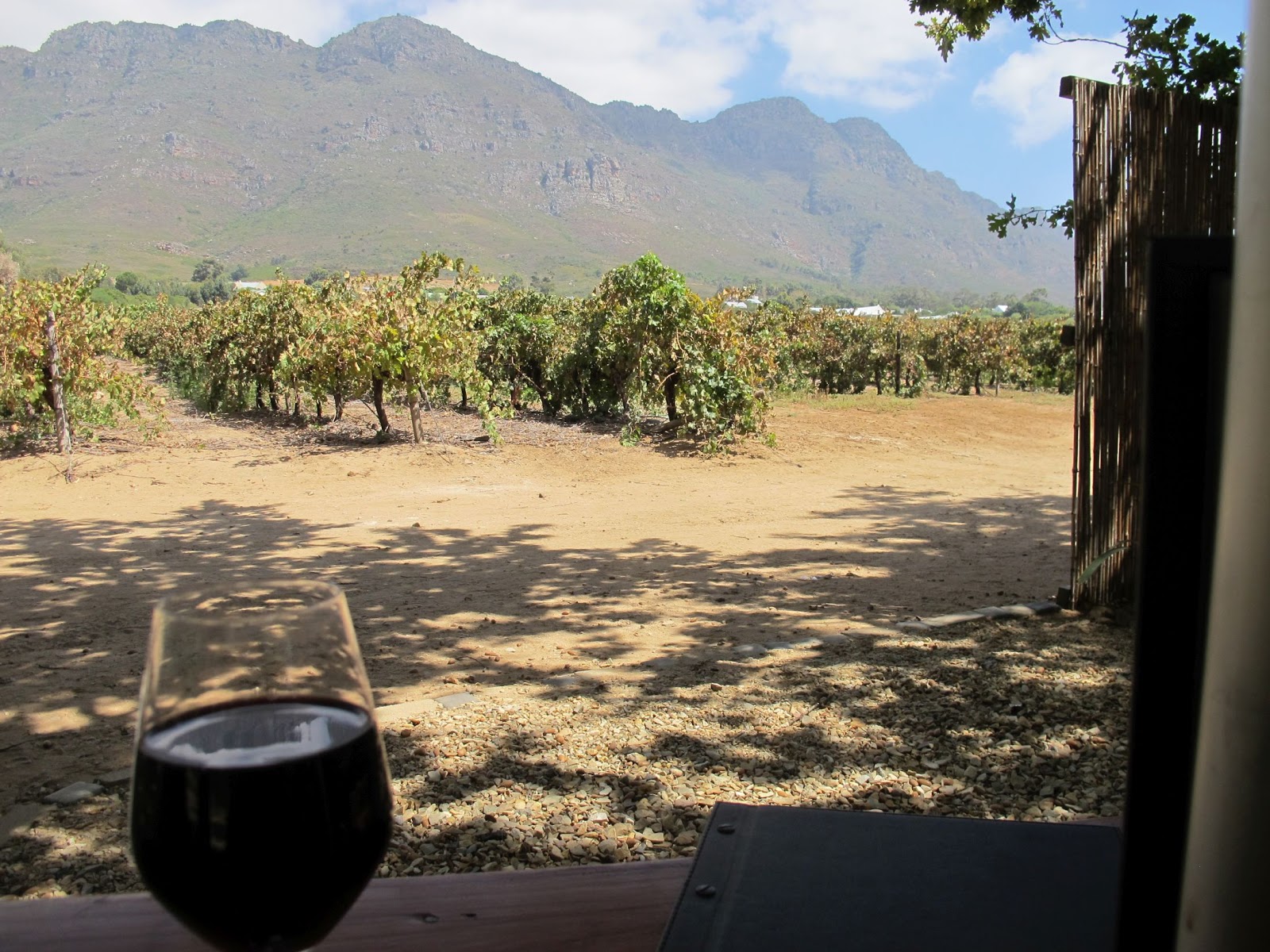
Riebeek Kasteel gets hell hot in summer so bear that in mind when planning day excursions. Wine tastings are a good way to start as wines from this region have a distinct character. It has something to do with the seasons and the soil. There are South African cultivars that grow particularly well in the Swartland (Black land) like Shiraz. Pinotage is unique to South Africa, it’s a new age Pinot Noir. Do make a point of tasting them. Visit The Wine Collective or Wijn Kollectiv in Short Street for wine tastings. They are in the heart of Riebeek Kasteel and stock a good selection of wines from the region to suit all pockets. We are unashamedly thrifty and the bloke who helped us wasn’t fazed by that at all. If you happen like any of the wines you bought, they do on-line deliveries all over the world. www.thewinekollective.co.za. Good to know.
Wine tasting at Allesverloren
Wine farms are without doubt a really big attraction in the Riebeek Valley. The nearest wine farms are: –
Allesverloren –
The name of this farm means – All is Lost. The widow Cloete who owned the farm came home to find the San people had set fire to the place and she uttered those words. The name stuck but don’t worry, the farm is in good nick. It is the oldest wine farm in the region. They do a wine tasting for R20 but waiver that fee if you buy wine. We liked that. And bought a few wines including a dry rose. Who knew rose could taste so good? They do an exceptional port but we’re not keen on sweet or fortified wines. The Pleasant Pheasant cafe is on the other side of the farm and they serve – great wine obviously – at a bargain R20 a glass – but pizza, burgers and quiche with chips or salad. Not gourmet, but good. They are the only vineyard that has a restaurant unlike most of the other wine routes in the Cape.
View from our walk at Pulpit Rock wine estate
Pulpit Rock –
I mentioned we did a walk from this wine farm earlier in this post. You may want to do the same. Pulpit Rock is a new winery, the first grapes were harvested in 2004. It belongs to the Brink family who have been farming in the area for more than 5 decades. I loved the wines. And loved the prices.
Kloovenberg Wine Estate Riebeek Kasteel
Kloovenberg –
We couldn’t do wine tastings – and still drive – to all the farms so this one sadly was given a miss. Hey, there’s always a next time? What’s nice about this estate is that it has buildings going back to the 18th century. It was mentioned in the History Route Guide as a “must see” for it’s architecture.
Lunch Break at Pleasant Pheasant at Allesverloren
Swartland Winery –
We never got to this winery either but apparently it’s a good source of exceptional quality bargain wines. They won 4 Bronze and 2 Silver Decanter World Wine awards in 2013 and 2014. Their Pinotage and Shiraz were in the top 100 wines in South Africa in 2012.
Italian restaurant in town
The Swartland Wine Route is a bit further out and includes even more wine farms. Ask for a Swartland Wine and Olive Route map at one of the wine farms or find it on www.swartlandwineandolives.co.za. We’re partial to dry reds. Have to say, the dry reds in this region are right up our street. These wines definitely need to breathe to be at their best. My husband and I tend to buy organic wine but over the years of visiting wine farms we have noticed that farmers are steering away from using a plethora of biocides – aka herbicides, insecticides, nematicides, termiticides, molluscicides, piscicides, avicides, rodenticides, predacides, bacteriacides, fungicides – yes really – and engaging in a more natural approach to vinticulture. I’ve not seen nets covering the vineyards before to keep birds out, but saw them on this trip. And we heard birds in the area. Yay! So although the wines aren’t labelled organic, they are much cleaner than in the past. South Africa exports a LOT of wine to Europe and the EU standards for pesticide levels are high. Also a consumer shift to cleaner and greener wines is forcing vineyards to be compliant to stay in business. Great news.
Local olives
Don’t forget to do an olive tasting as well. Should you miss out on olives at any of the wine farms you can always pop in to Het Vlok Casteel which is right in Riebeek Kasteel. They sell the best olives ever. And other olive products such as skincare and oils.
Move to Part 4 with – this link.
If you go to My Holidays and Trips page you can find out about other places we have been to.
To read about this trip from the beginning – click here.
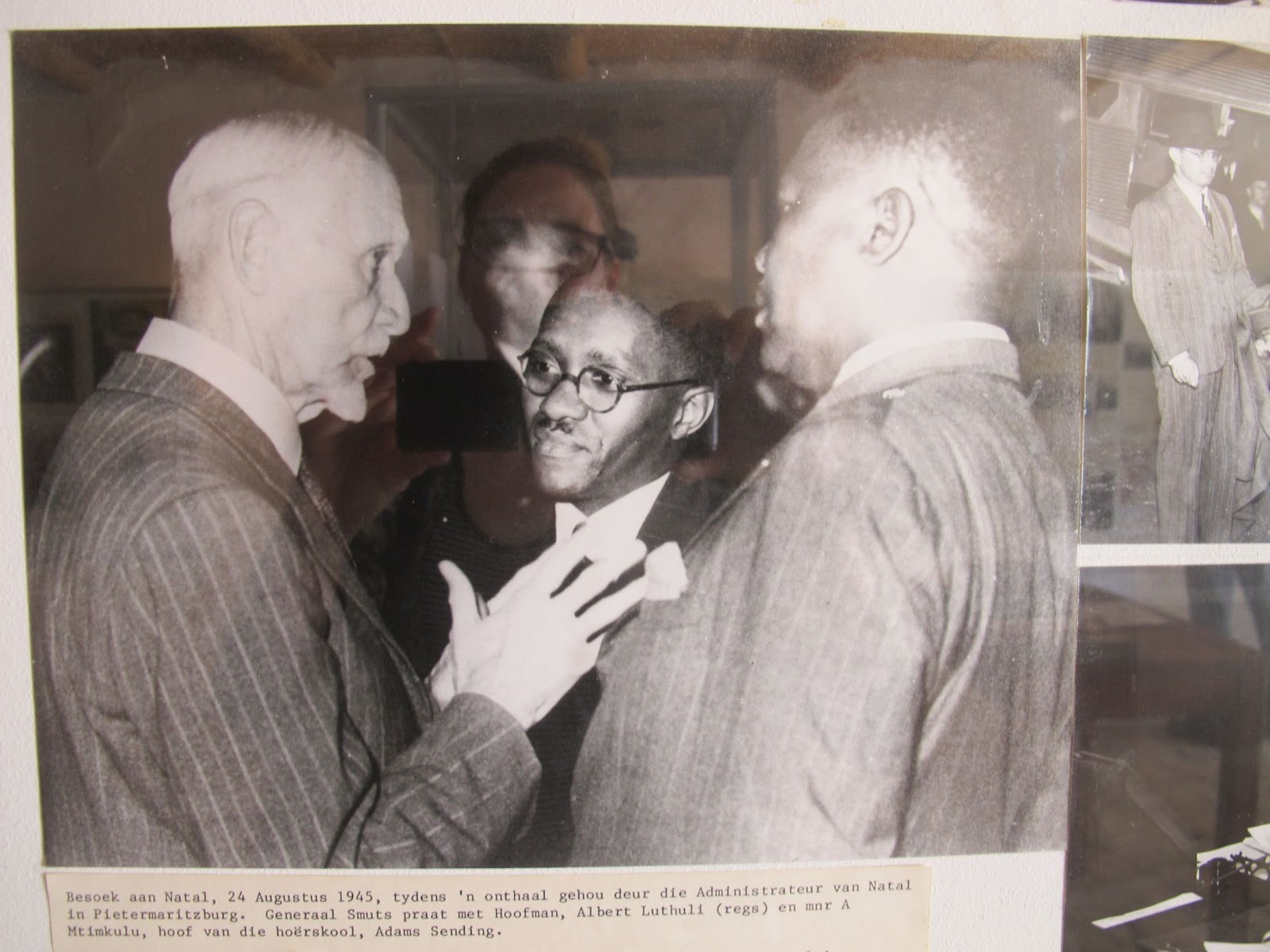
General Jan Smuts with Albert Luthuli
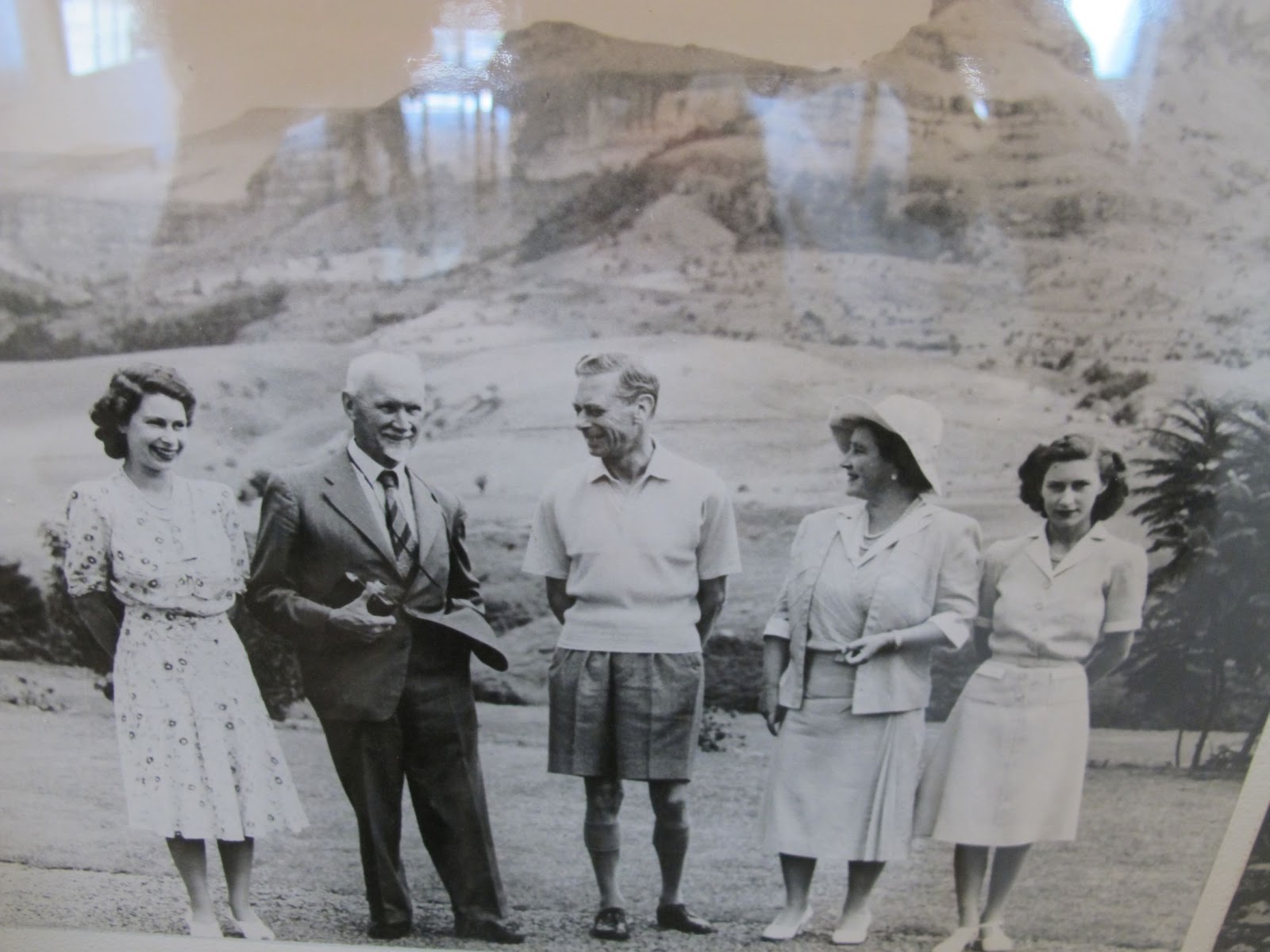
This area is birthplace to one fondly remembered political leader and another less so. Field Marshall Jan Christiaan Smuts was born in Riebeek West. He fought in both world wars and was head of state for South Africa twice. He is credited as the father of Holism. What is Holism? Smuts defined Holism as the “tendency in nature to form wholes that are greater than the sum of the parts through creative evolution”. He was also instrumental in keeping South Africa on good terms with Europe and the west. He had a big role in establishing the League of Nations. Smuts spent a considerable amount of time out the country which was viewed with negatively by the opposition National Party and contributed to his downfall. Jan Smuts was an avid outdoorsman and nature lover. He took great pleasure in taking the British royal family amongst others on hikes in the South African mountains.
Smuts with the British royal family in The Drakensberg
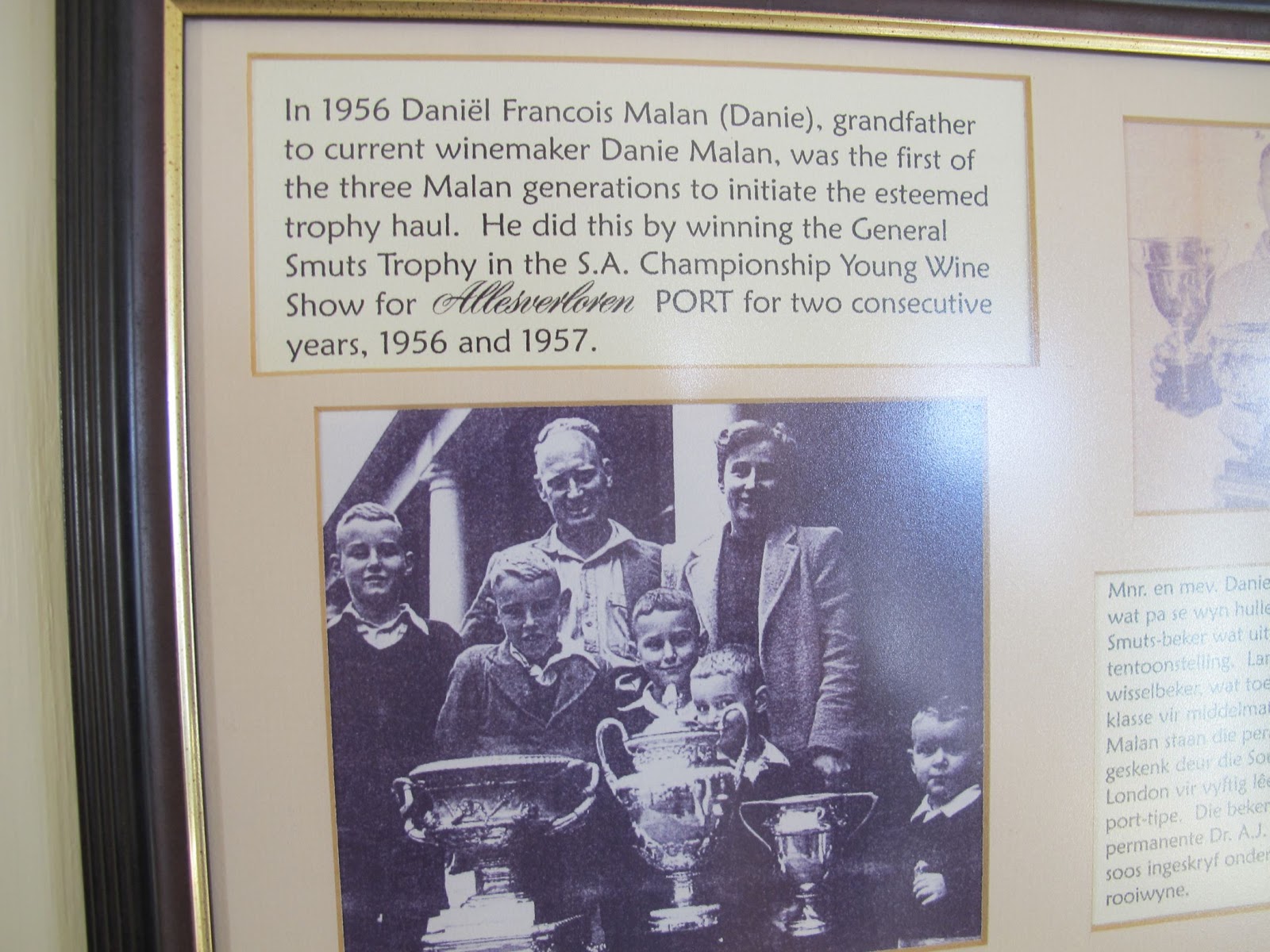
The other politician from the area is Daniel Francois Malan. He succeeded Smuts and is widely known as the architect of apartheid. The National Party got into power and proceeded to implement racist Apartheid policies. He was born in Riebeek Kasteel. His descendants still run the wine farm Allesverloren successfully. Malan’s descendants or family do not all share their ancestor’s ideologies. Riaan Malan wrote an excellent book called My Traitor’s Heart sharing his views on people and politics in South Africa after spending much time abroad.
D F Malan
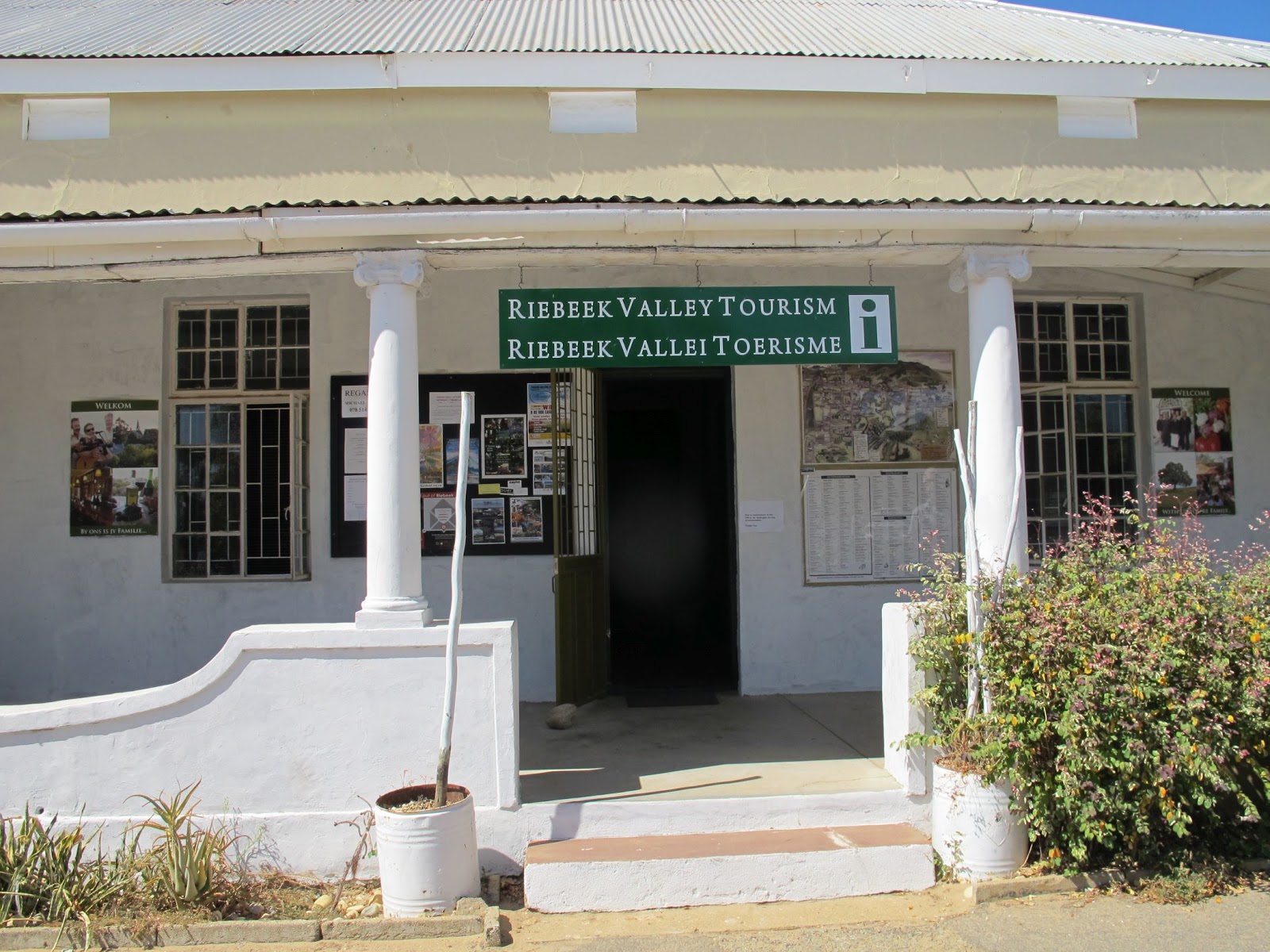
What to do in the Riebeek Valley? The Tourism Office was friendly but not that helpful. We waited over half an hour for them to open during time they were supposed to be open. Once inside they had a quirky free map which they happily gave us. But volunteered almost no info. We had to ask. Are there good hikes? Um, yes. They have the Carl Thunberg Route and the Pieter Cruythoff Route.
Tourism office
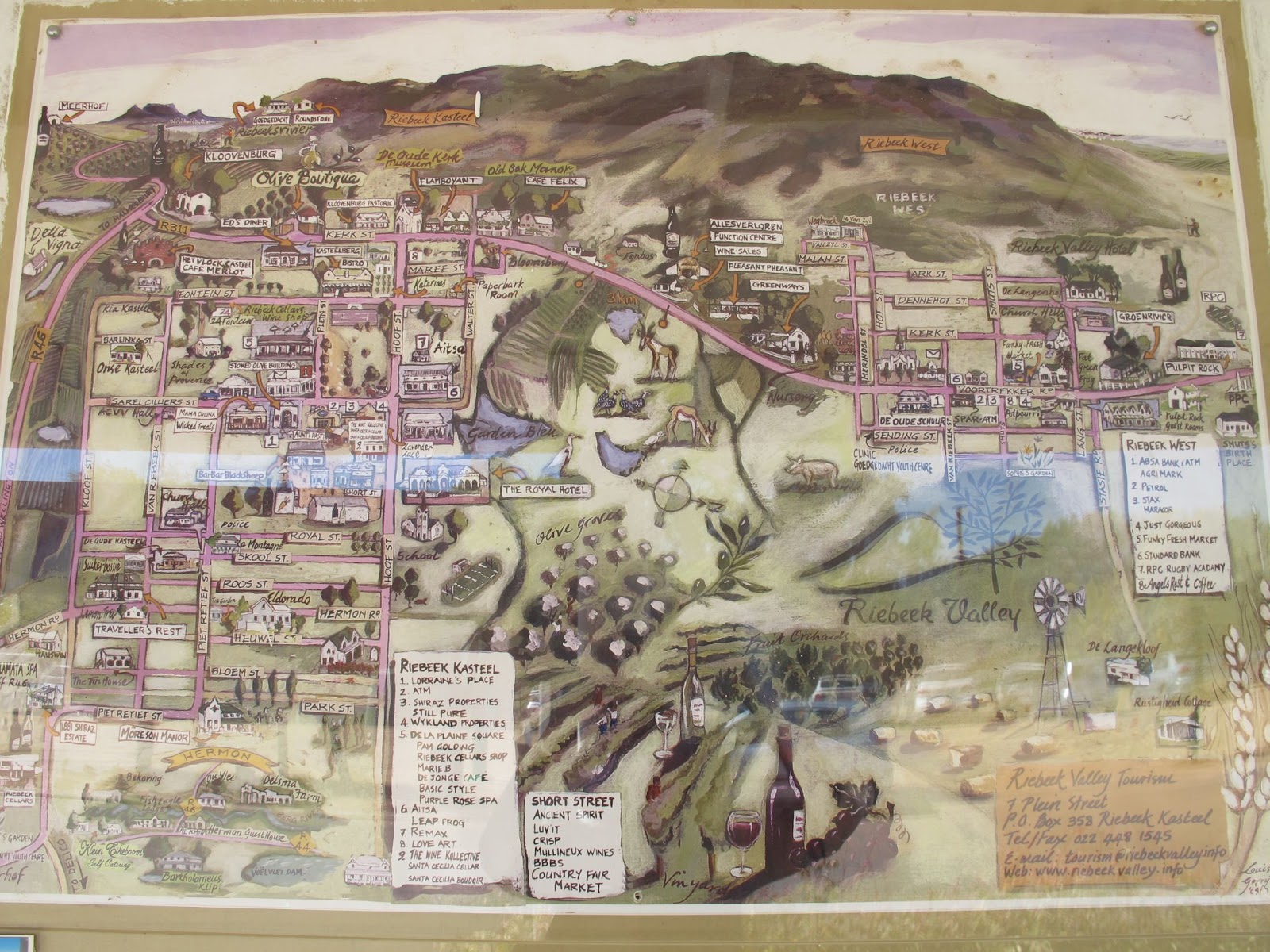
Neither are a Sunday leisurely stroll – but hey we would have liked to know about them. You apparently need a permit so they – whoever they is – know who is on the mountain for safety purposes. You supposedly get a permit from the Tourism Office or The Royal Hotel. Except the Tourism Office can’t afford to print permits so they don’t have any. You also need consent from the wine farm as the hikes are on private property. Some wine farmers get a bit upset when ramblers help themselves to grapes. Understandably so.
Quirky map
We decided to do the Pieter Cruythoff route as it was shorter and easier. You start at Pulpit Rock Winery. The woman there was super helpful and gave us a laminated copy of a map. The route is overgrown and we gave up trying to find the path and just walked as much as we could. We decided to do a spot of wine tasting while we there. Such nice wines. And the best prices. How could we not buy wine? We ended up with two cases of wine.
Pulpit Rock Hike
There are more hikes further out – Silverfontein Hiking Trail on the slopes on the Elandskloofberge, Waterfall Forestry Reserve (contact Tulbagh Tourism Office), Murludi Hiking Trail (north of Tulbagh) and Die Hel or Groot Winterhoek. Perhaps they are more structured. Turns out there are cycle routes too. Not sure about permits as we aren’t cyclists.
Funky Fresh Market Riebeek Kasteel
We also asked at the Tourism Office if they had any markets. Yip, they have the Funky Fresh Market on the first Saturday on the month in Riebeek West. There was even a leaflet on it. Not the biggest market in the world I will admit, but it’s a market. It’s next to the main road. You can hardly miss it. They sell items like hand crafted soaps and jewellery, fresh juices and smoothies, artisan bread, home made food, coffee, antiques and loads more interesting stuff. There is also a Sunday Market @ The Barn. We weren’t told about it, so we never got to visit that one. And there is a museum at De Oude Kerk. We discovered that by driving the History Route. Actually there is LOT to do.
Royal Hotel
Luckily we discovered a whole lot going on in Riebeek Kasteel by accident when we went to the Royal Hotel to catch up on comms. The Royal Hotel is the oldest hotel in South Africa. It’s the top place to visit on Trip Advisor, plus they do really good coffee. When you sign up for their bfound wi-fi you can subscribe to the Riebeek Valley Newsletter. So perhaps do your own planning to ensure you won’t miss out on stuff to see and do. Go to newsletter.rv.wc@bfound.co.za.
Read the rest of this article – here.
For more on places we have visited click on the My Holidays and Trips page.