Our next stop was Huy. We clearly were pronouncing Walloninan place names all wrong. People did not know what we were talking about. Huy, which we were calling hay, as in straw, is actually pronounced like the French word for yes, as in Oui. When asking for a Carrefour, a French supermarket, we were saying – Carry For – but it’s pronounced – Khar Foohr. Given that it was still the height of summer, and France is a boating Mecca, we were expecting to see a lot more boats on the waterways. Belgium is a through route to France for a few countries. The Meuse River from Liege is mostly unspoilt by heavy industry and I think beautiful. I would rate it up there with some of the scenic routes we have passed through in France or the Netherlands.
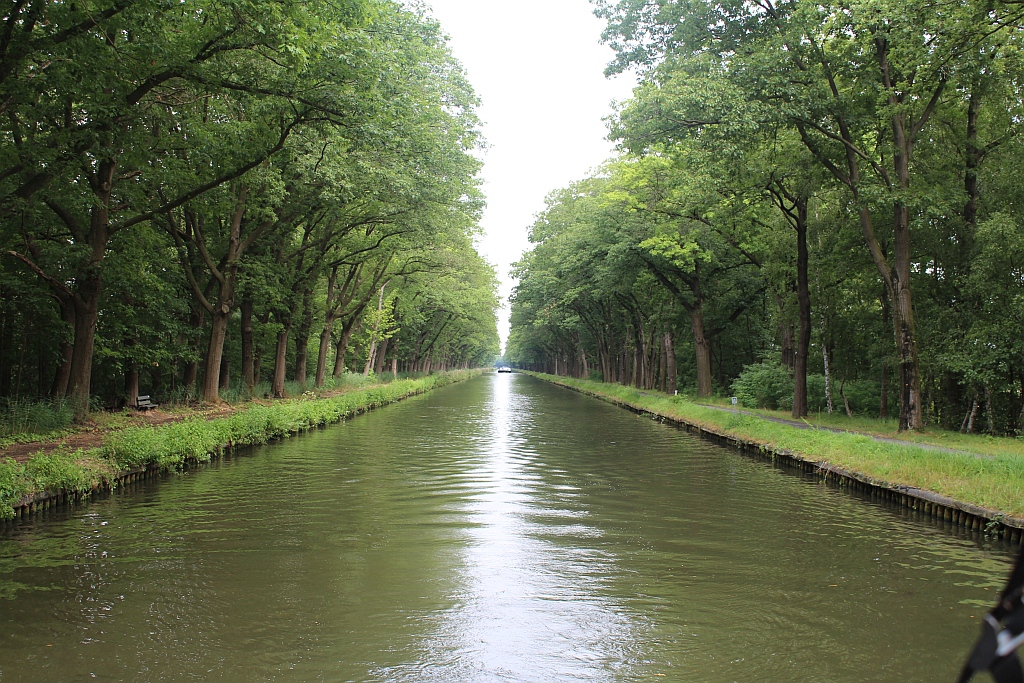
Approaching Huy via the canal
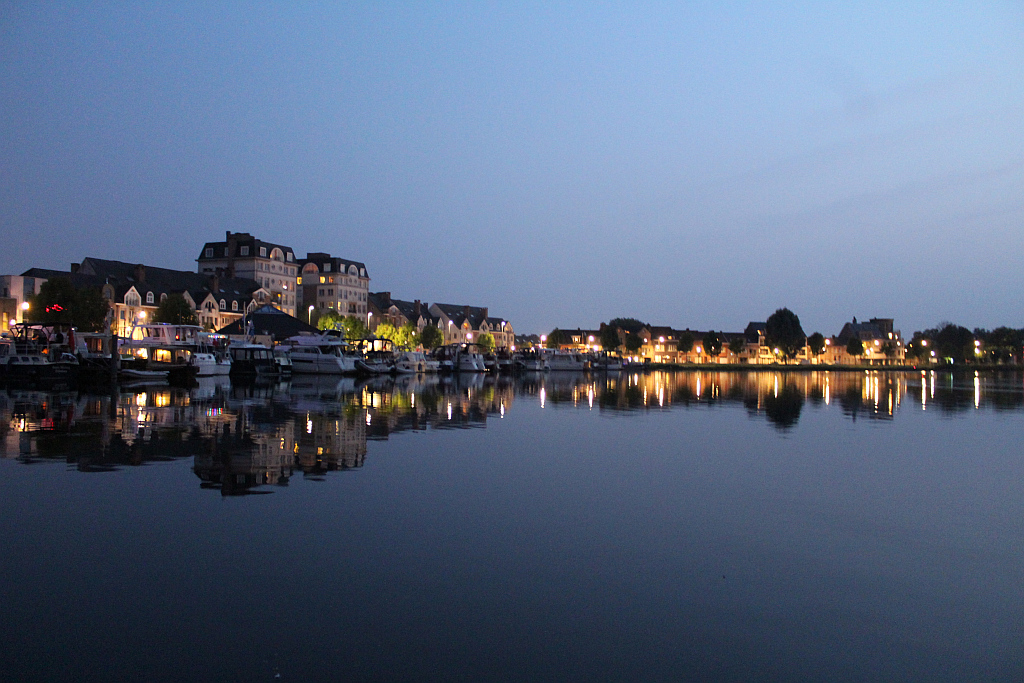
The marina at Huy was a pleasure. Nice clean showers with 24 hour access, a restaurant, full strength wifi, water and electricity included in the €13 fee. There were 5 other boats with us in the marina. My husband and I took a day out and went to explore Huy. The marina is about 1.5 kilometres from the town centre. We walked along the river and over the bridge into the town. It was market day. There were some familiar faces from the Liege market. We found what we thought was a Tourist Info office but later discovered a proper one near the fort. The woman there tried to be helpful but could not speak a word of English. She gave us a map and marked key attractions and shops for us. We got by with a mix of our awful French and gesticulations. She probably wondered what the hell we were doing there but was kind enough to help us anyway. I’m sure that scenario would have made a great comedy sketch.
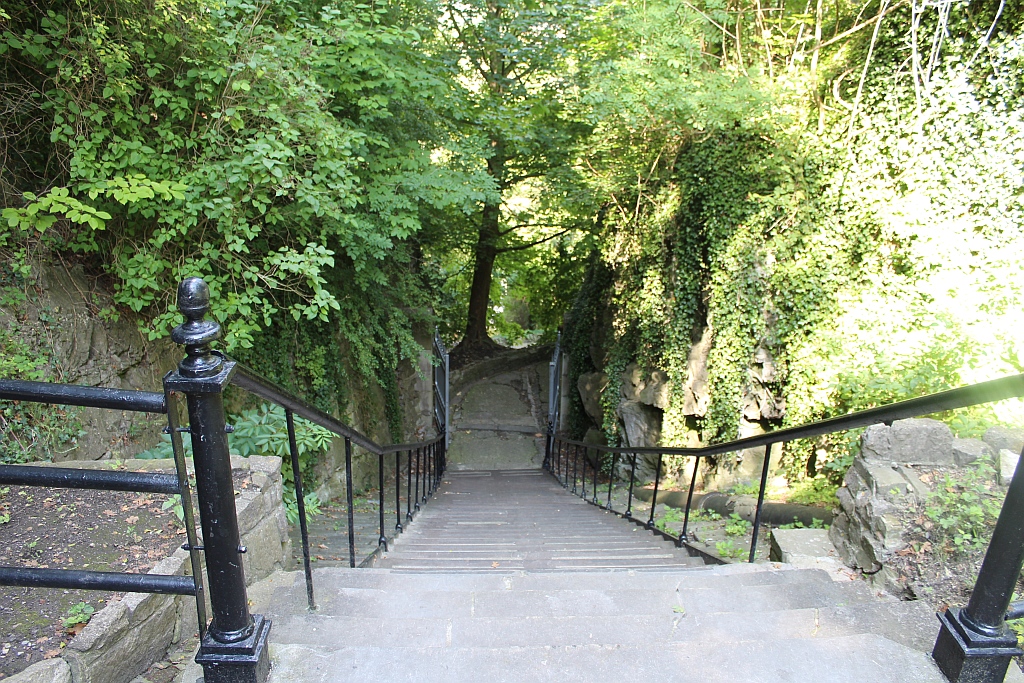
Stair to the fort
The cable car to the top of the fort was out of order so we walked up. With all our purchases from the market. It’s a steep walk up. Not the smartest idea, but we managed. After that we walked out of town to find a hardware shop. My other half wanted empty gasoline canisters. We’d been asking about fuel top ups en-route and discovered that not many marinas sell fuel. A bit of a problem. Our solution was to buy diesel from regular car fuel stations when we encountered them in close enough proximity to our boat. We had bought a shopping trolley which we used to wheel our groceries back to the boat. It’s possible to remove the bag from the frame. We could roll the fuel back to our boat on the frame and not have to carry it.
We were just over a month on Shangri La. Heading steadily south and the time of year was edging closer to the end of summer. The sun was setting earlier. When we left Zwartsluis it was light as late as 22.30pm. Now it was dark by 21.00pm. With the passing of time, our boat had become home to a few insects. Spider webs were popping up all over. I don’t like bumping off creatures but I was removing spider webs from the rails and awnings regularly.
Friendly swan hoping for a snack
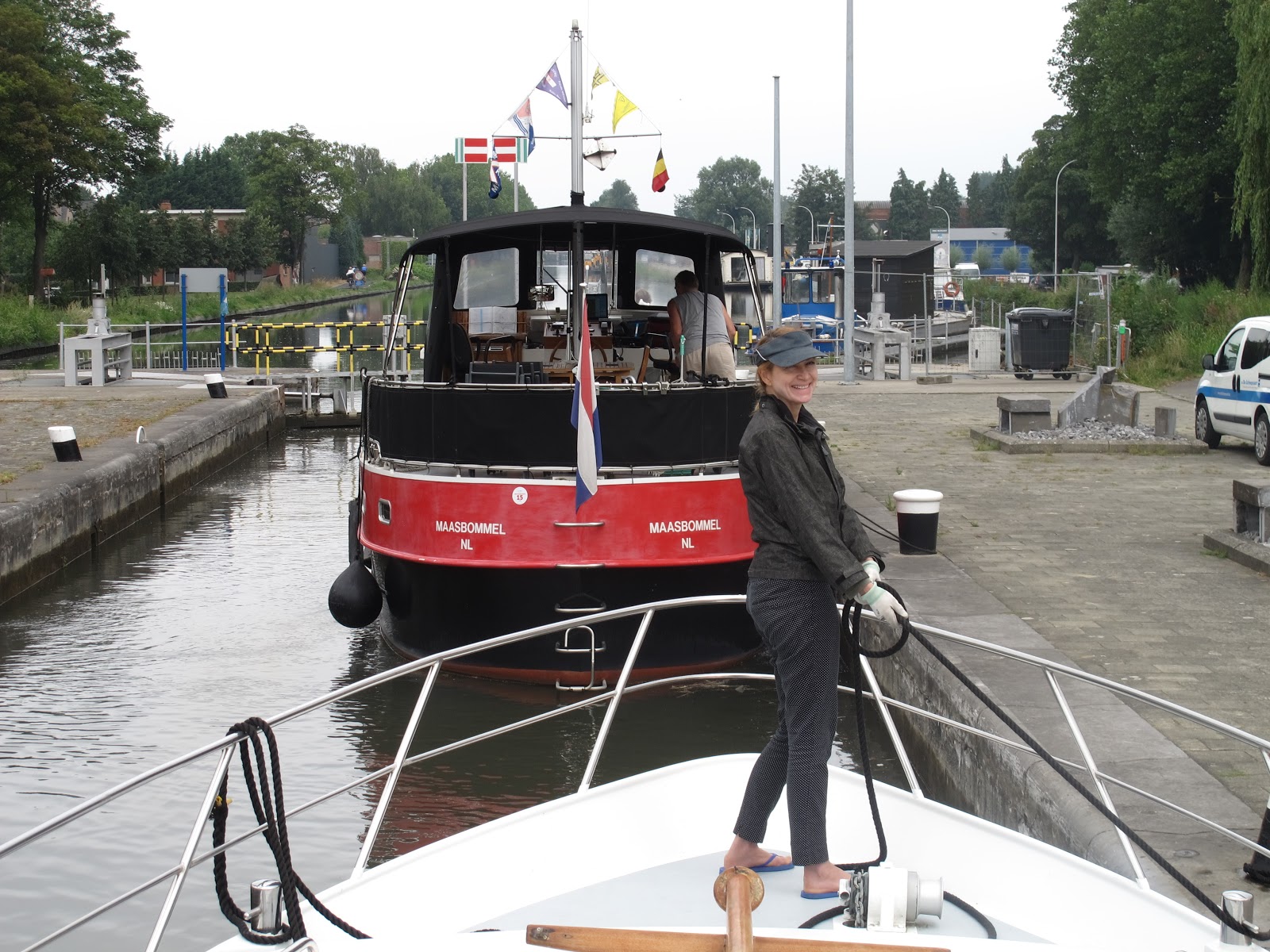
The next place on our itinerary was Namur. Before we left I dashed round the corner to pick wild berries from the bushes. They are yummy. And free. After about four hours motoring – excluding time spent waiting for locks – we arrived in Namur a total of 32 kilometres later. Both locks went smoothly with minimal waiting time and we berthed around 14.00pm. A person can almost always spot a hire boat in the locks. I’m sure the lock keepers must have a laugh. Not that I know it all, and for sure a few years back I made those same mistakes. But people on hire boats have no idea what to expect or how to handle a boat in a lock. They put out a single rope. They leave it slack. They focus on having a holiday and basking in the sun. They don’t know how to manoeuvre a boat. Once the water starts flooding into the lock it creates turbulence and surges causing a boat to bounce all over the place. Which is why two ropes – a front and a back rope are critical. They need to be reasonably tight to stop the boat bashing about. And keeping an eye on all corners of the boat. Using boat hooks and fenders to stop bashing is rather important. We saw a hire boat sink before our eyes in a lock in France. It happens.
Marina in Huy
We chose not to use the private marina but to rather moor up next to a quay at the municipal mooring spot. As we came in we recognised a few boats from other places we had stayed. And gave a recognisory greeting. We chatted to one or two people. A Brit/Belgian couple told us they had sold up everything and now lived on their boat. All year round. They usually find a marina with all the trimmings for the winter months when the canals have limited services or close before they freeze over. They gave us some handy boat wintering tips. Another Dutch/Australian couple were making there way back to the Netherlands from a few years spent in France. He commented that things are a lot cheaper in France but nothing works. I hoped he was a cynic.
Namur
Once tied up securely we consulted MapsMe app to locate the centre ville (town centre) and once there, looked for Tourist Info signs. They’re usually easy to find – but not always. You might remember in Ghent the signs pointed in the total wrong direction. One new thing to get used to is making sure we had ID on us. A Belgian requirement is to carry some form of ID.
Namur
The lady at the Info office was wonderful. She made suggestions and gave handy leaflets. We asked about places to buy our kind of food – read organic, fresh, wholefoods and vegan – and she gave a host of options. It was too late to start any serious exploring so we went back to the boat and read up on Namur. The guide book had a mini walking tour which was a must. There was also a mention of a Friday organic food market from 15.00pm to 19.00pm in the car park of the Omnisport Hall in chaussee de Dinant which is off avenue de Plante. Another must. While it may not be strictly sight seeing we like opportunities to engage with locals and meet like-minded people.
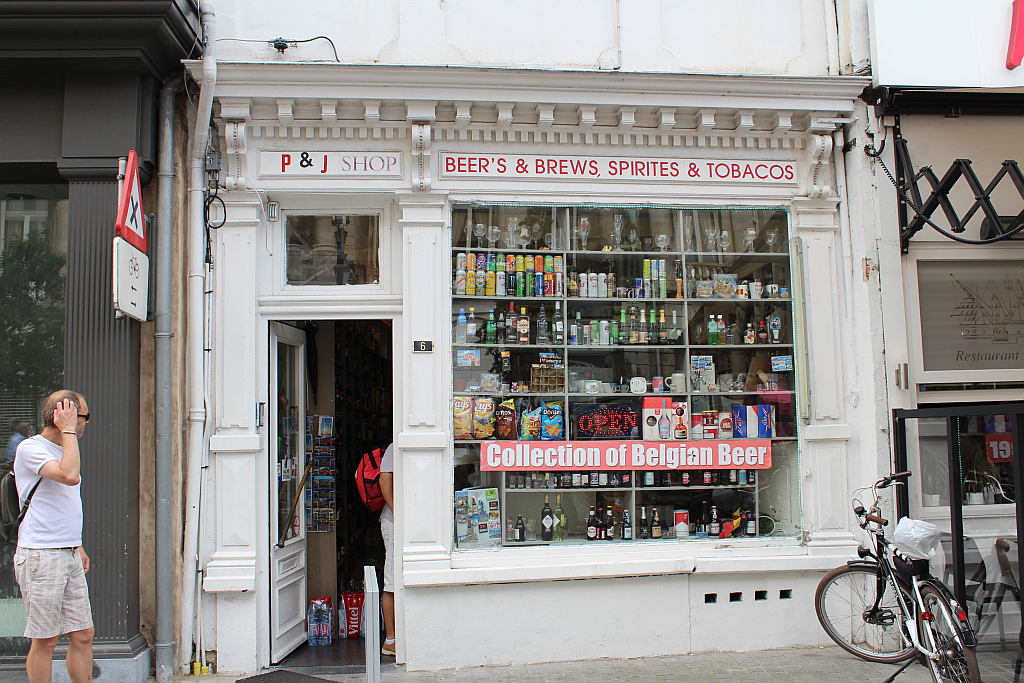
I still struggled to understand Flemish. But I was starting to see a Gallic influence in Belgium. Local supermarkets had four times the space allocation for wine. We stared and stared at the range of beers on sale. Never in my life have I seen anything like it. Their pastries looked sublime. And you could buy hand-made chocolates – at the supermarket! We avoid cheeses but the cheese selection was looking a lot more French. And of course, although we were in Flanders, we heard a bit of French spoken around us. I could see a bit of southern Europe in the appearance of locals. I also noticed holy Mary statues on the corners of buildings.
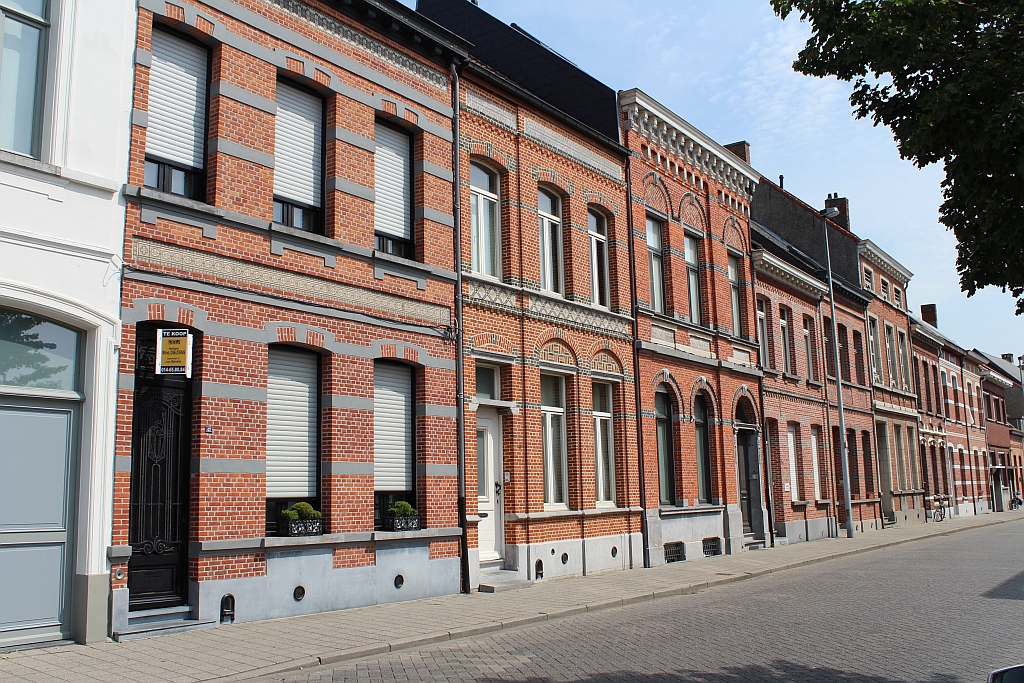
Turnhout is the heart of the brick industry
The shift from super industrial Antwerp to sleepy rural St Job – which was our next stop – was dramatic. From the frenetically busy Albert Kanaal we turned off into the Schoten-Dessel-Turnhout Canal and it was instantly rural. The little marina in St Job was an absolute pleasure. No more sharing Internet with hundreds of humans. It worked. The showers and toilets were immcaulate. Havenmeester came out to meet us and we got a parking space right next to the facilities. There were only a few more boats to arrive after us and that was it! Even the barges tied up along the banks of the river for the night.
Schoten-Dessel-Turnhout Canal
Speciality foods to try in Belgium? As aspirant vegans most people would think we don’t have many options. But we do. Belgian frites are available on nearly every corner. We skip the mayo and have salt. We found dark Belgian chocolates which are milk free with nut and fruit fillings. Don’t know how they do it but Belgian chocolate is good. And Belgian beers are the business. There are around 400 different beers in Belgium. A person could drink a new beer a day for a year and still not get through all of them. Brewing is an art in Belgium and the Trappist monks seem to have been blessed with a knack of making what we think are the best beers on earth. I was told by the vegan I met in Antwerp that all the Trappist beers are filtered with a reusable sediment and contain no animal products.
After one night in St Job we set off for Turnhout. Four locks and 10 bridges that needed to be opened. The Imray book said the waterway operators keep in contact with each other and open the bridges for you. But we found that you had to call them up on Channel 20 on the VHF radio. A bit of a problem as ours wasn’t working. We had yet to find someone who could fix it. Fortunately we were in convoy with a family who lived on their barge. They spoke a little Dutch and got us through. There wasn’t a lot of space to moor but a sweet elderly chap motioned us to a space next to his boat. And helped us with our ropes. I love that people pitch in and help out with ropes. We’ve met some lovely people on our travels. By 7.30pm the havenmeester (harbour master) still hadn’t come to collect his mooring fee so my other half went looking for him. The havenmeester came past later to let us all know that there was a public holiday that weekend which would affect bridge and lock opening times. We were grateful for that info. He looked just like Father Christmas. A most unlikely looking havenmeester. His English wasn’t great but we managed to get by with a mix of English and Afrikaans.
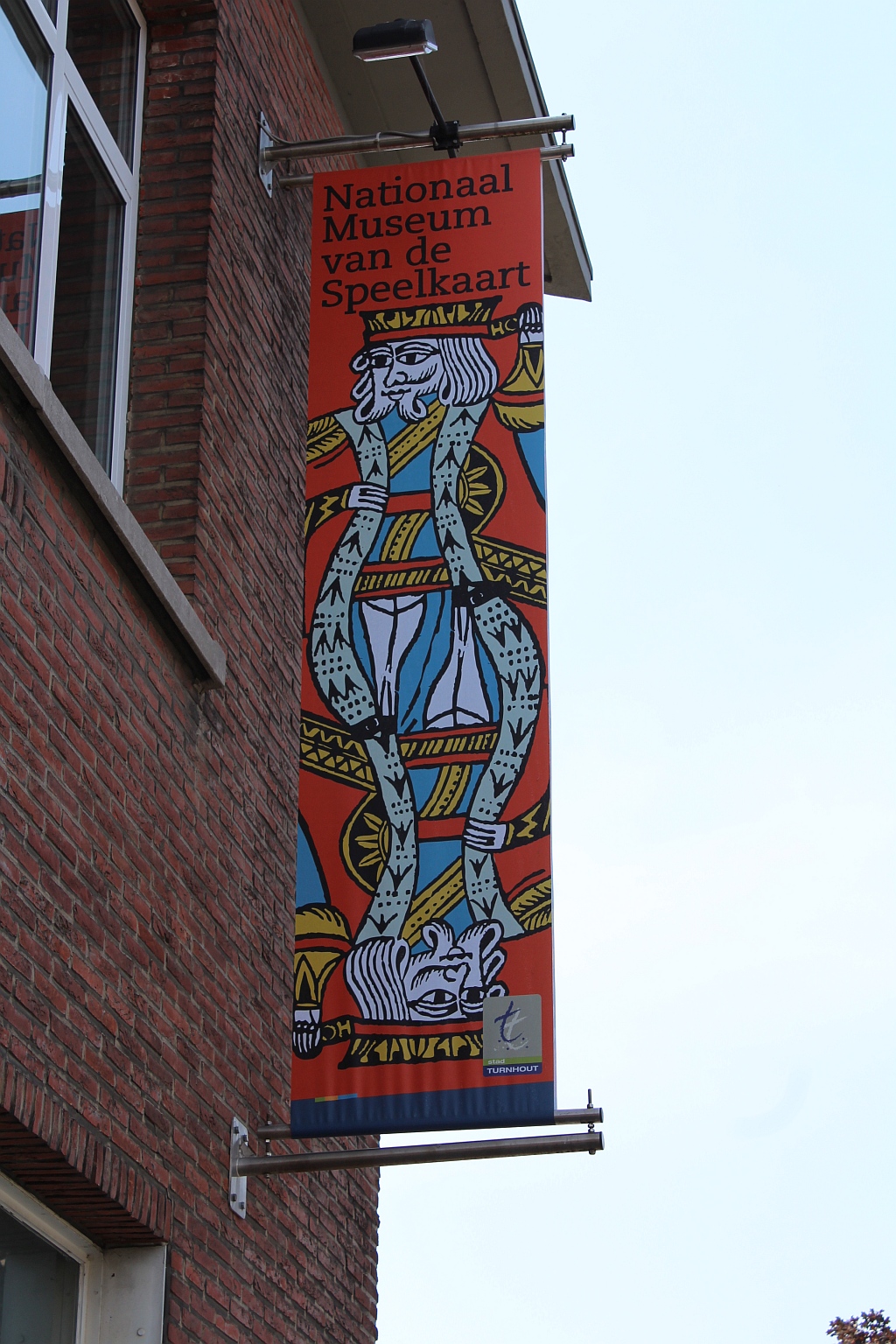
Playing card museum in Turnhout
Turnhout, capital of the Kempen region in Flanders is the main shopping area. Expect to find the usual retailers represented. Turnhout is where bricks are made. If you look at their houses, but also the local castle, you can see fancy brickwork with different coloured bricks. It’s also an agricultural region. The Dessel Turnhout canal winds through farms and the region is distinctly pastural. It’s flat and the canal is surrounded by a mix of tall trees from Oaks to Copper Beeches. We were expecting more boat traffic in such a pretty area but it was surprisingly quiet. Which is a pleasure on a wide canal. So I’ve mentioned it’s been hot. Europe had experienced 8 consecutive weeks of high temperatures which had caused a water shortage on the canals. The lock-keepers were being judicious with openings and closings. We had to wait for a boat to lock down before we could lock up.
Card playing museum Turnhout
This area is distinctly reminescent of the northern French canals with a tow path and tall shady trees on either side. Except you encounter the odd small working barge. Knowing there was a public holiday disrupting bridge and lock times, we thought it best to go as far as we could along the Kanaal-van-Dessel-over-Turnhout-naar-Schoten Kanaal. Yes we were on schedule, but a person never knows what can happen en-route. Bridges break, boats give trouble, public holidays all conspire against a proper plan. We both prefer to have a day or three in hand with our travel plans. And on that note, we think that boat hire companies are far too ambitious with their recommendations. Yes, a person does want to see as much as possible. But part of being on a boat is relaxing. And enjoying your trip, your meals as well as exploring local villages and markets. A hectic boating schedule puts paid to that.
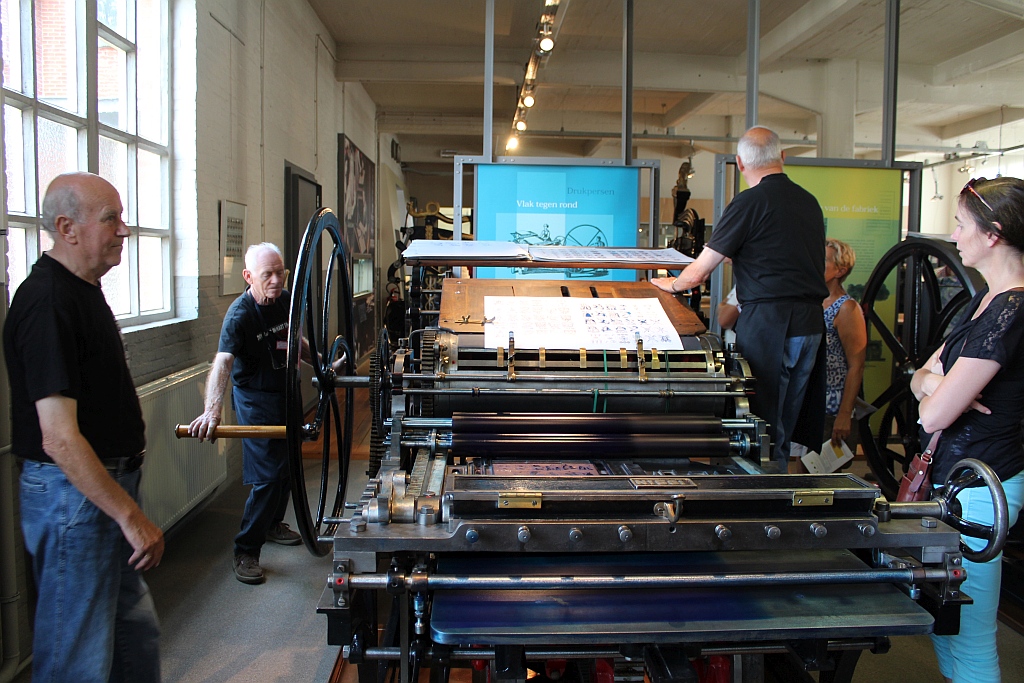
We took a day out in Turnhout and popped into the Tourism Info office to find out what to do. Belgium is not really geared for English visitors. It seems they expect obviously Belgians, possibly Dutch and maybe German tourists. So unfortunately not all information is available in English. They rotate open days at the various museums in Turnhout. The card making museum had free access that day so we made a turn there. There was a young guy who spoke perfect English but he was at the reception desk. The lady giving the tour said her English wasn’t good enough. We wandered around on our own or tried to listen in and make sense of the talks in Flemish. Turnhout was the place where playing cards were printed. Fortunately many of the the exhibits had English information. The youngster popped away from his station to check on us (so nice of him) and asked if we had questions which he answered. We each got a complimentary deck of cards from them which was a lovely gesture.
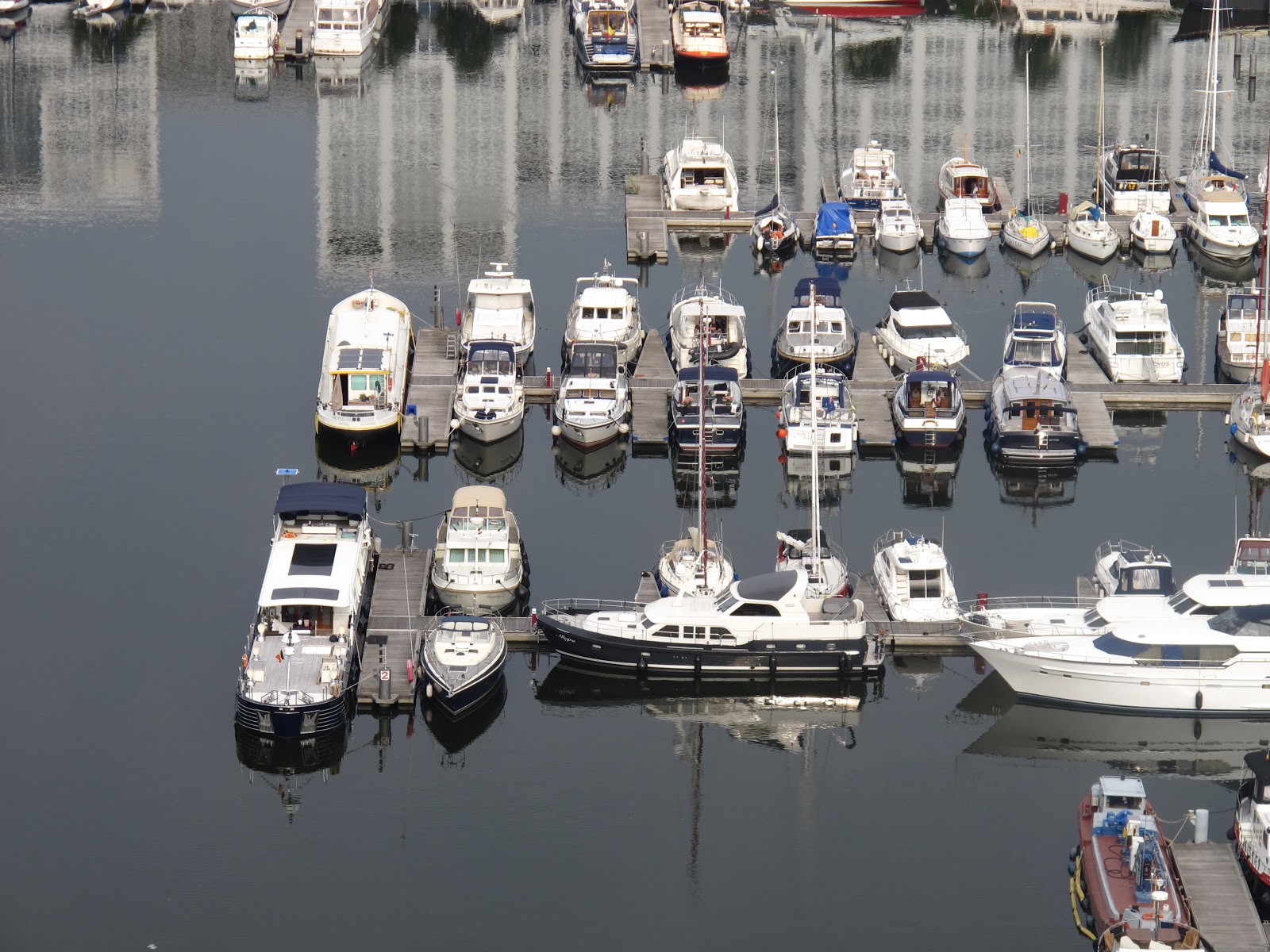
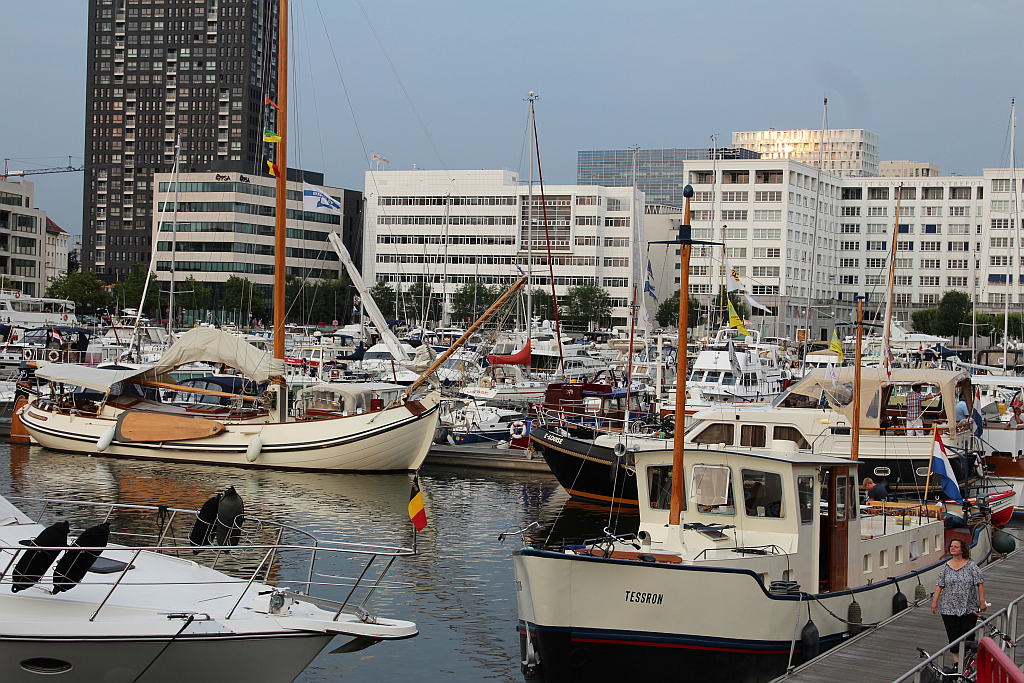
Antwerp marina can accommodate some seriously big boats. Fancy shiny boats. The kind of boat an oligarch would have. We walked past them on the way to havenkantoor (harbour office). These are floating holiday homes. They have satellite TV, fresh flowers, pampered pets and designer interiors. Well heeled folk sit on their back deck sipping chilled prosecco or champagne and gaze down on the rest of us. We also walked past teeny tiny little yachts where no more than two people can squeeze in. All-weather gear is mandatory as they spend most of their time on deck. And they brush their teeth over the side of their boats – with a bottle of water. The variety in boats never ceases to amaze us. We love seeing old ex-working boats like tugs and trawlers lovingly restored by enthusiasts. Often a group of them will arrive together. And you get house-boats lurking on the waterways and in the marinas. There are people who live all year round on their boats. And sometimes take their homes on holiday. Handy that. We’ve met families who home-school their children and travel the world.
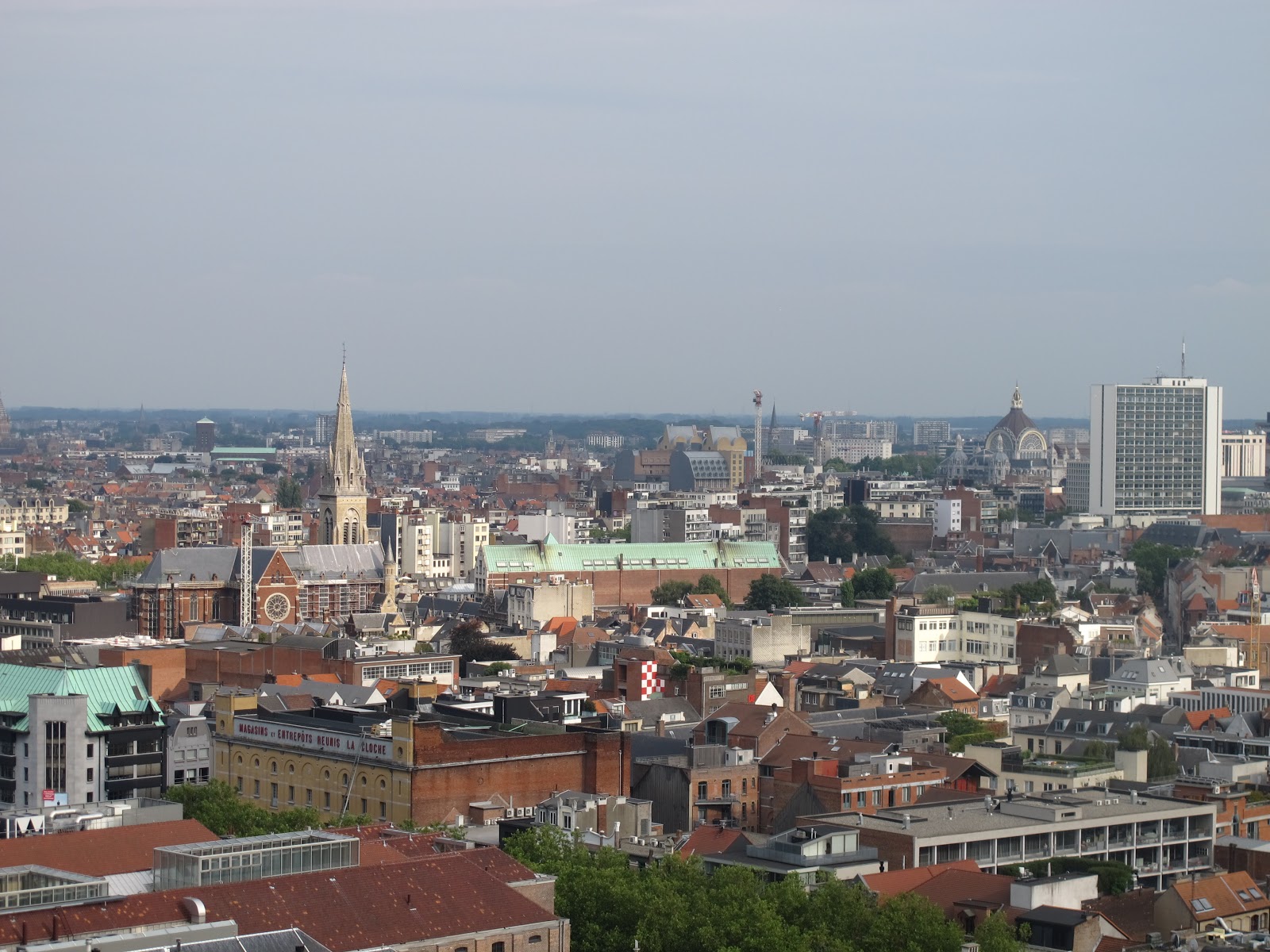
View of Antwerp from the Mas Museum
Sundays not a lot happens. So we treated ourselves to a lie in. Even the supermarkets only open for a few hours. We took the day out to catch up on chores – laundry, boat washing, grocery shopping, e-mails, paying bills, etc. The weather was still hot. Europe had been having one of it’s hottest summers with consistent highs and record breaking temperatures. We waited until early evening and then went to see the panoramic view of Antwerp from the top of the Mas Museum right next to the marina. It’s free to go to the top which is the 10th floor. There is a fee to visit the rest of the museum.
Although boating is hardly arduous, it does requires concentration and planning. There’s always a lock or a bridge or something that has to opened. You need to keep a watch for other waterway traffic – and humans. People do stand-up paddling, canoeing, swimming in the harbours and near the boats. And of course finding a space for the night can be a challenge. A day doing something different is a pleasant change. We took the next day out to travel by train to Ghent. My other half wanted a day there and for me to see Ghent as he’s been there by ship a few times. We would have needed at least week to incorporate Ghent by boat. However it was a mere one hour train ride from Antwerp.
Belgium has nearly 400 different beers
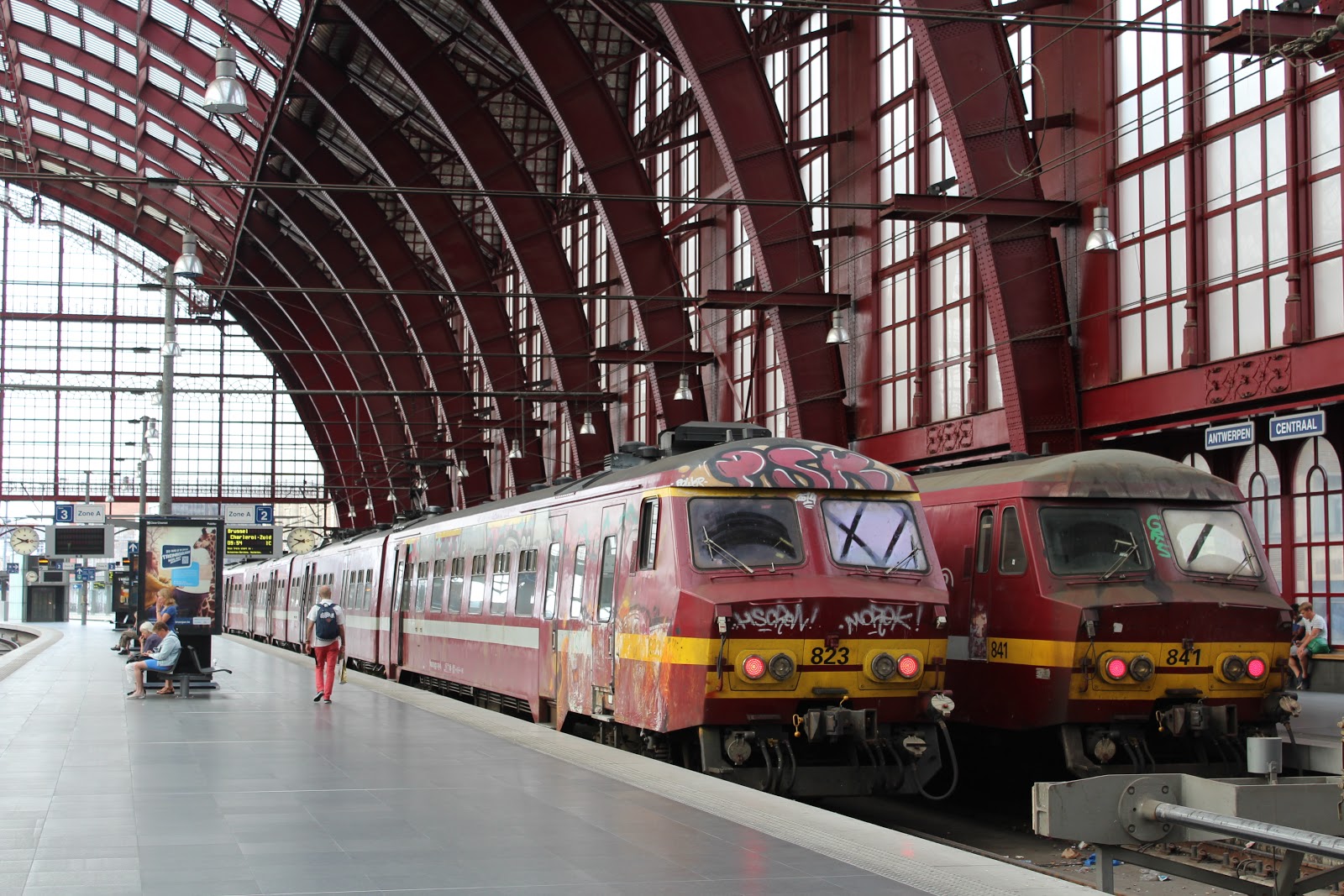
Our day got going fairly early and we hotfooted it up to Antwerp Cenraal train station. A fair walk from the marina. Antwerp Centraal station is a beautiful building. It has a wide domed ceiling with lots of curvy ornate bits. And gold coloured decorations. Very, very elaborate. There is a refurbished cafe where you can have a bite or a drink and soak up the opulence. We decided to do that when we got back. A few minutes later we were on our way to Ghent.
Antwerp Station
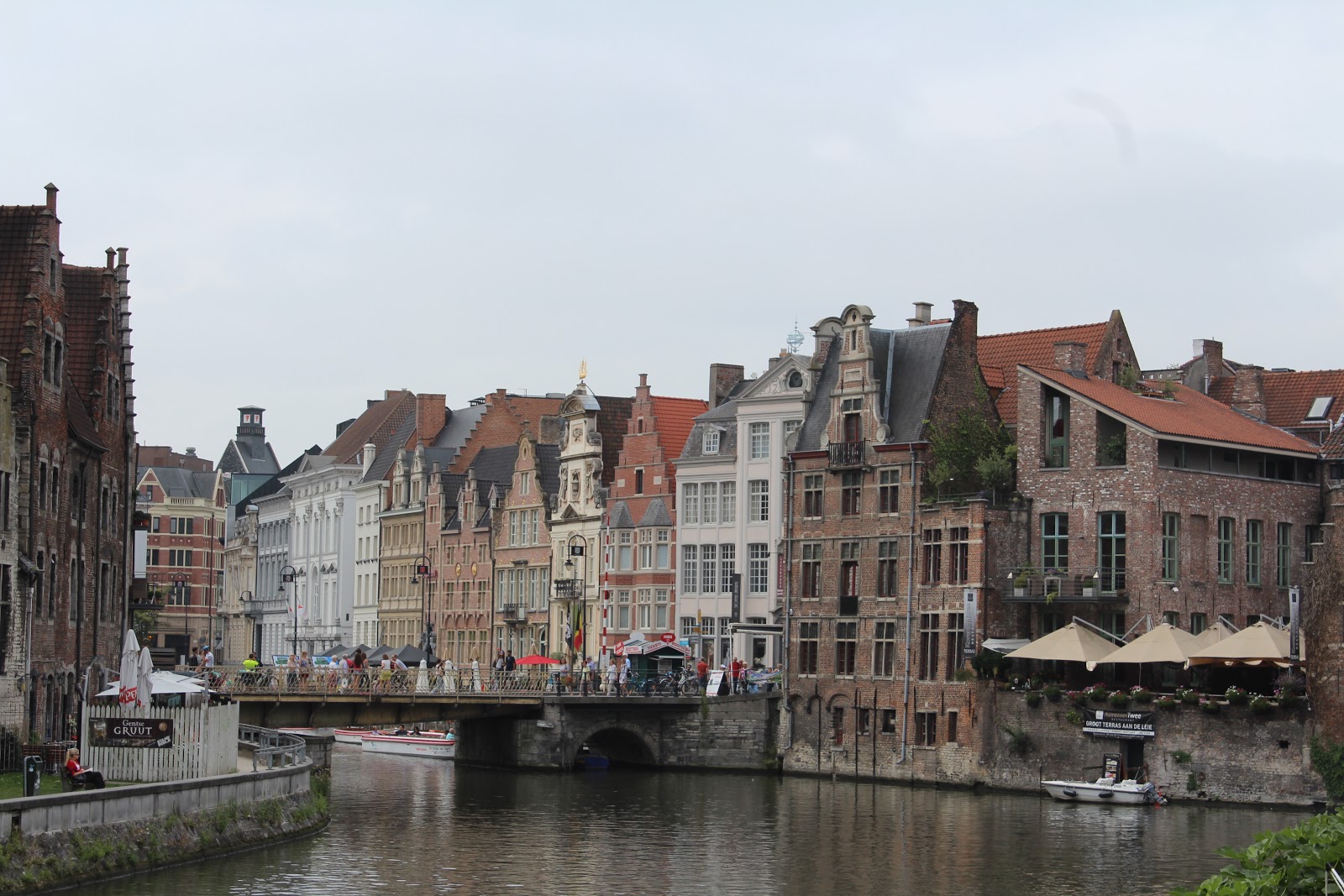
Pity there wasn’t much tourist info signage in Ghent. MapsMe to the rescue again. We sort of aimed for the centre of Ghent. Once in Ghent, the Tourist Information signs pointed in totally differing directions. Someone must have played a prank. Needless to say we got lost. Thankfully helpful locals guided us in the right direction and we found the Info Centre. Ghent is a cute olde world city with loads of cathedrals and historical buildings. Unfortunately we only had half a day to spare. How to choose what to do? My husband and I decided to do a canal boat tour and wander the streets. Have a meal somewhere. Have a Belgian beer somewhere else. And walk slowly back to the station. We found a fabulous veggie place called Greenways. We also tried a local sweet called a cuberdon or a “nose”. It’s a soft gooey cross between a wine gum and Turkish Delight. Made from Gum Arabic they’re fine for vegans. Noses have a hint of violet but are fruit flavoured. One or two is enough as they are very, very sweet.
Ghent
On the way back we stopped at the fancy cafe at Antwerp Centraal station to have a Belgian beer. I decided to try a Gauloise berry beer and my husband had a Gauloise dark beer. He loves these dark honey flavoured Trappist beers. I didn’t think berries and beer would work. I was wrong. They are unbelievably nice. Refreshing. And pack an 8.2% alcohol content.
It was time to get going again. We were heading through the Kempen region toward Turnhout. As we left Antwerp harbour my husband called up the havenbestuurder (harbour manager) to Afmeld (de-register). New aerial, new cable, things should be fine. Unfortunately not. The mariphone was still working intermittently. Fortunately we had the Imray Inland Waterways of Belgium book. And fortunately they provide phone numbers and mobile numbers for bridges, locks, marinas and harbours. Although the book was printed in 2005, the numbers still work. My husband had also made sure his mobile phone was topped up – just in case. We used his phone a good few times on our trip.
Greenie on the Turnhout Kanal
The other big thing we had to do was get a vignet. It’s a licence disc you buy at one of the locks. You’re supposed to stick it to the rear port side of your boat. The first lock keeper was on the ball and we didn’t even have to ask for one. My other half keeps a file with all the boat details so it was all ready and waiting. You only need a vignet in Flanders, not in Wallonia. Begium is almost two countries. The Flemish speaking top half of Flanders and the French speaking bottom half of Wallonia. Brussels is an area in the middle that is both Flemish and French. It’s almost a neat line dividing the country in half. Signs and notices are in Flemish up north and in French down south. Having said that, place names have a French AND a Flemish name. So if a French person talks about Liege (pronounced lee age) and a Flemish person is talking about Luik (pronounced lake) it’s actually the same place. Belgians knows this. The rest of us don’t. Mostly there is some semblance of similarity in the place names but not always. How about Lille and Rijsel? Or Haut Escaut and Bovenschelde?
I don’t know why, but I was expecting a bit of something when we crossed the border from the Netherlands into Belgium. At least a sign saying you’re leaving one country and passing into another. There was nothing. We had to check the map to see where we were and discovered we had popped into Belgium. Without even knowing it.
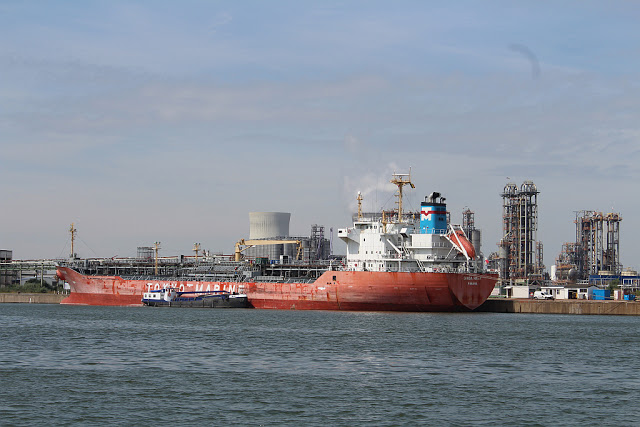
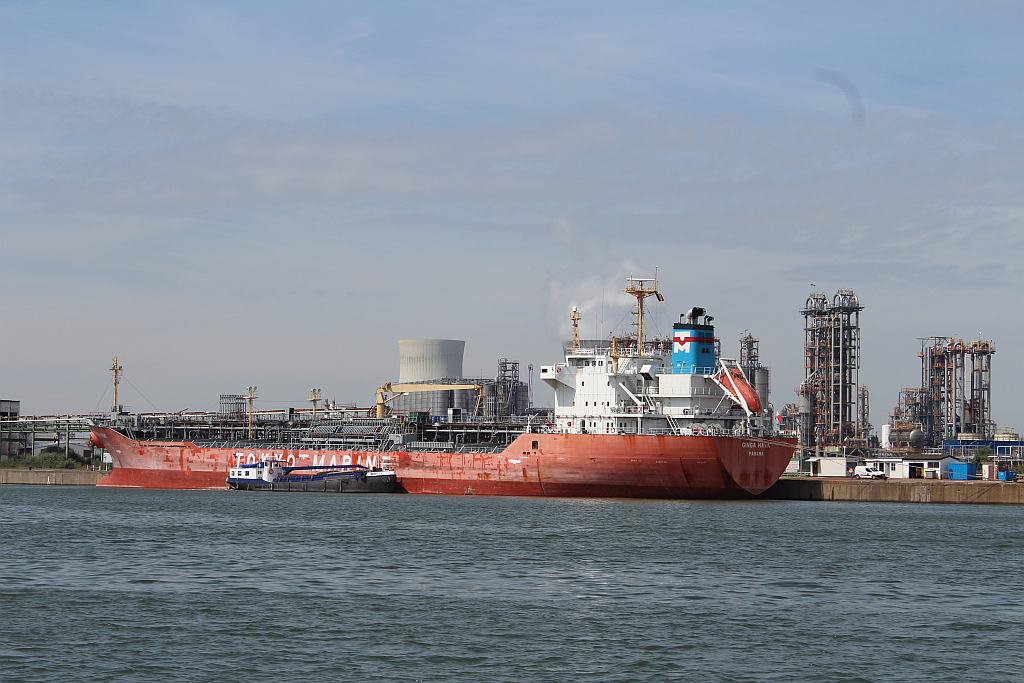
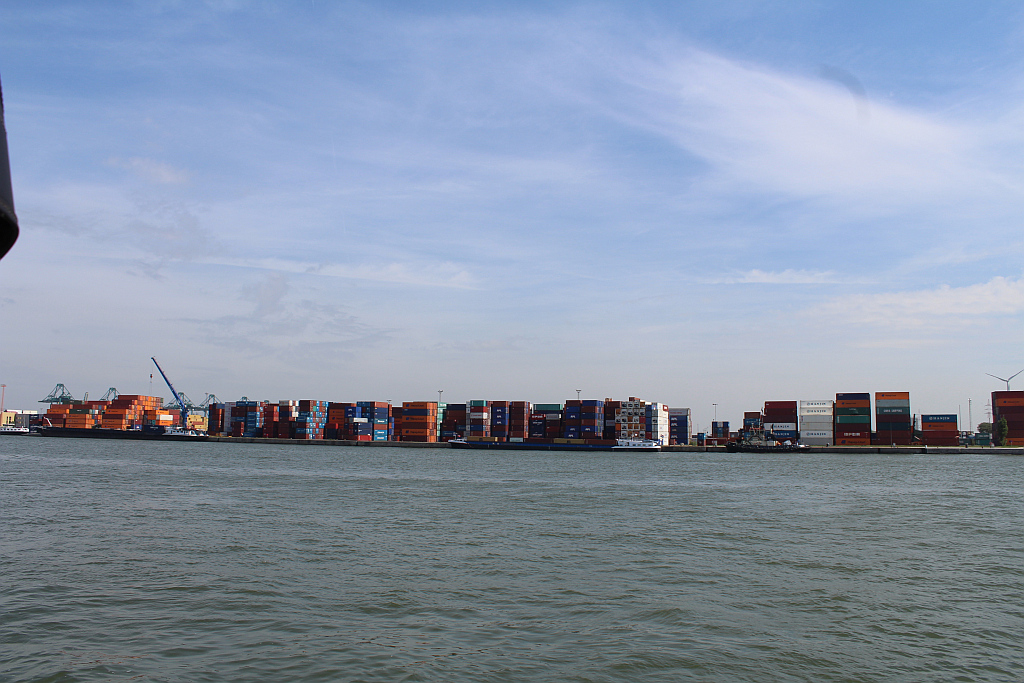
Heading toward Antwerp it was becoming decidedly industrialized. We also started wearing our lifejackets in the locks as they are deeper – and it’s a Belgian recommendation. And then we got to Antwerp harbour. The second biggest harbour in the world – after Rotterdam – before Hamburg. We motored over 16 kilometres straight through the harbour and everywhere you looked there was another branch or arm leading off – full of barges and ships. Antwerp has 13 057 hectares of harbour. Some stats from 2010 show that Antwerp harbour turns over 40 ships, 156 barges and 250 train loads of goods per day. No wonder barges were going past Tholen all night long.
Antwerp harbour
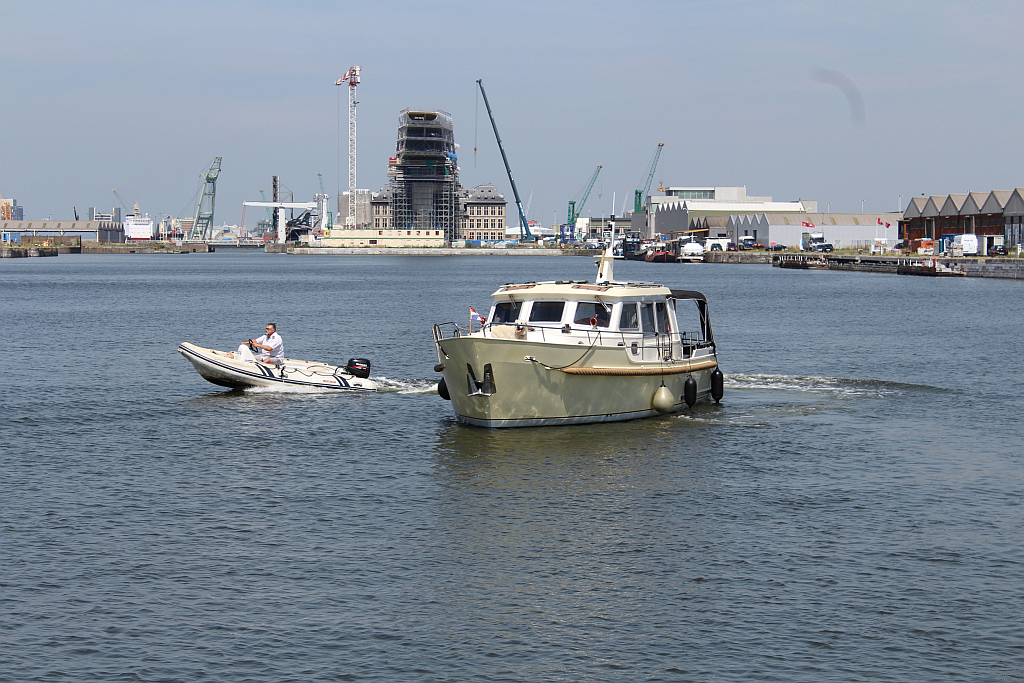
And again I was expecting to go through immigration, have my passport checked. My husband specifically asked the havenmeester (harbour master) about this. We didn’t want a problem as a result of not being stamped in. The havenmeester phoned his local authority and was told we needn’t worry. Certainly the opposite of how it works at airports – but there you go. This havenmeester has his very own dinghy and he races out to meet the incoming boats as the bridge opens and guides them into free spaces in Willemdok marina. Very helpful that. He was a friendly guy with a John Wayne accent when he spoke English. He probably honed his pronouciations listening to American movies.
Havenmeester coming to meet the boats
Have I mentioned how much we loved being in the Netherlands? It’s organised, everything works. The people are the country’s biggest asset. Direct but friendly. And now after three summers we were in Belgium. We went for a quick walkabout in Antwerp and stopped for a drink. A Belgian beer of course. And it hit us – Belgium is different. I would expect a contrast between Sweden/Norway and Italy/Spain. But Belgium is right next door to Holland. They speak almost the same language. Yet the people are different in manner and even appearance. The architecture and style was not the same. I had gotten used to bending my brain to understand Dutch and now I couldn’t undertand Flemish. We went back to the boat and sat on the deck, glass of wine in hand chatting and listening to the sound of laughter and water lapping on the boats tied up. It was one place we could get some relief from the sticky heat.
Antwerp harbour
Our first priority in Antwerp was to get the mariphone fixed. On our way into Antwerp my other half had tried to radio the bridge operator on his mariphone and there was no reply. We figured s/he wasn’t interested in us. Luckily as we got to the bridge he motioned us over and said the protocol was to call him on the VHF. Which we had done. A few times. My husband had eventually phoned. Turned out our mariphone wasn’t working. The following day, I left my husband to find a marine supplies shop and do his best while I went exploring. Access in and out the marina was via a card. We arranged that I would text him to let me back in. Fortunately my husband was able to figure out the mariphone problem. The wiring in the boat is 21 years old and the cable had disintegrated. He replaced the aerial and wiring. He also managed to get the float on the fuel gauge going. Boating is more than just cruising the canals.
Meanwhile I met a bunch of vegans at an animal anti-cruelty outreach in Antwerp and they had suggested some vegan eateries for us to try. That evening I treated my other half to a meal and a glass of wine. We were both tired and went back to the boat early. There was a sprinkle of rain which cooled the air.
Antwerp
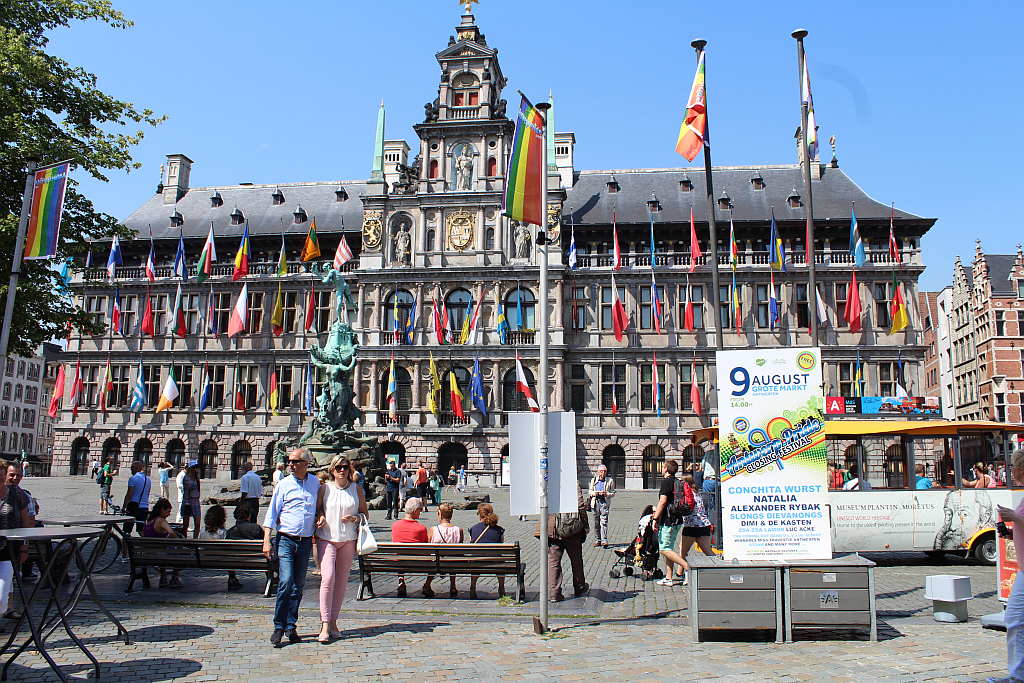
The havenmeester had given us a map and a booklet of what was happening in Antwerp. We liked the idea of a city walk which takes place at 14.00pm from the Tourist Info office – Tue to Sat in high season – and lasts 3 hours. The information office said it was €7 per person if you pre-booked. Or €9 per person if you pitched up on the day. Only thing was they do the tours – in two languages per tour. They also had a guide book for €5 which lets you to do your own thing. Luckily they had an English book. We opted for the book which allowed us to explore at our own pace. In English only. And at 1/3 of the price. We somehow managed to drag the walk out to 5 hours by which time we were exhausted, so raced through the last few pages. There’s a LOT of information to take in. Each museum or historical place expects an entrance fee. We poked our nose in those places but didn’t venture in.
Antwerp
The nice thing about following a proper guide versus just wandering about is you get to see places you would never have known about. And find out about their role in history and modern times. The bad thing about this guide is the directions were not clear. Not sure if it was due to a poor translation from Flemmish to English? Or if the writer assumed the visitor would have a detailed map as well as the guide? Thank goodness my other half has a MapsMe app on his smart-phone. It doesn’t need data. You load up maps of your intended destination and then refer to them when you need them. You can delete them when you’re done with that part of the workd. Without that app we would never have been able to do the walk. He also uses MapsMe on the waterways when he’s not sure about something on the nautical map. I use it to find a long straight road to go for the odd run so I don’t get lost. That app has been immensely valuable to us.
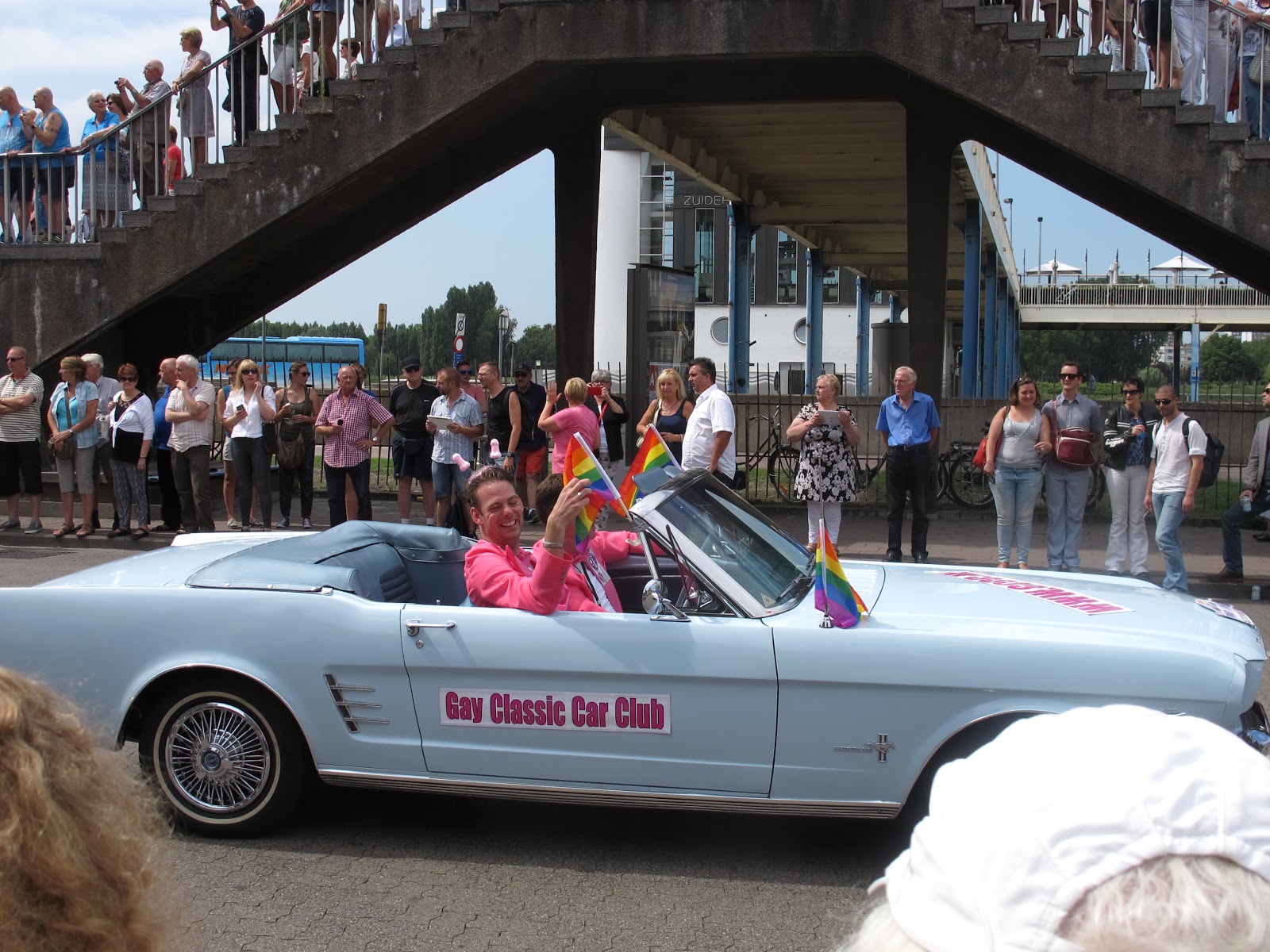
Part of Antwerp Pride drive by
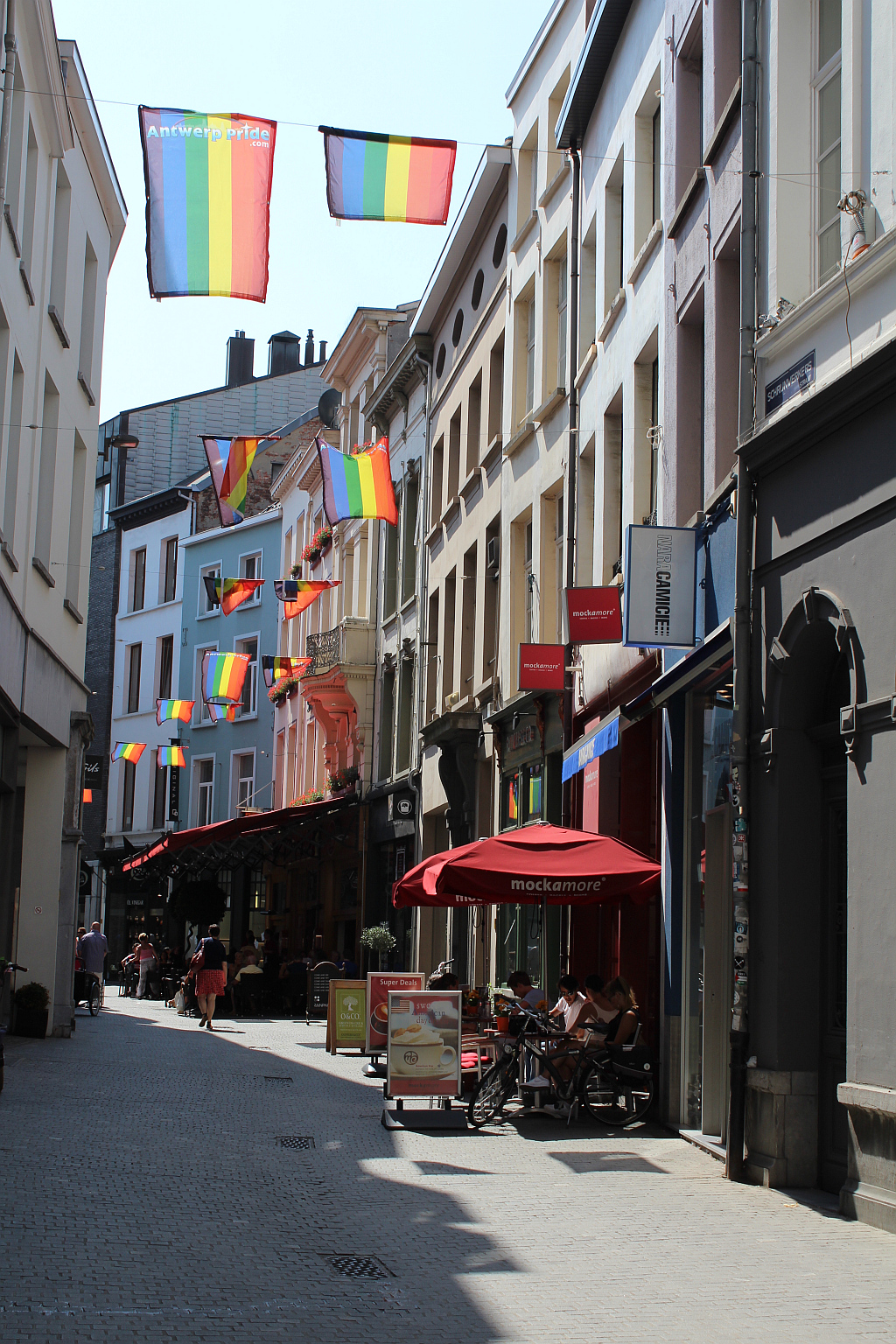
While we were doing our city walk, Antwerp was having a Pride festival. There was a Gay Vintage Car Club and members had decked their cars out in flags, flowers, feather boas, you name it. The drivers and passengers dressed up in bright colours. A pink satin suit with a pink feather hat to match was one of the colourful outfits we saw. There were lots of pop-up venues for eating, drinking and partying all over Antwerp.
The story continues – here.
We opted to spend three days and four nights in Doordrecht. I mentioned before that my other half had planned this trip meticulously. We had gained one day which we used to catch up on things. Day One we used to find IKEA and a proper marine supplies shop. We don’t have a motor vehicle so getting there is either walking, taking a bus, using the train, or a mix of all three. That took almost a full day. Day Two I did a thorough clean of the boat – defrost freezer, dust, wipe and vacuum, washing and drying. My other half checked all the workings – cleaned filters, replaced the water pump and checked oil and water levels. Day Three we caught up on comms at a bar and did a mini walking tour of Dordrecht. The weather had now gone from days and days of rain and cold to three days on a trot of heat and humidity.
We were edging closer and closer to the Belgian border and one of the requirements is an FD number. Which a person can easily obtain – apparently – via the website. Not so easy when wi-fi is limited. My husband was stressing no end about this. We tried to ask people en-route – either in the locks or at the marinas – if they had crossed the border and what to expect. We got differing responses from those who had travelled to and from Belgium. Which did nothing to allay my husband’s apprehension.
Doordrecht marina
Our next stop was Willemstad. I mentioned that in Enkhuizen boats were not just double banked – but tied up to SIX abreast. We tied up to a boat that was already double banked to another boat as per the havenmeester’s instructions. By the end of the day there were six boats abreast – all tied to each other. Which meant we were in tight proximity to each other. Fortunately no-one snored in the boats near us but the boat next to the quay had a rowdy bunch of people who were well into their beer stash. They were mimicking the sound of bow thrusters and finding it extremely funny. We feared they might carry on all night but luckily the lot of them went off to one of the many restaurants next to the marina in Willemstad. Lovely place. Would have liked more time there. It was hot and people were out in the streets and cafes. We chose to sit on our back deck and listen to people laughing and the sound of the water slapping the hulls of the boats as the sun went down.
Willemstad
Stuck between a bunch of boats meant we had to wait for the others to move before we could make a start to the day. There are people who get going early but most boats begin moving around 10.00am. You have to factor in bridge opening and lock times if they affect your boat (size) and route. No point in hanging around for hours in the water waiting for a bridge to open. Once we got going I was having a turn at driving the boat when the engine suddenly slowed down. I had managed to get sea grass tangled around the propeller. Luckily all it took was a couple of reverse and forward manoeuvres to dislodge it. On one of our trips on a hire boat we managed to get a man’s jacket tangled around the propeller. I’m eternally grateful my other half is a master mariner and an avid boatie. He instinctively knows where to look when things go wrong. He also understands nautical navigation rules and signs. A person can get into a lot of trouble if you don’t know what you’re doing and what to do. Also important to know is which documents, permits and paperwork are required. The authorities dish out heavy fines to transgressors. Ignorance is no excuse. And yet again, I defer all that to my husband and he does a great job of it.
Tholen
Our last stop in the Netherlands was Tholen. So named as it was a point where people paid a toll. We deliberated between Bergen-op-Zoom or Tholen as our last stop. What helped us decide was the marina in Tholen was closer to the town centre. Sometimes a marina can be quite far out of town. Which is a bit inconvenient carrying shopping bags or even exploring. Marinas may offer bicycles either to hire or for free but in the height of season the bikes go fast. It was the first week in August. The apex of European holiday of season. Most children were taking school holidays and families were enjoying the waterways. It seemed like every single person on the planet was out and about. I prefer the shoulder seasons as the marinas are less crowded and quieter. But then less bars and cafes are open and the vibe is subdued. The weather is another factor. I prefer not too hot and not too cold. The warm weather had continued and it was frankly plain hot. Sticky humid kind of hot.
We later discovered Europe was having a heat wave with temperatures up to 39’C in the Netherlands. Humidity levels were around 80% plus. I’m always amazed at how the Europeans relish sun and heat. They don’t miss a ray of sunlight. People were in their swimming gear spread on the bow of their boats topping up their tans. That’s when you can tell who has a hand-held or remote driving device for their boat. Perhaps we get enough sun back in South Africa. Temperatures can soar to 40’C plus in Cape Town but we don’t get the same heavy cloying humidity we were experiencing. South Africans are taught to have the same cautious approach to the sun as Australians.
Nordersluis
With hindsight it might have been best to stay at Bergen-op-Zoom as it’s a bigger town and we needed provisions from a health shop. Tholen is a small town. Throughout the night there were barges driving past Tholen.
A person would expect to lock up going inland and lock down heading toward the coast. In the Netherlands – it works the other way around. It’s always hard for us to grasp that they live below sea level. We were locking up – together with big fat barges – who always have right of way. I was more than a bit annoyed when were told to wait while beroepsvaartuie (working boats) from no-where in sight were given right of way. We waited over an hour for them to arrive. And then a massive pleasure boat was placed in the lock before us. Hardly a working boat. I didn’t think that was fair. Fortunately there was enough space and we all managed to fit into the lock.
The story continues – here.
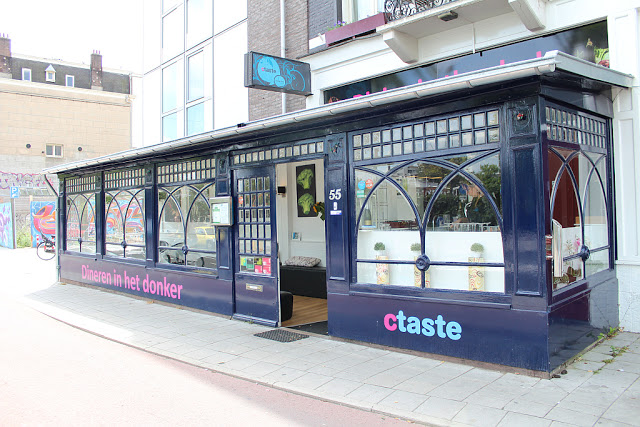
I mentioned C-Taste earlier. It’s an eatery where you dine in total darkness. A person doesn’t realise that there is ALWAYS some light even in the dead of night. Alarm clock, street lights, mobile phone, LED lights, something is producing even a teeny bit of light. At C-Taste you leave your watch and phone at the front desk, put your hand on the waiter’s shoulder, and are guided to your table. Not so easy to sit down when you have no idea which way the chair is facing and where your table is relative to it. I’m a hectic claustrophobe. I nearly bailed but I’m glad I persevered. Oh and one other thing. You have no idea what you’re about to eat. C-Taste will accommodate any food preference or diet, provided you give them notice.
CTaste
The food was amazing. Our quiet waiter came to life in the dark. Have to confess I used my fingers to eat. It’s nigh impossible to aim a knife and fork if you can’t even see your plate. Let alone the food. I just assumed I would easily guess what we ate but was surprised at how much we eat with our eyes. We liked that they ask you afterwards what you thought you ate and corrected you.
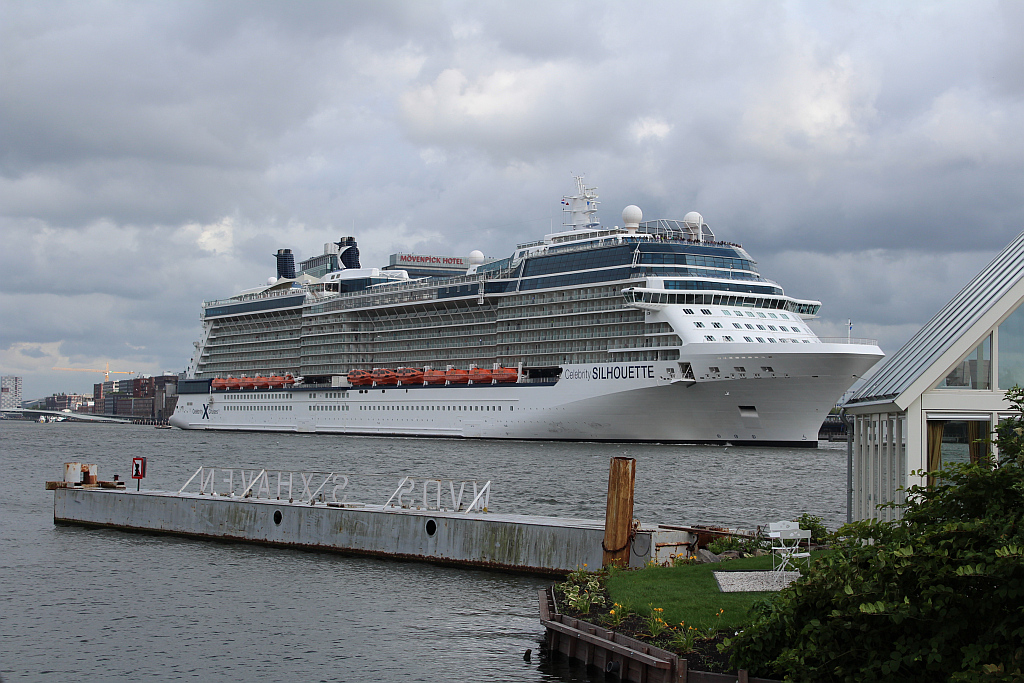
Big passenger ship
Back at the boat we heard a deep horn blowing and raced out to see what it was. The biggest passenger ship I’ve ever seen in my life was being assisted by a pilot and tug. We tried to count the outer cabins but there were too many. That excludes inner cabins. Crew are probably in the bowels of the boat so add them as well. That boat surely accommodates thousands of people. It’s a city – moving on water.
The weather was conspiring against us and we were pretty much trapped by boats at Sixhaven marina. An early start was not possible unless we could get to the outer boxes where we could at least leave without waiting for the surrounding boats to surface and be willing to move. We definitely did NOT want to be doing tight manoeuvres in wind and rain. By about 11am we were finally able to get out the inner section of the marina and move the the periphery.
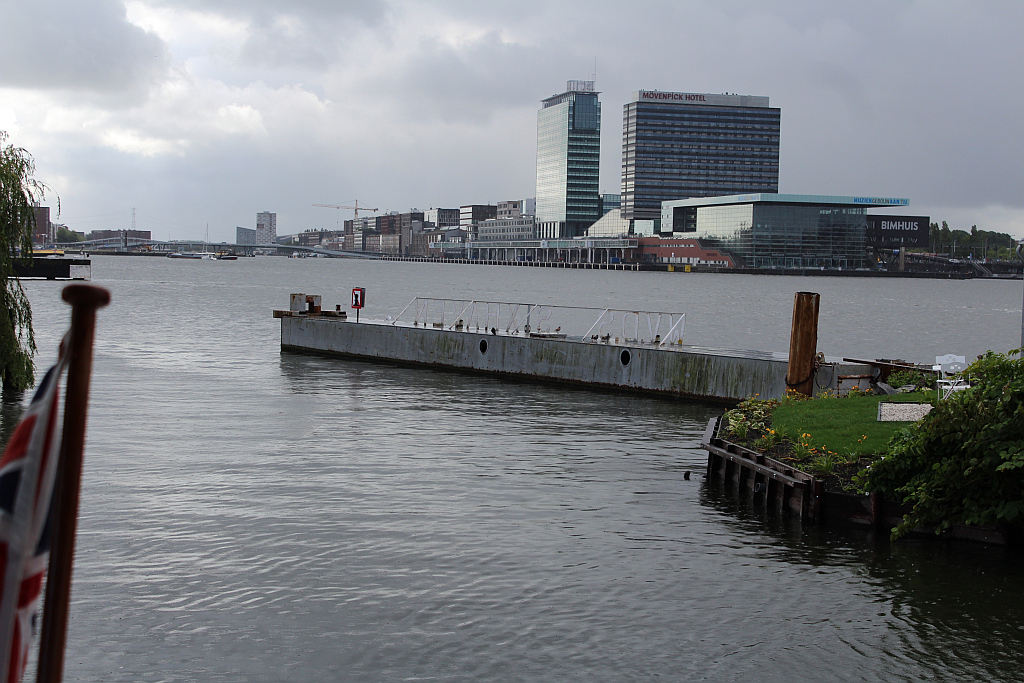
View of Amsterdam from Sixhaven
We made an early start to Utrecht. The weather was still rubbish. Cold and intermittent rain. We know in the height of summer if you don’t get to a marina shortly after midday you run a real risk of not finding somewhere to berth. Shangri La arrived at Utrecht just after 15.00pm and we bagged the last of three spots. Phew! We’ve been to Utrecht before, so spent the night on the boat. We didn’t feel like going out in the rain after a day of battling the elements on the boat.
Utrecht
Utrecht marina is the cheapest by far at €12. But no wifi. And limited hours at the ablution facilities as they’re connected to a retail shop. That fee did include unlimited electricity (walstroom). We took a day out in Utrecht the next day. Less sightseeing and more about finding things – like brass hooks and stationery. Sometimes just wandering around a place is also a nice way to explore. Apparently Utrecht was plagued by flooding so the canny Dutch rebuilt a new city on top of the old one. Now that they are able to keep the water at bay, Utrecht has two levels. The lower levels are typically where people hire canoes or little dinghies. Coffee shops (real ones – not cannabis smoking spots) and restaurants line the lower canals. The upper level has more cafes and bars but also retail shops. We had an appelgebak (apple tart) and a coffee at HEMA so we could get wi-fi and check for any urgent messages. Leaving Utrecht is special. There a lots and lots of low and sometimes long bridges. Almost tunnels. We dropped our mast, radar arch and awnings so we were as flat as possible. It’s surreal gliding along the canals watching people beavering away and slipping through dark tunnels.
Market day in Utrecht
Next stop was Schoonhaven. By now we’d had five straight days of rain. As luck would have it, the crucial moments, like entering a lock or tying up in the marina, the rain subsided. We were grateful for that. Schoonhaven is a teeny little place. Not a lot going on but we found a gorgeous pub full of old fashioned decor items and authentic interior design. They also played some solid rocking music. Think Stevie Ray Vaughan. A perfect reason to enjoy a glass of wine or a rich dark ale. Or two. For the most part we self-cater on board our boat. Eating out in Europe is hellishly expensive. Especially for those of us unfortunate enough to earn South African Rands. The Rand has been heading steadily south. I notice it every year when I need to change money. Sigh. I wish Nelson Mandela was still around. Those were good days for Saffas.
Rain en route to Dordrecht
The other big reason we self-cater is we’re both almost vegan. So we eat fully vegan at home and on the boat. But if we go out to a friend for a meal or are at a place with limited options then we drop back to vegetarian food. But we prefer not to have to do that. We LOVE local organic and ethical food stores such as Marqt and Eko Plaza found all over Holland. Even regular supermarkets such as Jumbo or Albert Heijn have a fair selection of vegan and organic food. More important than eating out or saving money – is eating nourishing food. We also love being on our boat. In good weather we sit on the back deck and watch the world go by quaffing a glass of organic wine and enjoying a healthy meal.
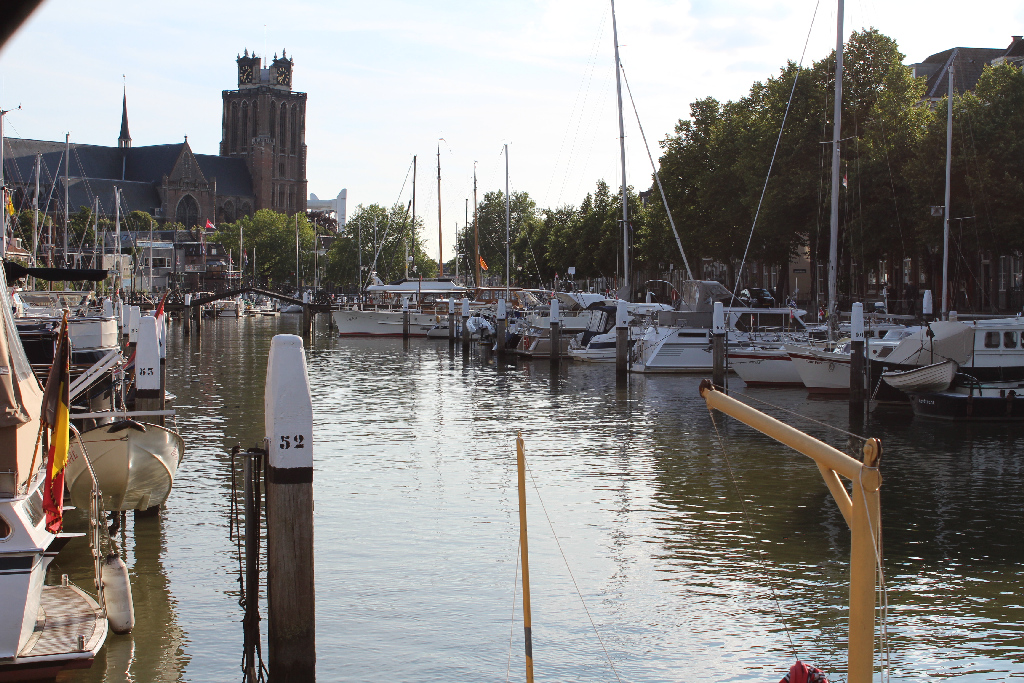
Dordrecht marina
It was a short journey to our next port of call, Dordrecht. Along the River Lek, the River Maas Noord and the Oude Maas River. No more narrow gentle canals. Now we were sharing the waterways with big beefy barges and dealing with tides and the resultant currents. When we were travelling with the tide we made great speed but the opposite occurred when we motored against the tide. Dordrecht is quite a big place with lots of marine activity, both pleasure and commercial boats. We had to wait for the havenmeester (harbour master) to open a bridge so we could pass through. And allocate a berth. Unfortunately we were placed miles away from the havenkantoor (harbour office). Which meant no wi-fi – yet again! The shower and ablution block was a trek. Dordrecht is a lovely historical harbour and can accommodate some seriously big boats. We don’t envy big boats. There is a lot more scope for travelling in a smaller boat.