Boating in Holland – Final + Boating Tips
Boating in Holland – Final + Boating Tips
|
| Guest cabin |
Our goal is to see as much as we can of the inland waterways of Europe. We’ve been boating in The Netherlands for the last 2 and a 1/2 years. Not the whole time obviously. In winter the canals freeze over, the smaller canals shut down and there are limited bridge opening times.
Also, as a South African, I am limited to a maximum of 90 days per annum.
We planned to explore Holland first since we bought the boat there. My husband and I originally thought we would be in and out of The Netherlands. It’s not such a big country after all. How wrong were we? We fell in love with the Dutch people. It’s possible we may fall in love with other countries? It’s not hard to when a person explores a place from the waterways. You get up close and personal with the people and go to areas other visitors would never see.
 |
| Large working barges have right of way |
However, if we are ever going to see Belgium, Germany, France, Poland, Denmark, United Kingdom and all the other countries linked to the European waterways – we have to move on.
Hopefully more family, friends and acquaintances will join us. Will we be able to share more of our experiences?
Meanwhile, I thought I would share my boating tips. Hope you find them useful.
Make sure to pack the following: –
- weatherproof/windproof/waterproof/warm jacket
- peak hat/sun hat
- non-slip light coloured sole shoes
- slip slops for the communal showers
- running shoes
- sunscreen
- sunglasses
- biodegradable shower gel/shampoo
- scarfs that double as sarongs
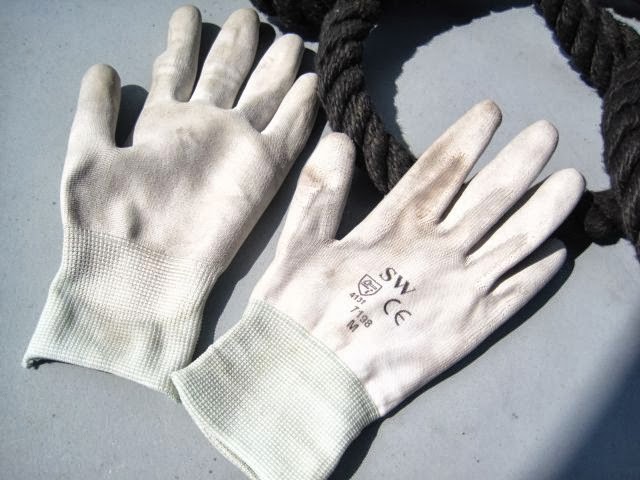
- cheap gloves for handling the ropes
- heavy duty bags that double up as laundry bags, toiletry bags, shopping bags etc
- cash – cards are not accepted in all countries – Netherlands is one of them
- small change for the showers and water and electricity supply – usually 50c
- plug adaptors for any gadgets – think mobile phones or tablets
- comfortable clothes for climbing on and off the boat
- phrase book or app with the local language
- consider loading maps.me or similar app on your phone
And for boaters: –
- maps of the waterways in the area either on-line or hard copies
- required waterway books
- your local flag and any other required flags
- mini binoculars to read signs/buoys/boats on the waterways
 |
| Traditional Dutch boat under sail |
1. Take gloves. I use cheap gloves from the hardware store. Even if your hands aren’t tender. Thick course ropes can shred your skin when you tie up for the night or secure your boat in the locks.
2. Do try and learn basic phrases in the local language. Most Europeans speak a lot more English than they let on. However you are in THEIR country where they have been speaking their mother tongue for eons. It’s only polite to make an effort to speak the local language and not expect them to accommodate you. Besides you will need to buy provisions, read notices or maps and ask questions of the lock keepers and locals.
3. Pack sun-hats and sunscreen. The sun does shine in Europe. It can get quite hot.
4. And a warm windbreaker. It also needs to be weatherproof/waterproof. It rains a lot in Europe. It’s usually colder on the water than on land.
 |
| Dutch cash card machines |
5. It would be wise to have some boat handling skills. And perhaps get to know a few boating terms like cleat, bollard, port, starboard or fender? No formal qualifications are required but a boat can be unpredictable in currents and wind. If the “captain” is speaking in boat-ese, it helps to know what s/he is saying.
6. Pack light-coloured sole shoes so as not to mark the boat and make sure they are non-slip. Leaping on and off a boat for locks and moorings is required. Make sure your shoes won’t be falling off.
 |
| Waiting for a bridge to open in Leiden |
7. Bring a cap, top or something to connect you to your home country.We have met expats and made new friends by flying our South African flag. People greet their fellow countrymen with gusto abroad. And we have made friends when people recognised our flag and shared memories of a trip to South Africa. Or they enquired where we are from. But we have also met locals who love it that we are taking an interest in their country.
8. Pack running shoes. A walk exploring the town or a run along the tow path is a great way to relax at the end of the day to stretch your legs. Besides you never know how far away the nearest supermarket will be?
9. It is mostly older and retired people who do these trips and while they aren’t strenuous they do require some effort. You will be jumping on and off boats and heaving ropes. You have to walk to the shops.
 |
| Bus service in Haarlem |
10. Go easy on the water when on a boat. Most boats come with about 200 litres tanks – which is not a lot. Get into the habit of re-using water for dishes. When showering use the spray to wet yourself. Switch off while you soap to conserve water. And only turn the tap on again when you need to rinse. Save shaving and shampooing for when you are in a marina where they have facilities. We try to use marinas when we have visitors on our boat.
 |
| Weather report Lelystad |
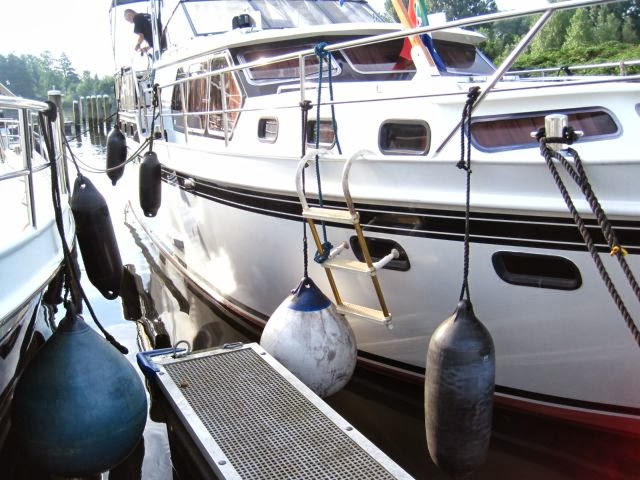
11. Learn a few basic knots. Fenders have to be moved up and down depending on the mooring. A Clove Hitch, Round Turn and Two Half Hitches are a good place to start. And it helps to know how to make a figure of 8 on a cleat to secure the boat so it doesn’t float away.
12. Boating is NOT glamorous. Pack comfortable clothes that you can move in and make sure you don’t mind if they get a bit grubby. Your clothes will be washed in a communal facility. You are going to be using basic facilities in a communal ablution block.
 |
| Essential guide books |
For more on other places we have visited, go to the top of this page and open – My Holidays and Trips.
I will be back soon.
Greenie.