With the advent of the New South Africa came a brand new constitution and legislation. Much time and effort was put into getting us off to a great start and so South Africa has some of the most fair and progressive laws in the world. Same sex marriages, polygamy and polyandry are permitted here.
Our president Jacob Zuma is a proud polygamist and has three wives and 20 children at present. Our neighbour, King Mswati 3rd of Swaziland, is ahead of him with 6 wives and over 20 children.
The president of Dubai, Mohamed bin Rashid Al Maktoum lists a senior wife, a junior wife and 19 children. He is reputed to have wives in between the two that are mentioned. In America Joseph Smith, founder of the Mormons, had a few dozen wives.
King Solomon and many others in the bible had a good few wives too. In Asia a second “wife” is taken as a concubine.
The good news – it’s all OK here in South Africa. And we don’t discriminate, woman are free to join in and have multiple husbands too. Now how many countries can say that?
Go to – My Holidays and Trips – at the top of this page to read about other places we have visited. Or just click on – this link.
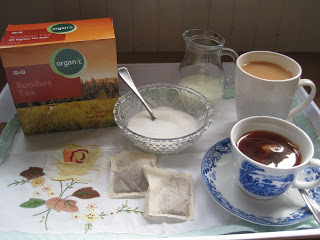
Here in South Africa, if you order a cup of tea, you will asked if you would like Rooibos tea or Regular tea. Rooibos means red bush in English. Rooibos tea is a deep reddish colour and is naturally caffeine free and low in oxalic acid. It is also high in vitamins and minerals relative to other teas. We use it as a thirst quencher for babies.
I drink mine as I do regular tea, with milk. It can be drunk as one would a herbal tea, with lemon or honey.
Rooibos is indigenous to the Cape and is part of the fynbos – fine bush in English – family of plants. The Cape with it’s Mediterranean type and sometimes harsh climate can be unforgiving to vegetation. Fynbos thrives where no other plants will grow. There are over 2600 species of indigenous plants in the Cape Peninsula alone – more than the entire United Kingdom.
So while I am blogging that SA is not the most dangerous place on planet earth yesterday, tabloids and broadsheets both here and abroad are having field day with the murder of Eugene Terreblanche.
People forget that this land has survived all manner of hardships – political and natural. I will not enter into debate on the who, what, where, when and hows of the incident. I will say, my experience, is that most South Africans are warm, a bit conservative and not inclined to the behaviour that is being portrayed in the news.
Most of us are out doing our usual things and tut-tutting at the headlines. We have a habit here, of chatting to strangers as if we know them. Post Office and supermarket queues around the land will have us sharing our opinions on this one.
The first question most people ask about South Africa is to do with crime. And after watching the BBC show with Louis Tredoux last night I am really not surprised since that’s what people see. I wouldn’t set foot anywhere near Hillbrow at night which is where Louis Tredoux was filming.
The Foreign and Commonwealth Office says “There is a high level of crime, but most occurs in townships and isolated areas away from the normal tourist destinations. More that 460 000 Britons visit South Africa every year. Most visits are trouble free.”
I know people who have been victims of violent and senseless crime and I’m not suggesting that South Africa is anything like Iceland or New Zealand. We can only wish to live like that. But if you compare our crime in the hot spots with crime in other global hot spots our numbers are lower.
Where we come horribly short is the per capita statistics. There are more and more violent deaths here per capita than anywhere else. However, I don’t walk around filled with terror every day of my life. Green Point is a safe area by world standards. Use plain common sense and a visit to South Africa will be a safe one. Our crime statistics are freely available at this link South African Police home page.
The South African currency is the Rand. We have pictures of our Big 5 on our notes. Buffalo, Lion, Elephant, Rhino and Leopard. They come in bright colours – red, blue, green, orange and yellow. And they vary in size. It’s not easy to mix up one’s money here.
South Africa has high interest rates by world standards. Our prime rate is 10%. This could be why the Rand is actually strengthening at the moment while other currencies are floundering. It’s hard to owe money here and there is some incentive to save.
For the interest and exchange rates go to our Reserve Bank website. Click here – South African Reserve Bank.
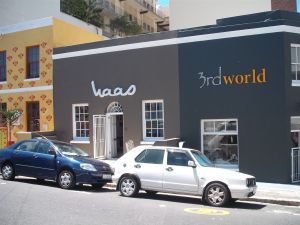
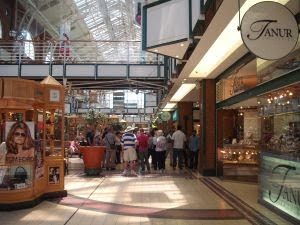
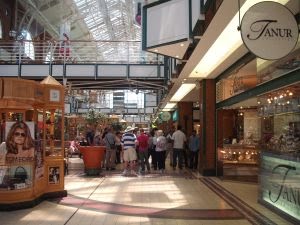
Shopping and eating out are still very affordable for visitors. We have the usual shopping malls with luxury and budget items for sale. I prefer the markets and shops with vintage and old items that are unique. Those type of stalls are found in Long Street, Salt River, Observatory and St James area.